
Six days, three parks, and time to stay in Serengeti
Leaving Arusha in the morning, you reach Tarangire in time for a game drive among the river country and baobab trees. The following day takes you through the Ngorongoro highlands to central Serengeti, where you stay for three nights. That is the decision that shapes this itinerary: you get two full days in the park without packing up your camp each morning. On Day 5 you drive back towards Karatu, then visit Ngorongoro Crater before returning to Arusha on Day 6.
There is a compromise. The journeys into and out of Serengeti are long, and the last day includes both a crater game drive and the road back to town. If you are happy with those travel days, the schedule gives you a much better look at the central plains than a six-day tour that tries to include four national parks. Capable Africa Tours can arrange the guiding, vehicle, accommodation and permits according to your dates, with the exact services confirmed in a written quotation.
| Starts and ends | Arusha hotel or another pickup/drop-off point agreed in advance |
|---|---|
| Where you sleep | Night 1: Tarangire / Mto wa Mbu / Karatu area; Nights 2–4: central Serengeti; Night 5: Karatu area |
| Best suited to | Wildlife-focused travelers who want two full Serengeti days and can manage long transfers |
| Route style | Road safari; ask for private vehicle, group arrangements and accommodation options in your quote |
| Important tradeoff | More time in Serengeti, but no separate Lake Manyara visit |
Accommodation is described by area rather than named property because camp location and availability depend on the dates you book. The final itinerary should list each property and its meal plan.
How the route works, day by day
The journey moves west rather than driving back to Arusha between parks. You cross the Ngorongoro Conservation Area on the way into Serengeti, but save the descent to the crater floor for the final morning. The outline below assumes you are already in Arusha on the morning of Day 1.
| Day | Main plan | Overnight |
|---|---|---|
| 1 | Arusha → Tarangire game drive | Tarangire / Mto wa Mbu / Karatu area |
| 2 | Ngorongoro highlands → central Serengeti | Serengeti, night 1 |
| 3 | Full-day central Serengeti game drive | Serengeti, night 2 |
| 4 | Second full day in Serengeti | Serengeti, night 3 |
| 5 | Serengeti → Ngorongoro highlands → Karatu | Karatu area |
| 6 | Ngorongoro Crater game drive → Arusha | Safari ends in Arusha |
Day 1 — From Arusha to Tarangire's river country
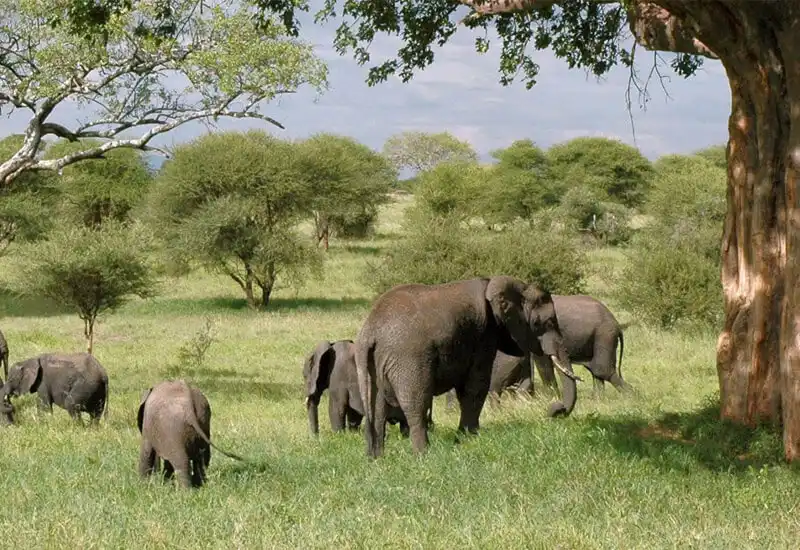
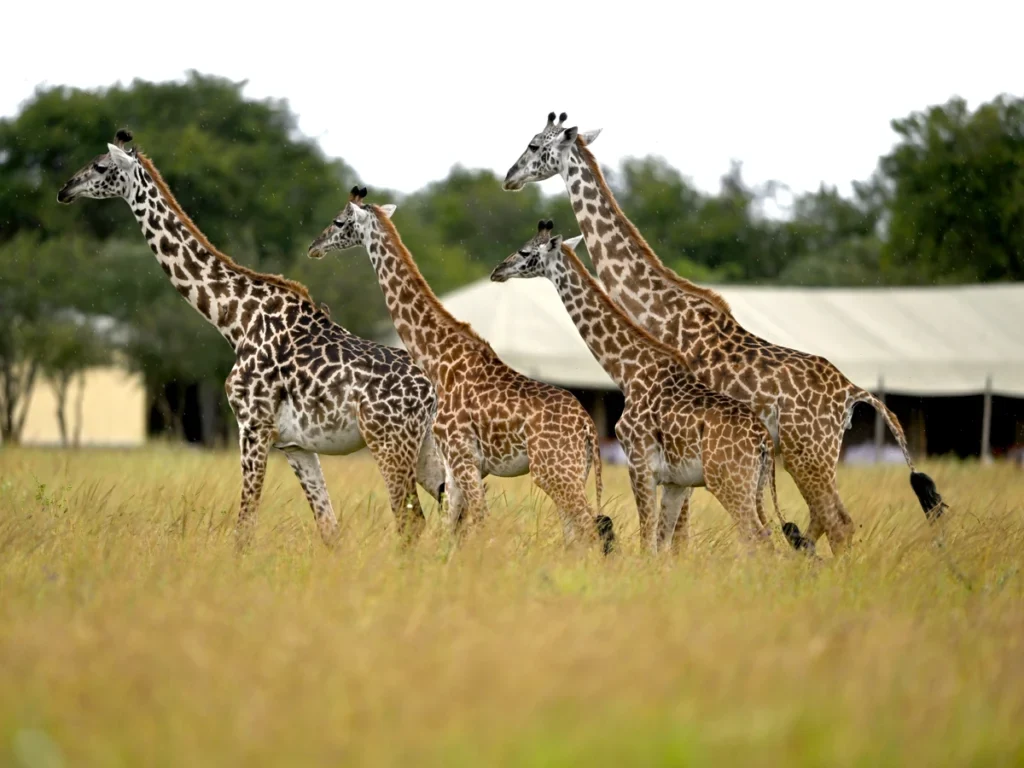
Meet your driver-guide at the Arusha pickup point after breakfast. The drive to Tarangire commonly takes around two to three hours, depending on where you start and traffic along the road. Once inside, the pace changes. You can follow the tracks through baobab woodland and look for elephants, giraffes and other animals feeding around the Tarangire River. Large concentrations of wildlife are particularly associated with the dry months, though animals move freely and no sighting is certain.
Lunch is arranged around your park-entry time and meal plan. Afterwards, travel to the lodge selected for the first night. Staying around Mto wa Mbu or Karatu can position you better for the next day's journey; staying closer to Tarangire may shorten your first day but lengthen Day 2. We make that choice when arranging the accommodation rather than presenting the two options as identical.
Night 1: Tarangire, Mto wa Mbu or Karatu area. Confirm the actual lodge, meals and drive to the next stop.
Day 2 — Across the highlands to the Serengeti plains
Set off early for the route through the Ngorongoro Conservation Area and towards Serengeti's eastern approach. The highland road gives way to open plains, but this is still a transfer day. From the Karatu area, allow roughly five to seven hours or more to reach a central Serengeti camp after stops, gate formalities and road conditions; starting near Tarangire adds travel time.
You may see zebras, wildebeest or other wildlife while approaching camp, depending on the season and route. Today's goal is to arrive in time to settle in safely, not to squeeze a full-day game drive into what is already a long journey. The crater-floor visit comes later; passing through the conservation area today is not the same thing.
Night 2: Central Serengeti tented camp or lodge, subject to your confirmed booking.
Day 3 — Follow the wildlife around Seronera
Now you have a whole day without a cross-country drive. Central Serengeti's rivers, grasslands and granite outcrops give the guide different places to look according to recent animal activity. Lions may be resting near kopjes; leopards are sometimes seen around riverine trees; grazers and birds can keep a drive interesting even when cats are out of sight. Nothing needs to be chased to a timetable.
Some travelers prefer a packed lunch and a long continuous drive. Others want to return to camp in the middle of the day, especially with children. Discuss the plan with the guide the evening before so that departure time, distance and camp location all make sense together.
Night 3: Same Serengeti camp. This is the first of two complete game-viewing days in the park.
Day 4 — A second full day, not another camp transfer
A second day in the same area is useful because wildlife does not work to a visitor's schedule. If the first day produced good viewing along one stretch of river, your guide may return at a different time; if animals are spread out, you can try another permitted circuit. You spend the time observing rather than repeatedly checking in and out of accommodation.
If seeing the Great Migration is the main purpose of your trip, tell Capable Africa Tours before booking. Three nights in central Serengeti are valuable for year-round resident wildlife, but they do not put you automatically near northern Mara River crossings or southern calving grounds. Those require a season-specific camp and possibly a different itinerary.
Night 4: Third Serengeti night, normally at the same property.
Day 5 — Leave Serengeti and sleep near the crater
Make an early departure through the plains and head east towards the Ngorongoro highlands. You can look for animals along the approved routes on the way out, but most of this day is devoted to getting back across a considerable distance. Bring a layer for the higher, cooler country after the warmth of the Serengeti.
Karatu makes a practical overnight stop before the crater. Arriving in reasonable time gives you a chance to rest and organize what you need for the early start. Optional stops, including cultural visits, need to be agreed before the trip and can add time or cost.
Night 5: Karatu-area lodge. Confirm park-transit arrangements and any optional stops in advance.
Day 6 — Ngorongoro Crater, then back to Arusha
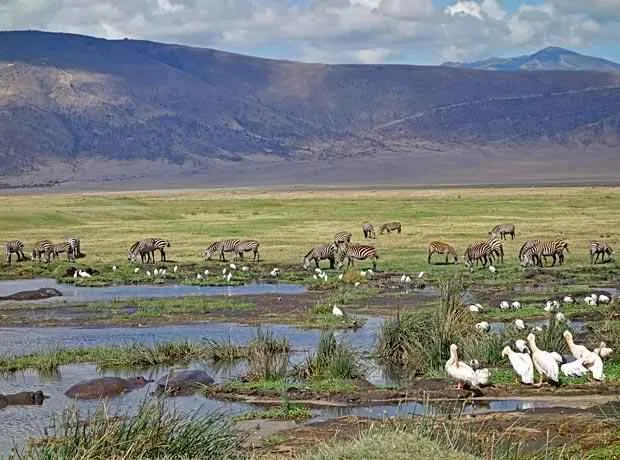
Leave early for the crater access road. The descent brings you to grassland, forest patches and wetlands in a relatively compact area. Depending on conditions you may encounter buffalo, zebra, hippo, lions and other wildlife; black rhinos are present but should never be treated as a promised sighting. Your guide keeps to designated roads and works within the conservation area's access rules.
After the crater visit and lunch, drive towards Arusha for your agreed drop-off. This is a full final day with an early start and a substantial return journey, so do not plan an early international flight or a very tight airport connection. An extra night in Arusha is a sensible choice if your departure schedule leaves little room for delays.
End of safari: Arusha. An airport transfer or extra hotel night is included only if stated in the quote.
Why leave Lake Manyara out?
Six days may sound generous until you look at the road map. Tarangire and Ngorongoro each deserve proper time, while getting to Serengeti and back takes much of two days. To add Lake Manyara to this exact schedule, you would usually have to shorten a park visit, move a night, or accept more rushing.
If your priority is elephants and time around the big cats of central Serengeti, the three-park version is the stronger fit. Travelers keen on Lake Manyara's groundwater forest or birdlife can ask us to rearrange the route. You can also compare broader choices on our six-day Tanzania safari packages page.
When this itinerary works best
You can travel on this route throughout the year, but conditions change what you are likely to see and how the roads feel. The itinerary remains centered on resident wildlife rather than a guaranteed migration event.
| Period | What changes on this route | Planning advice |
|---|---|---|
| June–October | Tarangire's dry-season river areas can attract large wildlife gatherings; roads are generally drier and popular camps are busier. | Book accommodation early, particularly for July–September travel. |
| January–March | Green-season scenery can be excellent. The main wildebeest calving concentration is generally farther south around the Ndutu area, not necessarily central Seronera. | If calving is your priority, ask for a southern-area variation before booking. |
| April–May | The long rains can bring lush scenery and fewer visitors, but muddy tracks and slower road travel are possible. | Allow flexibility and check camp operation and road conditions. |
| November–December | Short rains can change grass, water and wildlife distribution; conditions vary from year to year. | Choose camps based on the actual travel dates rather than a fixed migration chart. |
For more detail about the animals and habitats, see our Tarangire guide, Serengeti safari guide and Ngorongoro Crater guide.
Accommodation, transport and comfort
The first and last nights usually sit near the main road corridor between the parks, while the three Serengeti nights work best in a camp that suits the planned game-drive area. An inexpensive lodge far from the point where you want to drive may cost you time every morning. Before accepting a quote, check the locations as carefully as the room photos.
Ask whether the safari vehicle is private to your party, the number of seats with windows, and what type of roof is available for wildlife viewing. Confirm room arrangements for children, dietary requirements and the meal plan. For people who dislike long driving days, the better answer may be a longer trip or a flight connection, rather than expecting the road journey to become short.
What will a six-day safari from Arusha cost?
There is no honest single price for this page without a departure date, number of people and accommodation choice. A camp inside or near central Serengeti, a private vehicle for two people versus a larger party, and high-season availability can change the quote substantially. Capable Africa Tours will price your version of the route after confirming those details.
| Ask us to specify | Why it matters |
|---|---|
| Five named lodges or camp nights and room basis | Property location, room sharing and meal plan change both the cost and daily travel time. |
| Safari vehicle, guide and fuel | Confirm whether the vehicle is private and what local transfers are covered. |
| Park and conservation charges | Tarangire, Serengeti, Ngorongoro transit and crater descent-related fees should be itemized or expressly included. |
| Meals and drinking water | Check meals on pickup and final days, and how much water is provided. |
| Optional extras | Airport transfers, additional hotel nights, balloon flights, personal drinks and other activities may be extra. |
International flights, visas, travel insurance, gratuities and personal expenses are generally separate unless your particular quotation says otherwise. Check payment and cancellation terms before sending a deposit. The written itinerary and quotation determine the services you are buying, not an assumed list of inclusions on a general webpage.
Arriving in Tanzania and finishing the trip
For this version, the simplest start is to arrive in Arusha the day before Day 1. Kilimanjaro International Airport (JRO) is outside the town, so an international arrival followed immediately by the Tarangire drive can leave you with very little park time. If you are already staying in Moshi or landing at Arusha Airport (ARK), share your flight details and we can explain how the pickup affects the route.
On the final day, the crater descent and drive back to Arusha take priority. If you must catch a flight, send the departure airport and check-in time before confirming the safari. A different final-night arrangement, airport transfer or extra hotel night may be necessary. The eight-day safari from Arusha is also worth considering if you want a less compressed northern circuit.
Questions worth asking before you book
Does the six-day safari include two complete Serengeti game-drive days?
Yes, in the sample itinerary. Days 3 and 4 are set aside for game drives, while Days 2 and 5 are primarily transfer days with wildlife viewing possible along the route.
Will we go into Ngorongoro Crater on the way to Serengeti?
No. You cross the Ngorongoro Conservation Area on Day 2, but the crater-floor drive is planned for Day 6. Your quotation should show any transit and crater-related fees clearly.
Is this a Great Migration river-crossing safari?
Not specifically. The three-night plan focuses on central Serengeti. Northern river crossings or the southern calving season may need a different camp location, route and travel dates. No crossing can be guaranteed.
Can we start at Kilimanjaro Airport instead of an Arusha hotel?
Possibly, depending on your arrival time. A pre-safari night in Arusha is often more comfortable. Tell us the exact flight details so airport transfer and first-day park time can be assessed realistically.
Can you arrange the safari for a family or a private group?
Capable Africa Tours can discuss a private arrangement and suitable rooms or tents. Give us the ages of children, the preferred pace and any mobility needs so we can check whether the long transfer days are appropriate.
Do we need an extra night after the safari?
An extra Arusha night is advisable if your onward flight leaves early or has a tight check-in window. The crater-to-Arusha journey on Day 6 can run later than expected.
Book Now — Request Your Safari Reservation
Send your travel dates, number of adults and children, expected Arusha pickup point and preferred room standard. We will work out whether the five-night route is sensible for your group, identify suitable accommodation and provide a written quote with fees and services explained. If you would rather add Lake Manyara or avoid one of the long driving days, say so in your message.