
At a glance
The migration does not sit in one part of Serengeti all year. Herds move with available grazing and rainfall, which makes travel month the first thing to discuss before choosing a lodge. Southern plains and the wider Ndutu ecosystem often matter in the calving months; later in the year, other parts of the ecosystem may become more relevant. The southern Serengeti and Ndutu area are often relevant to the calving season, while western and northern sectors may matter at other times of year. The herds do not move on a fixed timetable, and a river crossing is never guaranteed. Compare packages by camp location, nights in the intended viewing area and road or flight access rather than by dramatic wildlife promises. Capable Africa Tours organises the agreed transport, guiding and accommodation for the seasonally chosen route.
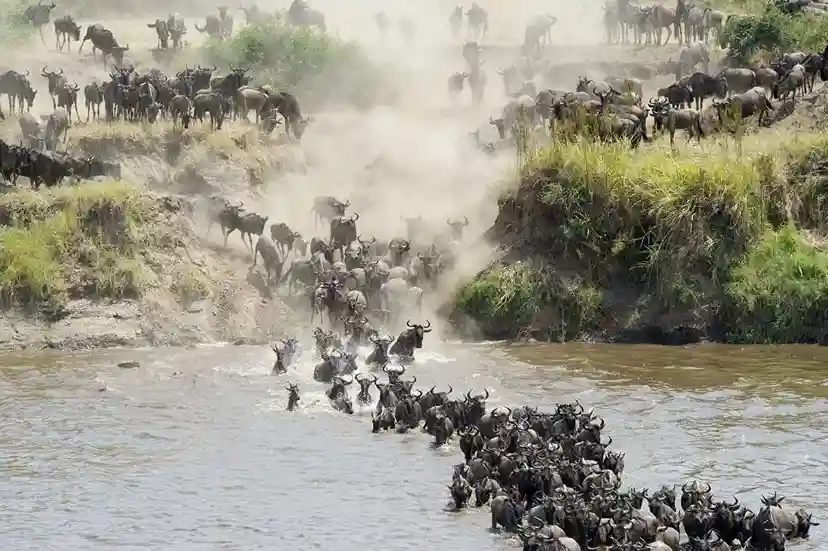
A package advertised as a 'crossing safari' should still explain how far the camp is from the river and how many mornings you can spend looking. Crossings happen on the animals' terms, not a tour timetable. It is possible to visit at a sensible time and not witness one; that does not mean the rest of the safari has failed.
A good migration package tells you which region you will actually sleep in and how many game-drive days you have there. It should not be built from a string of distant park names with a single hurried Serengeti night.
The shorter departure is outlined in our five-day seasonal safari alongside the six-day migration and crater safari. These are different ways to plan the same type of holiday; choose the one whose daily route matches your available days rather than relying only on the package name.

Planning this experience
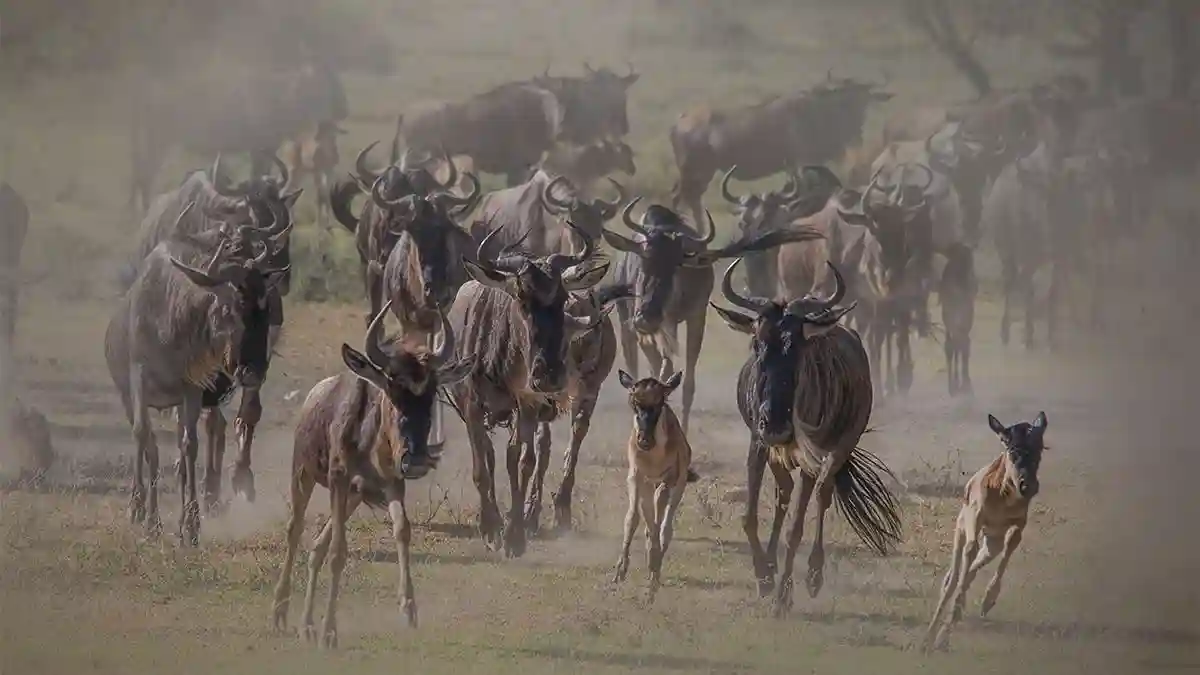
The great migration is a moving wildlife system, not a fixed daily show in one corner of Serengeti. Wildebeest and other grazing animals respond to rain and available grass across the greater ecosystem. Early-year southern plains and the Ndutu area may be important for calving; other areas become relevant as the herds move through the year. A migration itinerary should therefore identify the intended region and the number of nights there, rather than promising the same river crossing in every month. Even in a suitable season, the exact timing and location of a crossing are unpredictable.
Arrangements with Capable Africa Tours
Capable Africa Tours arranges the driver-guide, private or agreed shared safari vehicle, accommodation, national park and conservation-area arrangements and domestic flights when included in the itinerary. We discuss the travel month before recommending an area and explain why a camp that works for calving season may be inconvenient for northern Serengeti later in the year. These services are provided as specified in the confirmed itinerary.
A traveler with five days and one with eight days should not receive the same migration route with a different heading. Shorter trips need a tighter geographical focus; longer stays may allow repeated drives in the most relevant seasonal region. We never make a sighting guarantee, but we can make the chosen route and transfer time clear.
The migration through the year
The southern short-grass plains and Ndutu region can be important around the early-year calving months. Herds often move toward western routes as conditions change, and northern areas may become a key focus for later dry-season travel. Weather makes the timing variable. A lodge that suits the calving period may be far from where herds gather in a different season.
River crossings are unpredictable individual events, sometimes happening repeatedly and sometimes not while a traveler is present. We do not promise the date, crossing site or number of animals. Even several nights in one area do not guarantee that a crossing will take place while you are watching.
Crossing country needs enough time
Northern Serengeti is a long distance from Arusha by road. A short itinerary promising both an unhurried Ngorongoro Crater day and repeated northern river watches deserves careful scrutiny. A guest arriving from Arusha may spend much of the first day simply reaching the northern wildlife areas.
For guests with fewer days, a flight to an appropriate airstrip may preserve game-drive time. The quotation must show the actual flight routing, baggage allowance and ground transfer—not just the words “fly-in safari.” Sometimes paying for a suitable flight is more worthwhile than adding a distant park to an already tight road itinerary.
Which option fits your trip?
Below are the differences between a short Serengeti stay, a longer seasonal itinerary and a general wildlife safari. The correct choice depends on dates and how much time you are prepared to spend travelling between regions.
| Option | What it means |
|---|---|
| Roughly Dec–Mar | Southern plains / Ndutu can be relevant for grazing and calving |
| Roughly Apr–Jun | Movement through southern and western areas, influenced by rains |
| Roughly Jul–Oct | Northern Serengeti and river-country focus may be useful |
| Roughly Nov | Herds often begin returning south, but timing varies |
Ndutu and Serengeti are not the same administrative area
Ndutu belongs to the wider Serengeti ecosystem, and much of the main Ndutu wildlife area is within Ngorongoro Conservation Area rather than Serengeti National Park. That distinction matters for entry formalities and camp location. This also affects how the guide plans the driving route between the two wildlife areas.
If your chosen itinerary uses Ndutu and central Serengeti, confirm the overnight split and which conservation or park charges are included. Separate entry procedures or charges can apply, which is why the final itinerary should distinguish the locations.
Wildlife beyond the wildebeest
Even when herds are distant, Serengeti offers varied resident wildlife, including big cats, antelope, elephants and rich birdlife. Guides can use that flexibility to make the most of uncertain migration positions. A safari can still be rewarding when migration herds are beyond easy driving range.
Some photographers prefer to stay with a single pride or family of cheetahs for a while rather than chase reports around the park. Tell us whether you value sightings, behavior or photography so we can propose an appropriate pace. If you care most about behavior, an unhurried sighting may be worth more than crossing the park for a distant herd report.

What is included and what should be checked?
The quotation for this safari should make clear what is paid for in the main price and what remains optional. Regional camp placement and internal flights, when used, can change the total substantially.
Usually arranged when quoted
- Vehicle, fuel and driver-guide on the transport basis specified in your itinerary
- Accommodation and meal plan named in the final trip details
- Park and conservation charges explicitly listed in your quotation
- Scheduled airport or lodge transfers only where shown
Commonly separate
- International flights, entry visas and insurance
- Domestic flight sectors unless the quotation includes them
- Tips, drinks and personal spending unless stated
- Optional activities, additional accommodation and unlisted services
The time and location of herd movement vary from year to year. A good seasonal choice accounts for the local road network and does not promise a river crossing.
Questions travelers ask
Can you guarantee a Mara River crossing?
No. No responsible operator can guarantee a wildlife crossing.
Is Ndutu inside Serengeti National Park?
Much of the Ndutu safari zone is within Ngorongoro Conservation Area and the wider ecosystem.
What length is best for a migration safari?
It depends on region and transport. Five to seven days gives greater flexibility than a hurried two- or three-day road circuit.
Does “migration safari” mean there will be big herds at our camp?
Not necessarily. Camps and animal positions change; the itinerary must be designed for the month.
Plan around your travel dates
The first useful detail is when you plan to travel. After that, tell us how long you can spend in Serengeti and whether you would consider a flight to a suitable airstrip. This lets us choose a sensible wildlife region rather than selling the same migration camp to travelers arriving in different months.
You can also compare this route with the five-day migration plan or the six-day migration itinerary. The best choice depends on how much time you have and what matters most on your trip.
Enquire about this trip
Give us your month and the wildlife experience that interests you most. We will discuss a realistic region and explain what cannot be guaranteed before you make a decision.