
6-Day Serengeti and Ngorongoro Crater Safari
First count how nights you will stay. Then count the number of parks you will visit. This six-day road safari includes two nights in the Serengeti, two near Ngorongoro Crater and one in Arusha, plus game drives in both wildlife areas. You will have a day roaming the Serengeti plains. Another day exploring the crater itself. The drive, to the Serengeti takes a time. You do not have to change camps every morning.
Ask About This SafariWhat does this six-day safari include?
This six-day safari includes your arrival in Arusha. Ends, on Day 6 when you return to Arusha. You will stay overnight in Arusha, the Serengeti and the Karatu or Ngorongoro highlands. This trip is perfect if your main goals are to see the Serengeti and the crater. It is not the choice if you also want to visit Tarangire, Lake Manyara or the northern Serengeti within the same six days.
What matters most is where the two Serengeti nights are located. A camp near Seronera is good for wildlife viewing. It is not close to the Mara River crossings in the north or the calving grounds in the south. Capable Africa Tours can choose the camp and driving route for your travel month instead of using the same camp every season.

The six days cover the time from when you arrive to when you return.
This itinerary follows the road through Karatu and the Ngorongoro highlands. This itinerary does not include a flight. Driving times are estimates. Driving times may change depending on the camp you choose the road conditions and the stops you make.
Day 1. Arrival in Arusha
Your driver will meet you at Kilimanjaro International Airport or at Arusha Airport, whichever you are flying into. From Kilimanjaro Airport the transfer to Arusha is normal so if you arrive late you may reach the hotel after dinner. A hotel night is part of the six days to keep you from having to start driving after a flight.
After you check in you have time to eat and rest. If you arrive early your guide can show you the route and arrange luggage for the morning. If you are already, in Arusha and have paid for a hotel night the itinerary could start with a departure instead; that would be a six‑day plan.
Overnight: Arusha.
Day 2. Arusha to the Serengeti
After breakfast the road heads west past Karatu. It climbs into the Ngorongoro highlands. From there the journey continues across the plains toward Naabi Hill Gate and into the Serengeti. The scenery shifts from settled farmland to open grassland..
Plan for seven to nine hours to drive from Arusha to a Serengeti camp and sometimes longer. This estimate includes stops for checkpoints, paperwork and meals. It is not a guaranteed arrival time. You might spot wildlife on the way into the Serengeti as you approach the camp. The amount of game you see depends on when you arrive in the park and how close your camp's to the road.
Tonight you sleep in the Serengeti after driving. That is what makes the day worthwhile: you wake up next to the wildlife area, with no park transfer needed.
Overnight: Central Serengeti lodge.
Day 3. A day in Serengeti
There is no need to rush to another park today. I can start early. I will spend time around the Seronera region, where river edges, kopjes, woodland and grassland offer spots to see animals. The guide may pause beside a pride of lions. I will wait near a stretch of woodland where a leopard has been seen. Sometimes the best sighting is the one you stay with not the report on the radio.
Lunch may be packed for the drive. I will bring it back to camp depending on my accommodation and pace. For photographers the direction of light and the time you can wait for an animal are as important, as the distance covered. Animals move freely; cheetah, leopard and black rhino are possible but they are not guaranteed sightings.
I return to the camp for dinner. Not moving my luggage today lets me focus on the part of the trip I came for.
Overnight: Central Serengeti, night.
On Day 4
On this day you begin your journey from the Serengeti to the Ngorongoro highlands. You might have some time to spot wildlife in the morning before leaving the Serengeti. The route takes you back through the conservation area. Your destination is a lodge in Karatu How much of the morning you can drive depends on the roads the weather and the gate rules.
Overnight: Karatu
Day 5. Down into Ngorongoro Crater
Leave for the crater after breakfast. The descent takes you from the highlands to grassland, lake edges and patches of woodland on the crater floor. Zebras, wildebeest and buffalo are sights and lions, hippos and many birds also add to the appeal. Black rhinos live in the conservation area. Finding one during a visit is far from guaranteed.
The crater is not a drive. Permitted routes are allowed. Follow the entry and exit rules. Your guide will plan the day around these rules even scheduling a lunch stop in an approved area. This dedicated visit is why the itinerary keeps you near Ngorongoro for two nights of leaving for Arusha right after the descent.
Return to your highlands lodge after the game drive. The evening is yours to rest before the trip to Arusha.
Overnight: Ngorongoro highlands, night.
Day 6. Karatu to Arusha. Continue traveling
After having breakfast start your trip to Arusha. Your last stop can be at a hotel in Arusha, Arusha Airport or Kilimanjaro International Airport. These are not places to stay so make sure that the pickup and return plans match the flights that you have booked.
If your flight from another country leaves early in the morning and you are coming back from the highlands on the same day the schedule might be too tight. In this situation staying one night to the airport or changing the plans for Day 5 is a good choice.
The schedule ends with the transfer that you have arranged. There will be no game drive, on the day you are leaving.
Overnight: Not covered after Day 6.
Serengeti, Ngorongoro and camp surroundings
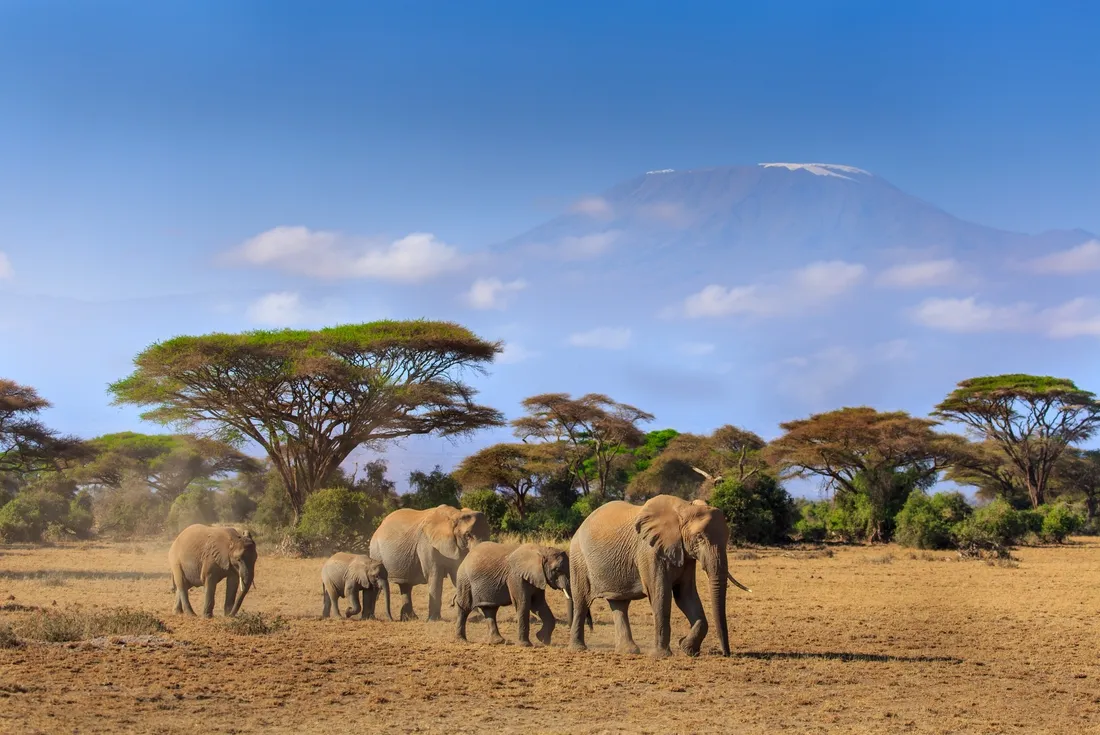
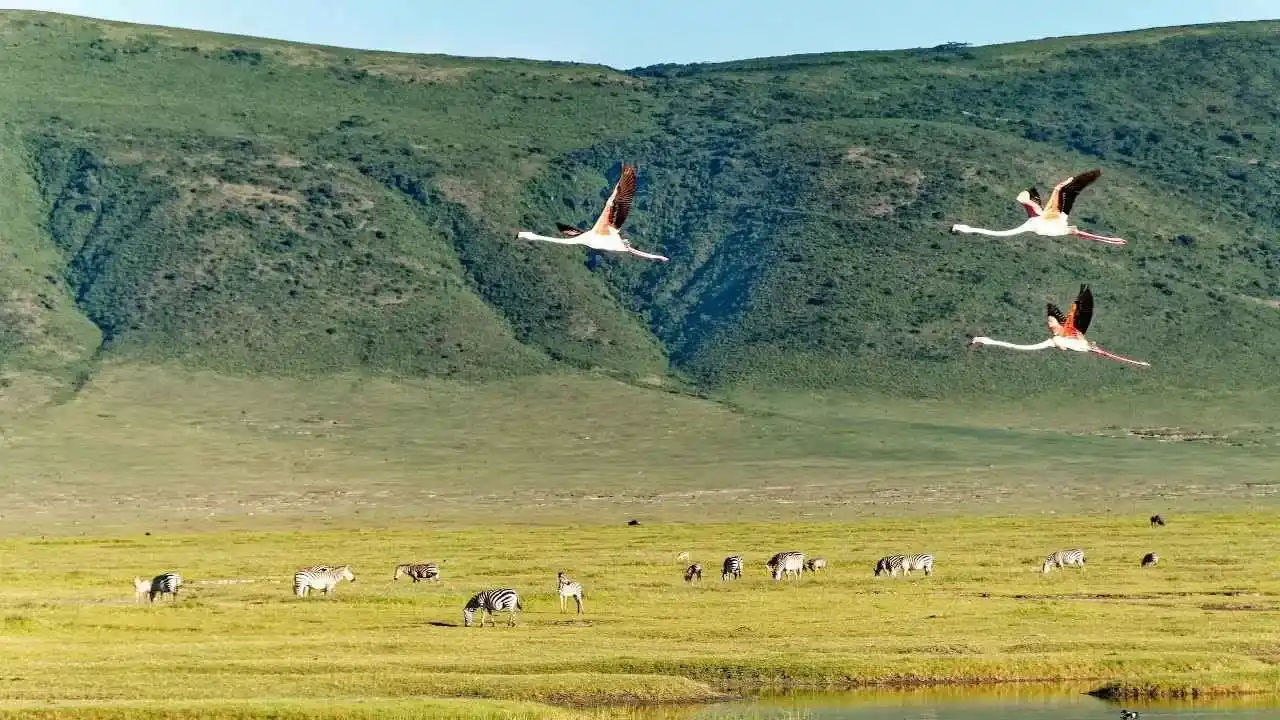
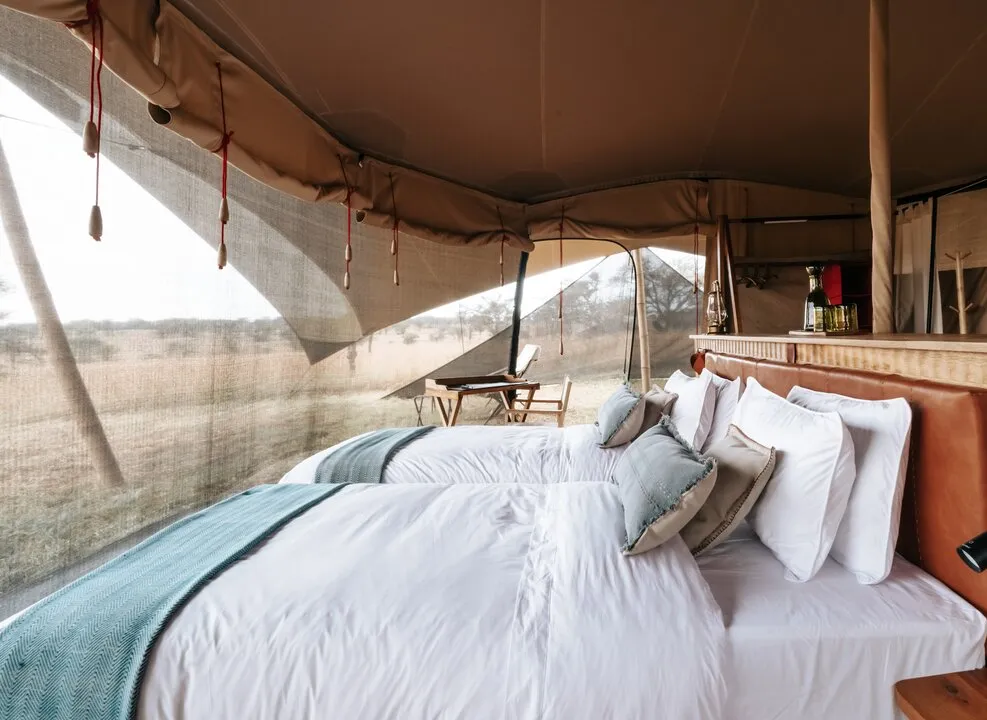
What are the wildlife differences, between Serengeti and Ngorongoro?
Serengeti is a park. UNESCO says Serengeti covers 1,476,300 hectares or 14,763 square kilometres. No guide can cover Serengeti in two nights. The advantage of staying around Seronera is that you can visit Serengeti habitats without spending most of your day trying to reach Serengeti edge. Resident wildlife in Serengeti includes giraffe, elephant, buffalo, lion and many antelope species. The exact sightings in Serengeti on any day depend on season and animal movement.
Ngorongoro feels different. The Ngorongoro crater floor has grassland and wetland that attract grazing animals and birds. You can find species in one drive. It would be misleading to promise a rhino or all five of the called Big Five in Ngorongoro. The crater visit also follows conservation‑area vehicle rules, unlike a drive, around Serengeti.
A migration‑focused safari is another matter. Wildebeest herds move through the ecosystem; their whereabouts are not fixed to one park entrance or one month. If you want a northern river crossing discuss a Serengeti camp and more nights there than booking this route just because the words Great Migration appear in a description.
Which travel months suit this route?
This route works all year for a safari that focuses on animals and the crater. Rain changes how the plains look. Rain also changes roads and the places where grazing herds move. The table below is a guide for planning, not a schedule for spotting animals.
| Months | What to expect | Planning consequence |
|---|---|---|
| June–October | Often drier with brief periods and cooler mornings. | Book your camp; northern migration interest may call for a base. |
| November–December | Short rains can arrive; fresh growth may change wildlife movements. | Keep routes. Allow for roads after rain. |
| January–March | Southern plains and Ndutu are relevant to the calving season. If calving is the aim compare the itinerary with this itinerary. | |
| April–May | Longer rains are more likely during April–May. Some access roads and seasonal camps may be affected by rain. Choose accommodation that has confirmed access and leave room for changes in the weather. |
It is worth checking where the camp sits on a map. The word "Serengeti" alone is not a location for planning a wildlife trip.
Does the location of your lodge change the safari?
Yes the location often changes more than the room type. A Serengeti camp that is close to the chosen game‑drive area means the morning starts with wildlife in an area. In the highlands a lodge near the crater entrance can save some driving while Karatu offers a choice of properties and prices. The cheapest room is not always the best once you factor in travel time and conservation fees.
| Location | Main advantage | Trade‑off |
|---|---|---|
| Central Serengeti / Seronera area | A base for general Serengeti wildlife viewing from some seasonal migration concentrations | |
| Karatu | More accommodation choice and often better value | Earlier. Additional driving for the crater |
| Ngorongoro highlands near the rim | Shorter access to the descent | Higher lodge costs and conservation‑area charging implications |
Capable Africa Tours can suggest named lodges when you give dates and an accommodation budget. These are proposed stays until availability is checked; a reservation is not confirmed by this description.
Is it worth flying one way?
For travellers who dislike drives a scheduled flight to or, from a Serengeti airstrip can make a difference. The flight may save time for watching animals. It will change the route, cost, luggage limits and sometimes the camp that makes sense. The route described here uses a vehicle all the way; a flight is a transport arrangement that needs its quotation.
A private 4×4 is useful if the party wants to stop for photographs or to adjust its pace. A shared departure can lower the cost for travellers. The group follows one agreed timetable. Neither is automatically better. If travelling with children an older guest or someone who needs breaks inform the consultant before the vehicle is selected.
How is the price of this six-day safari worked out?
The price of a six-day safari is based on the dates you choose and the actual accommodation that is available. The cost per person can vary depending on how many people share the vehicle. For example when two guests share a vehicle the cost is split differently than when four or six guests share it. This affects the vehicle and guide charges. Lodge rates also change depending on the season. Peak times mean prices.
Here is a breakdown of the cost components. What affects them:
| Part of the cost | What affects the amount |
|---|---|
| Vehicle and guide shared arrangement, number of guests and fuel for the two transfers | The number of guests sharing the vehicle and the fuel used for transfers affect the cost. |
| Accommodation | The number of nights (five) where the lodge is located the room type, the meal plan and the time of year you travel all influence the price. |
| Park and conservation fees | Entry fees for Serengeti, Ngorongoro transit and the crater descent vehicle charges are included. These vary by season and park. |
| Arrival and departure transfers | Costs depend on airport details, arrival and departure times and where you need to be dropped off. |
What is included in the proposed package?
The standard package includes the vehicle and driver-guide for five nights of game drives the park-related fees listed in the quotation and meals as per the lodge or camp plan. Airport pickup and drop-off are included if flight details are provided. Drinking water during drives should be clearly mentioned.
International flights, visas, travel insurance, tips and personal purchases are not included. Balloon flights, drinks, extra hotel nights and domestic flights are not part of the road itinerary unless added. A family room, a room or a luxury camp can also change the price.
If an offer says "all-inclusive " the written list of services matters more than the label. Capable Africa Tours will clearly state what is included and excluded in the quotation.
If someone in your group needs a child seat, special meals, mobility assistance or a place to charge equipment let us know when you book. These details affect which safari vehicle and lodges can be arranged. On game drives follow the guides directions. Stay in the vehicle unless a stop is allowed and give wildlife plenty of space.
You can also look at our Tanzania safari packages and Serengeti tours to see routes. These options help you choose the journey. They do not mean every traveller must take a trip.
Questions travellers ask about the arrangements
Can the guide adapt the route during the safari?
Yes, within the agreed itinerary and park rules. Your guide can change the game-drive route for weather, road conditions or wildlife activity. A different overnight stop or an extra park may require new permits and additional costs.
Can we book meals? Explain a food allergy?
Yes. Share meal preferences and any food allergies before the accommodation is booked. Capable Africa Tours can pass these details to the selected lodges and camps, but the kitchen must confirm what it can prepare safely. Mention any serious allergy and the precautions required.
Do we need bags for the 4×4?
Soft-sided bags are usually easier to store in a safari 4×4, especially when several guests share the vehicle. Ask how much luggage space is available before bringing a large suitcase. If you add a domestic flight, its airline baggage limits apply separately.
Is the trip suitable for guests with mobility?
It depends on the person's mobility and the vehicle and lodge chosen. Safari roads can be rough, and getting into a 4×4 may require a step up. Explain any need for wheelchair access, help boarding or an accessible bathroom in advance so each arrangement can be checked; accessibility is not guaranteed.
Can a balloon safari be added in Serengeti?
It may be possible, subject to the balloon operator's availability, launch area and weather. Balloon safaris normally leave very early and cost extra. Confirm the camp location and timing before adding one, especially if you are due to leave Serengeti that morning.
Is this the safari for your six days?
Choose this route see Serengeti and Ngorongoro without adding another park. It gives you a day in each place and a stop on the way. If your main goal is a river crossing, a calving-season trip or fewer hours in the vehicle a different camp or a flight might be value.