
What to expect on the seven-day Machame Route
The seven-day Machame Route is a camping climb on Mount Kilimanjaro that starts at Machame Gate and finishes at Mweka Gate. You begin on a forest trail, reach the Shira Plateau and walk across the southern side of the mountain through the Lava Tower area, Barranco and Karanga before the final climb towards Barafu. The scenery changes quickly, but so do the altitude and the demands on your body.
The seventh day on this schedule is not an extra sightseeing day. The route includes a night at Karanga Camp after the Barranco Wall, which separates that stage from the walk to Barafu. This gives you a less rushed approach to the summit camp and another night to adjust. Summit night is cold and physically demanding, followed by a long descent to Mweka Camp if conditions allow. The following day takes you down to the exit gate.
Capable Africa Tours arranges the mountain guide, support crew, camping equipment and meals listed in the agreed climbing package. Before booking, ask about your tent setup, the guide-to-climber arrangement, hotel nights and how the team responds if altitude sickness develops.
For a closer look at the camps and southern circuit, read the Machame route overview. If you have an additional mountain day and prefer a western approach, compare the eight-day Lemosho alternative rather than assuming the routes are identical.
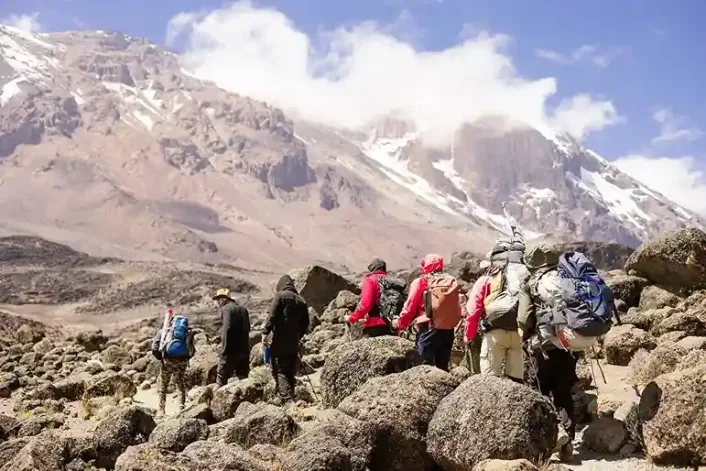
Why seven days instead of six?
Machame changes character as you climb. You leave wet forest, reach the broad Shira landscape, descend to Barranco after the Lava Tower area and later cross the steep Barranco Wall. The camps have basic facilities, and the warmest tent is no substitute for appropriate clothing or telling the guide when you feel unwell.
A “seven-day Machame package” should mean seven trekking days. If the price also includes airport transfer and hotel nights, those should be shown separately rather than inserted into the mountain itinerary to reach the advertised total.
Life at camp: what travelers actually need to know
Machame is camping from the first mountain night to the last. The crew normally sets up sleeping and dining facilities, with details depending on the package. Temperatures drop as altitude rises; bring a good sleeping bag, insulated layers, waterproof shell and warm socks.
Facilities are basic and waste must be managed responsibly. Ask whether a portable toilet is included or if park facilities are used. A comfortable tent helps, but acclimatization and hydration require just as much attention.
Day-by-day itinerary
There is no airport arrival counted in these seven mountain days. Day 6 includes a summit attempt and a long descent if conditions permit. Day 7 finishes at the gate. Many trekkers appreciate an overnight in Moshi before flying home rather than trying to race from the gate to an international departure.
Day 1 — Machame Gate to Machame Camp
Register with park authorities and walk through rainforest. Trails may be wet, and it is useful to start at a steady pace. Allow time for registration and the crew's organisation at the gate. The first trail climbs through humid forest, so a waterproof jacket and a sensible walking pace matter from the outset.
Day 2 — Machame Camp to Shira Camp
Climb above the forest onto the Shira Plateau. Expect changing weather and cooler evenings. Once you leave the taller forest, sun and wind can change quickly. The plateau often feels more exposed than the previous day and the evening at camp can be unexpectedly cold.
Day 3 — Shira to Barranco via Lava Tower
Pass into higher terrain around the Lava Tower area before dropping to Barranco for the night. This is a key altitude-management day. Going higher during the day and sleeping lower at Barranco is one part of the planned acclimatization approach. You still need to report headaches, nausea or unusual fatigue rather than assuming they are harmless.
Day 4 — Barranco to Karanga
Cross the Barranco Wall in the morning and continue to Karanga. The camp allows a separate overnight before Barafu. The Barranco Wall involves rocky steps and places where hands help with balance. There is no need to rush other groups; the separate Karanga overnight is intended to make the next section more manageable.
Day 5 — Karanga to Barafu
Make the relatively short climb to Barafu, check equipment and rest ahead of the summit attempt. This is the place to check headtorch batteries, gloves and warm layers. Resting well is more useful than spending the afternoon walking around camp when the overnight summit departure is close.
Day 6 — Barafu to Uhuru Peak and down to Mweka
Attempt the summit when guides judge conditions safe. Descend to Mweka camp afterward. Summit day can be the longest and coldest part of the trek. If you are fit to continue, there is still a substantial descent to a lower camp after the attempt; keep some energy in reserve.
Day 7 — Mweka to Mweka Gate
Complete the forest descent, sign out and drive back to Moshi. You will pass back into forest as the altitude drops. Many climbers feel tired and want a shower and a proper meal, which is one reason to plan a Moshi hotel night after the gate.
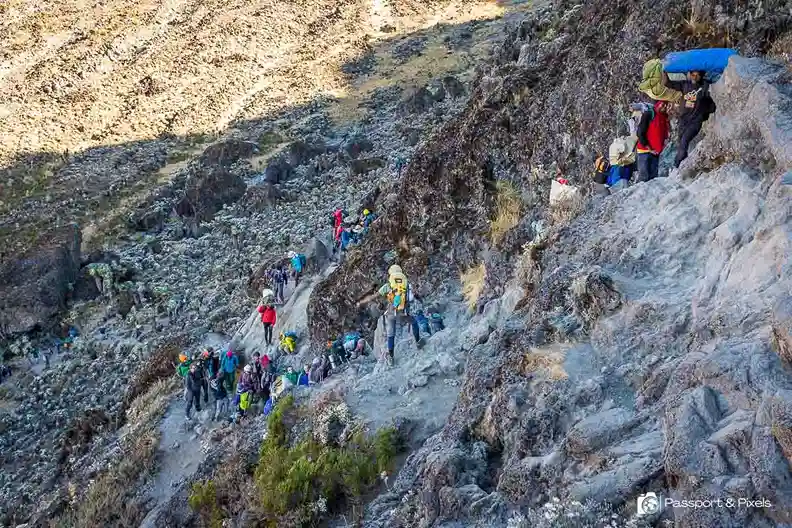
What happens at the Barranco Wall?
Barranco Wall is a steep rocky section where trekkers use their hands in a few places for balance. Guides choose the line and help groups move past narrow sections. It is not a technical rock climb on the usual trail, but people uncomfortable with exposure should know about it before booking. The walk continues towards Karanga after the wall. On this seven-day itinerary, Karanga is a separate overnight stop before the journey to Barafu.
It is a mistake to spend the day trying to race to camp. The next section toward Karanga and the higher Barafu camp is part of the same gradual preparation for summit night.
Summit attempt and descent planning
Summit night starts in the dark on many scheduled trips, and the cold, wind and altitude can slow the group. Turning around is sometimes the right choice. After the summit attempt, the descent to a lower camp can feel unusually long on tired legs.
Do not schedule an immediate same-evening international flight after the final gate day. An extra hotel night provides a buffer for fatigue, gear and transfers.


What is included, and what needs checking?
Included in the proposed package
- Professional mountain guides, cook and porter team as stated
- Camping accommodation and meals during the seven trekking days
- Park fees and transport listed in the booking
Normally separate unless added
- International flights and high-altitude medical insurance
- Sleeping bag, personal equipment, optional rental and tips
- Pre-/post-climb hotels unless in the written quote
Karanga is a separate overnight on the seven-day itinerary described here.
Questions worth asking before booking
Is the first day an airport arrival day?
No. In this seven-day trekking outline, Day 1 starts at Machame Gate. Arrival and hotel nights are separate.
Does the route go through Barranco Wall?
Yes. The usual seven-day Machame itinerary includes the Barranco Wall before Karanga camp.
What is the sleeping arrangement?
Mountain nights are in tents; private or shared tent occupancy depends on your quotation.
Will I summit on Day 6?
That is the planned summit attempt day on this outline, but the guide may change or cancel the attempt for safety.
Request the 7-Day Machame Climb
Share your trekking month, prior altitude experience and any concerns about exposed rocky sections. We can explain the Barranco Wall, camp facilities and what your mountain package includes before you decide.