
Kilimanjaro Charity Climbs – Fundraising Trek Planning
A Kilimanjaro charity climb combines a normal guided mountain trek with a separate fundraising goal. The climb still needs proper route planning, acclimatization, equipment and park logistics, while the charity side needs a named beneficiary, transparent donation handling and clear reporting to supporters.
Plan a Charity ClimbKilimanjaro Charity Climb Essentials
- Mountain: Mount Kilimanjaro, Tanzania
- Highest point: Uhuru Peak, 5,895 m
- Charity model: Keep travel costs and donations clearly separate
- Suitable groups: Charities, schools, clubs, companies, churches and NGOs
- Route choice: Based on group needs, not “record-breaking” marketing
- Key rule: Do not promise fundraising totals or summit outcomes before they happen
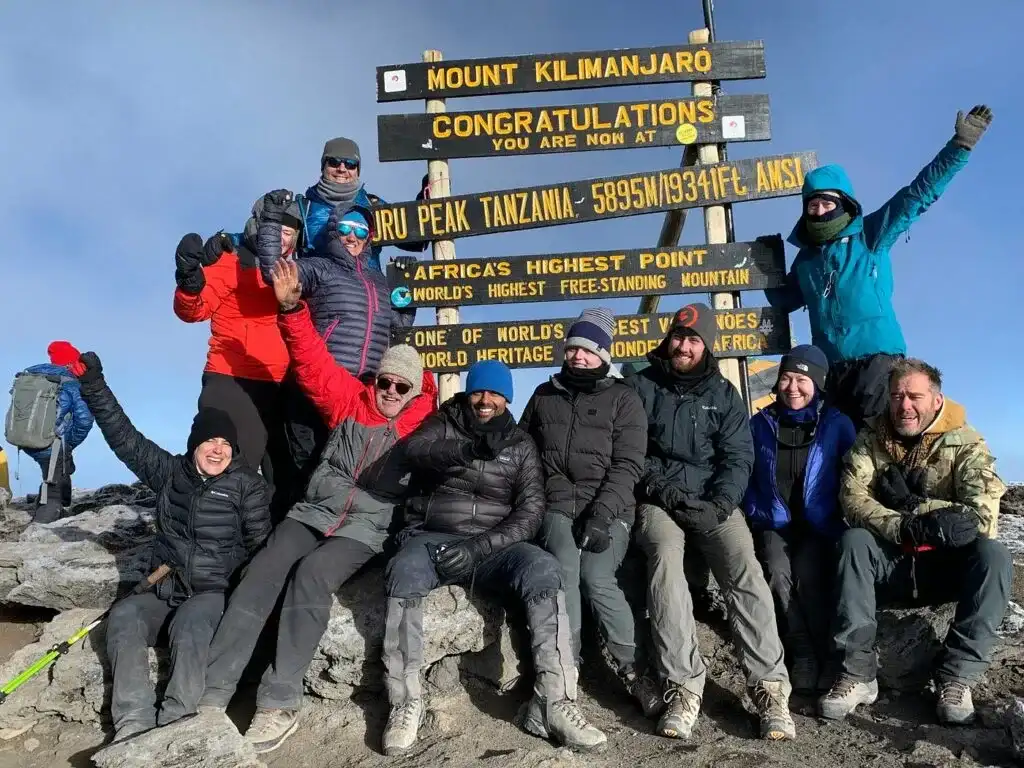
What Is a Kilimanjaro Charity Climb?
A charity climb is a standard Kilimanjaro expedition where the participants also raise money or awareness for a chosen cause. The mountain operation and the fundraising campaign are related, but they should not be treated as the same transaction.
The tour operator arranges the climb: route, guides, crew, accommodation on the mountain, meals, transfers and the services written into the final quotation. The charity or fundraising organizer should control how donations are collected and passed to the beneficiary.
Start With the Beneficiary
Before announcing the climb, decide exactly who the fundraising supports. Name the charity, school, medical project, conservation organization or community initiative rather than using a vague phrase such as “helping local people.”
If the beneficiary is a registered organization, donors should be able to see its official details. For a smaller project, explain who receives the funds, who controls the account and how the final use of the money will be reported.
Keep Trip Payments and Donations Separate
The price paid for the Kilimanjaro climb should be shown as a travel cost. Donations should be shown as donations.
A clear setup is for each participant to pay the confirmed mountain package under the booking terms, while fundraising contributions go directly to the charity's donation page or approved fundraising account.
This avoids confusion over whether a donor's money is paying for hotels, park services or transport.
Choosing a Route for a Charity Group
A charity team does not need a special “record-breaking” route. It needs a route that suits the group's time, experience and accommodation preference.
- Machame: popular camping route with varied scenery and common seven-day itineraries.
- Lemosho: longer western approach with more mountain days available.
- Marangu: shared hut accommodation rather than tents.
- Rongai: northern approach with quieter early stages.
- Northern Circuit: long itinerary for groups that can dedicate more days.
For a mixed-ability team, a less compressed itinerary is usually more useful than the cheapest option.
Set a Fundraising Target That Belongs to the Project
There is no standard amount every Kilimanjaro charity climber should raise. A school project may have a very different target from an international health charity.
The target should come from the beneficiary's real budget, the number of participants and the campaign audience. Avoid copying a fundraising amount from another expedition just because it sounds impressive.
Supporters understand a target better when it is connected to a clear purpose.
How to Build the Campaign
- Create one clear fundraising page.
- Name the beneficiary and explain why the group chose it.
- Explain what the target is intended to support.
- Introduce the climbers and their connection to the cause.
- Share training and preparation updates.
- Give donors one simple payment route.
- After the climb, publish the confirmed amount raised and next steps.
Do not describe money as “raised” until it has actually been received or confirmed by the fundraising platform.
The Charity Goal Does Not Change the Altitude
Uhuru Peak is 5,895 metres above sea level. Every participant still faces the normal challenges of altitude, cold, fatigue and long hiking days.
The cause should never pressure someone to continue when they are unwell. A climber who turns around for safety has not failed the charity.
Large Charity Groups Need More Logistics
A group of six and a group of thirty are different mountain operations. Larger teams require more crew, more tents or hut space, more meal planning and more transport coordination.
For a large team, smaller walking groups can make the mountain easier to manage. Faster and slower climbers can move at an appropriate pace without turning the expedition into a race.
Corporate, School and NGO Charity Climbs
Companies, schools, clubs, churches and NGOs often need more than the mountain itinerary. Useful planning can include coordinated airport arrivals, a private departure, group briefing, local accommodation, photography and post-climb transport.
Any public statement that an organization “partners” with a charity should only be used when that relationship has been confirmed by both sides.
Training for a Mixed-Ability Team
Rather than prescribing one fixed mileage target, the group should build consistent walking endurance over time.
- Regular walking or hiking
- Gradually longer weekend hikes
- Hill or stair sessions
- Basic leg and core strength work
- Practice with the boots and daypack to be used on the climb
- Recovery between harder sessions
Training improves hiking capacity. It does not guarantee acclimatization.
Charity Branding Should Not Replace Mountain Gear
Matching shirts and branded clothing can work well for photos, but they are not a substitute for waterproof layers, insulation, boots, gloves, headlamps and cold-weather equipment.
For a large team using rentals, confirm sizes and quantities well before arrival.
Do Not Build the Campaign Around a Summit Guarantee
A fundraising campaign can celebrate the attempt without promising that every climber will reach Uhuru Peak.
Weather, altitude response, illness and individual condition can change the outcome. The cause is supported by the effort and fundraising, not only by a summit photograph.
What Capable Africa Tours Can Arrange
Capable Africa Tours can organize the Kilimanjaro travel side of the charity climb. Depending on the confirmed package, this can include guides and crew, park arrangements, mountain accommodation, meals, gate transfers, briefing and local hotel nights.
If your organization already has its own charity or fundraising platform, we can build the mountain itinerary around your dates. We do not need to collect donor money to operate the climb.
What to Confirm Before Launching the Campaign
- Beneficiary name and legal status
- Donation platform or account
- Who controls the donated funds
- Fundraising target and its purpose
- Expected number of climbers
- Kilimanjaro route and mountain days
- Travel cost per participant
- Cancellation terms
- How updates will be shared with donors
- How the final amount raised will be reported
Planning the Climb Without Overpromising
A good charity climb does not need invented impact figures or record-breaking language. It needs a real beneficiary, transparent fundraising and a mountain plan that respects the group.
Send us your dates, participant numbers, preferred route and fundraising organization. We can focus on the Kilimanjaro logistics while the charity controls the donation side.
Planning a Kilimanjaro Charity Climb?
Send us the group size, travel dates and fundraising organization so we can prepare the mountain itinerary and local logistics.
Plan a Charity Climb