
Lake Chala Day Trip from Moshi: Crater Hike, Birdwatching & Kilimanjaro Views
Lake Chala is one of the most striking natural features in the Kilimanjaro region — a deep volcanic crater lake straddling the Tanzania–Kenya border, its surface sitting roughly 100 metres below the rim, surrounded by cliffs draped in forest. This day trip from Moshi puts you on the crater edge by mid-morning, takes you down to the lake on a guided hike, and has you back in town by late afternoon. It suits travellers who want something genuinely different from a game drive: physical, scenic, and locally informed.
Book This Day TripLake Chala Day Trip — Key Facts
- Duration: Full day — approximately 8–9 hours door to door
- Distance from Moshi: ~50 km, 1.5–2 hours each way
- Hike: 2–3 hours round-trip, rated moderate (steep in sections)
- Starting Price: From $130 per person (private tour)
- Best Season: June–October (dry season); January–February also reliable
- Main Activities: Guided crater hike, birdwatching, photography, optional canoeing
- Suitable For: Adults and children aged 10+, moderate fitness required
- Included: Transport, guide, lake entry fees, packed lunch, bottled water
What Is Lake Chala?
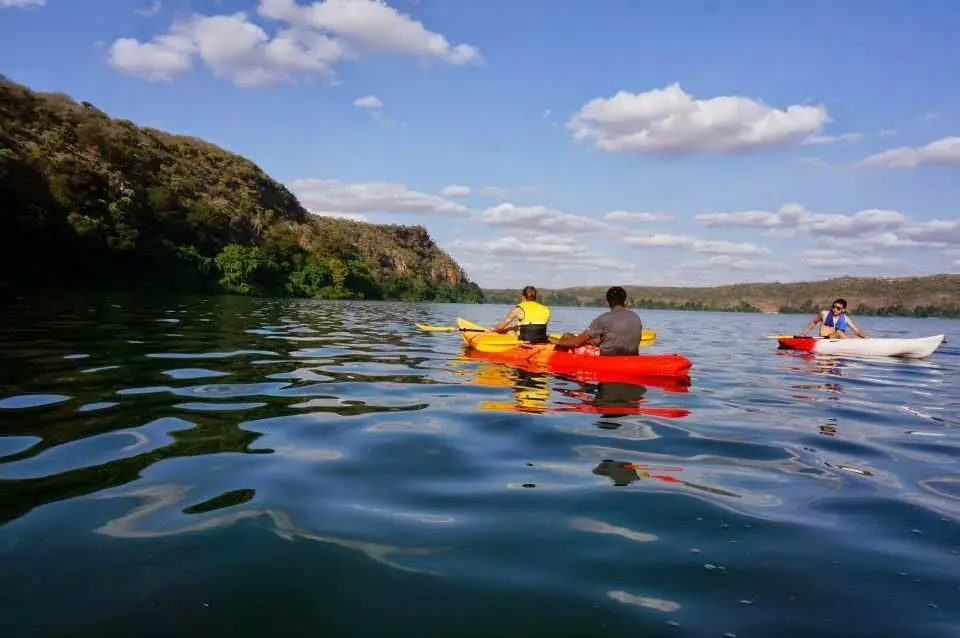
Lake Chala (also written as Lake Challa) is a volcanic crater lake on the southeastern slopes of Mount Kilimanjaro, sitting on the Tanzania–Kenya border close to the Tanzanian town of Holili. The lake formed over 250,000 years ago when volcanic activity created a deep caldera that filled with water from underground streams fed by Kilimanjaro's glaciers and rainfall. The lake surface is roughly 100 metres below the crater rim and covers about 4.2 km², with depths exceeding 90 metres in places — making it one of the deeper crater lakes in East Africa.
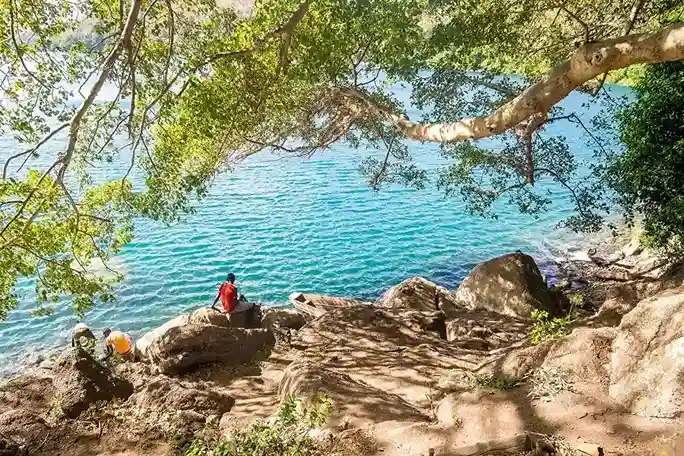
What makes Lake Chala distinct for visitors is the combination of its geology, colour, and remoteness. The water is a clear, deep blue-green — unusually clear because the lake has no surface inlet or outlet, just subsurface flow. The crater walls are steep and heavily vegetated, creating a contained, enclosed world that feels noticeably different from the open savannah landscapes most travellers associate with this region. On a clear morning, you are looking across the lake into Kenya while Kilimanjaro's flanks fill the sky behind you.
Why Do Travellers Choose the Lake Chala Day Trip from Moshi?
Most visitors to Moshi are here for Kilimanjaro. Lake Chala appeals to two groups: those who want a physically engaging day trip that does not require a multi-day commitment, and those with a rest day between a Kilimanjaro climb and their onward travel who want something more active than a town walk.
The lake is genuinely off most tourists' radar. Unlike Arusha's popular day excursions to Lake Manyara or Materuni, Lake Chala receives relatively few organised tour groups. Arriving at the crater rim, you are likely to have the trail largely to yourself. The hike involves real descent — steep enough to require attention on the way down and effort on the way back up — which means the lake feels earned when you reach it.
For birdwatchers, the lake is a serious destination. Over 100 species have been recorded in and around the crater, including the African fish eagle, pied kingfisher, malachite kingfisher, African darter, and a range of forest birds in the crater vegetation. The enclosed environment concentrates wildlife in a relatively small area, which makes sightings consistent even without specialist guiding.
We operate this trip from Moshi in a private 4WD vehicle with an English-speaking local guide who has been leading the crater trail for years. Groups are small by design — a maximum of ten people — and the itinerary is relaxed enough to spend proper time at the lake rather than rushing back to the vehicle.
Who This Day Trip Is Best For
- Kilimanjaro climbers with a spare day in Moshi — a structured outdoor day that does not require technical gear or multi-day planning.
- Couples and small groups wanting a quieter alternative to game parks — Lake Chala involves almost no other tourists and no vehicle queues.
- Birdwatchers — over 100 species recorded in the crater ecosystem, including several kingfisher species and the resident fish eagle pair.
- Photographers — the visual contrast between the enclosed green crater walls and the lake's surface, often with Kilimanjaro in the background, is genuinely distinctive.
- Travellers combining a safari with a Moshi stay — a half-day or full-day crater walk pairs well with a Northern Circuit safari itinerary beginning or ending in Moshi or Arusha.
Who This Day Trip May Not Suit
- Travellers with limited mobility — the crater descent is steep and on uneven ground.
- Those looking primarily for big game viewing — Lake Chala is not a game drive destination.
- Young children under 10 — the hike to the lake is manageable for older children but the descent is not suitable for very young ones.
Lake Chala Day Trip Itinerary — A Typical Day
Departure times and precise timings flex slightly depending on group size and pace, but below is what a standard day looks like.
7:00 AM — Pickup from Moshi Hotel
We collect you from your hotel or guesthouse in Moshi in a private 4WD vehicle. The drive to Lake Chala takes approximately 1.5 to 2 hours along the road toward the Kenya border. The route passes through the lower slopes of Kilimanjaro and banana-farming communities typical of this part of the Kilimanjaro Region. Your guide introduces the area's geology and the significance of the lake as you drive.
- Duration: ~1.5–2 hours driving
- Highlights: Lower Kilimanjaro landscapes, agricultural communities
- Refreshments: Bottled water provided
9:00–9:30 AM — Crater Rim Arrival & Orientation
On arrival at the crater access point, you step out to your first views of Lake Chala. On a clear morning the contrast — deep blue-green water 100 metres below, the crater walls rising around it, and Kilimanjaro's mass behind — tends to stop people in their tracks. Your guide gives a safety briefing and a short orientation on the lake's formation, the resident wildlife, and the route down.
- Duration: 20–30 minutes
- Highlights: First crater views, Kilimanjaro backdrop on clear days
9:30 AM–12:00 PM — Guided Crater Hike to the Lake
The hike from the rim to the lake's edge and back takes between 2 and 3 hours at a comfortable pace. The trail descends steeply through mixed vegetation before levelling out near the shoreline. Your guide identifies bird species along the route — kingfishers and darters are regularly visible from the water's edge — and points out the plant communities that characterise the crater ecosystem. The return ascent is the more demanding section; take your time and your guide will manage the pace.
- Distance: Approximately 3–4 km round-trip
- Difficulty: Moderate — steep descent and ascent on mixed terrain
- Highlights: Crater vegetation, lakeside bird activity, crater geology
12:00–1:30 PM — Lunch at the Lake & Optional Canoeing
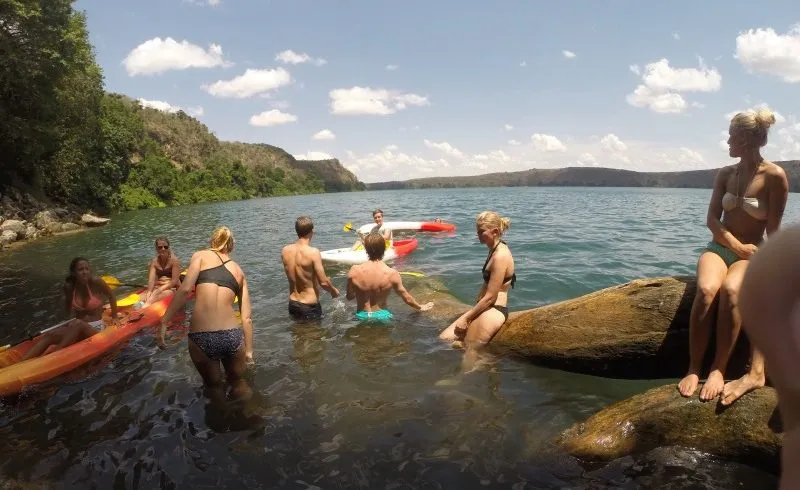
A packed lunch is served at the lake — either at the shoreline or at a rest area near the water, depending on conditions. This is also when optional guided canoeing is available. A canoe on the lake surface gives you a different perspective of the crater walls and puts you close to the bird activity on the water. Availability is seasonal and subject to conditions on the day; let us know in advance if you want to include this.
- Included: Packed lunch and bottled water
- Optional: Guided canoe ride (additional cost, subject to availability)
- Highlights: Lake-level crater views, close bird observation
1:30 PM — Return Ascent & Drive Back to Moshi
After lunch, begin the return ascent to the crater rim, which takes roughly 45 minutes to an hour depending on your pace. From the rim, a final look back across the lake before the drive to Moshi. You are typically back in town between 4:00 and 5:00 PM, with the rest of your evening free.
- Return ascent: ~45–60 minutes
- Arrival in Moshi: approximately 4:00–5:00 PM
Local Expert Tips for Lake Chala
- Go early in the dry season if Kilimanjaro views matter to you. June and July consistently produce the clearest mornings. By September, haze from agricultural burning can obscure the mountain even on otherwise fine days.
- The descent is faster than most people expect — and steeper. Wear closed-toe shoes with grip. Sandals and flip-flops are not suitable for this trail.
- Bring binoculars even if you are not a dedicated birdwatcher. The fish eagle pair that nests near the lake is reliably visible, and spotting them from the shore with binoculars is a highlight that would be missed otherwise.
- The dry season trail (June–October) is significantly more pleasant than the wet season. After heavy rain the crater path becomes muddy and difficult. If you are visiting in the shoulder months, check conditions with us before booking.
- Photography is best in the morning. By afternoon the light flattens and the lake's colour is less vivid. Plan your crater-level time for before 1:00 PM if photographs are a priority.
- Do not swim. The lake has a resident crocodile population, confirmed by local fishing communities and documented in ecological surveys. Canoeing on the surface with a guide is safe; entering the water is not.
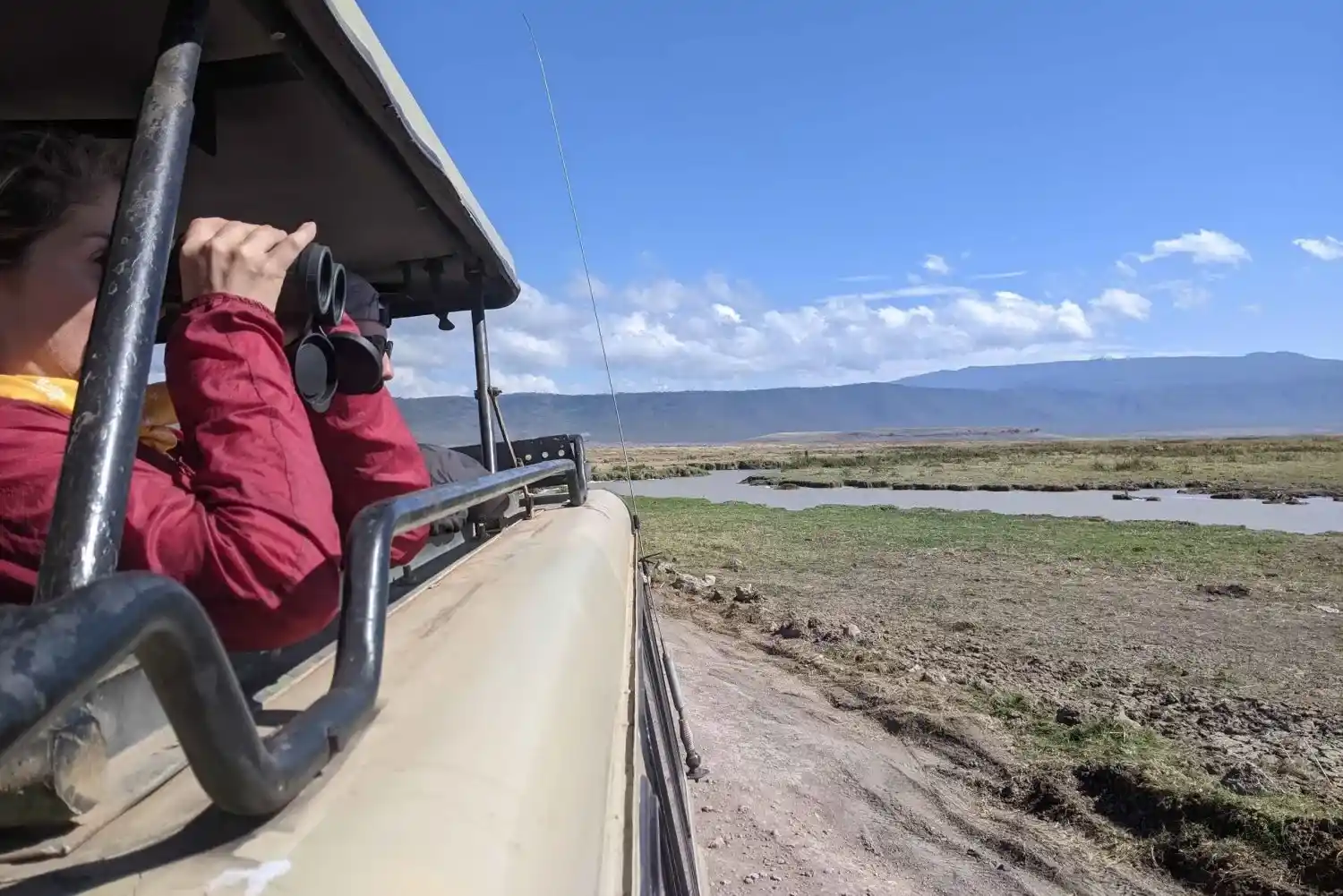
Lake Chala Day Trip — Photos from the Trail and Crater
Lake Chala Location — Map
Lake Chala is located approximately 50 km southeast of Moshi near the town of Holili, close to the Taveta border crossing into Kenya. The map below shows its position on the Kilimanjaro–Kenya border and relative to Moshi town.
Wildlife at Lake Chala — What to Expect
Lake Chala is primarily a birdwatching destination, though the crater supports a broader range of wildlife than most visitors anticipate.
Birds
Over 100 species have been recorded in and around the crater. The lake surface and shoreline are the most productive zones: African fish eagle (resident pair), pied kingfisher, malachite kingfisher, African darter, great white pelican (occasional), yellow-billed stork (seasonal), and African purple swamphen are among the regularly sighted waterbirds. The crater vegetation holds sunbirds, weavers, and a range of forest-edge species. Birding is good year-round but particularly active from October to April when migratory species pass through.
Mammals and Reptiles
Vervet monkeys and olive baboons are common in the crater vegetation and around the rim. Dik-dik and the occasional bushbuck have been seen on the lower slopes. Nile crocodiles are present in the lake — their population is small but confirmed — which is why swimming is not permitted. Monitor lizards are commonly seen on the rocky sections of the trail and near the shore.
A Note on Wildlife Expectations
Lake Chala is not a game reserve. The wildlife here is part of a functioning crater ecosystem rather than a managed park, which makes sightings feel more incidental and natural — but also means nothing is guaranteed. The bird activity at the water's edge is the most reliable component of any visit.
Best Time to Visit Lake Chala from Moshi
Lake Chala is open year-round, but conditions vary significantly by season.
- June–October (Long Dry Season): The best overall window. Clear skies, dry trails, reliable Kilimanjaro views on morning departures, and strong bird activity. July and August are peak Moshi visitor months so book ahead.
- January–February (Short Dry Season): Also reliable, with good trail conditions and bird activity picking up with early migrants. Less crowded than the main dry season.
- November–December (Short Rains): Light, intermittent showers. The crater trail can be muddy in sections but trips are still operable on most days. Birdwatching is very active during this period.
- March–May (Long Rains): The wet season. Heavy rain makes the crater descent slippery and less enjoyable. We still operate on dry days during this period, but conditions are unpredictable. Not the recommended window if you have flexibility.
What to Pack for the Lake Chala Day Trip
The hike involves a steep crater descent and ascent on mixed terrain, with time spent near water afterward. Pack for movement and sun exposure rather than cool temperatures — the crater sits at around 900 metres altitude and can be warm during the hike.
- Closed-toe hiking shoes with grip: The crater trail is steep and occasionally rocky. Running shoes are acceptable; sandals or flip-flops are not suitable.
- Light fleece or jacket: The early morning drive and the crater rim can be cool. The hike itself warms up quickly.
- Sunscreen (SPF 50+) and a wide-brimmed hat: The rim and the lower sections near the water offer limited shade during midday.
- Insect repellent (DEET-based): Useful near the water's edge, particularly in the afternoons.
- Binoculars (8x42 minimum): Essential for identifying birds on the lake surface and across the crater. A significant part of what makes this trip worthwhile is wasted without them.
- Camera with zoom capability: The fish eagle pair and kingfishers are active near the shore. A longer lens produces better results than a phone camera from the same distance.
- Small daypack: For carrying your jacket, water, camera, and binoculars on the hike. Hands-free is important on the steeper sections.
- Reusable water bottle: We provide bottled water, but a personal bottle for the hike itself is useful.
- Trekking poles (optional): Not required but genuinely helpful on the descent for anyone who finds steep downhill uncomfortable on the knees.
Lake Chala Day Trip from Moshi — Price
The Lake Chala day trip from Moshi starts from $130 per person for a private tour. Group bookings reduce the per-person cost; contact us for a group quote. The price covers everything you need for the day — transport, guide, fees, and food — with no hidden additions at the trailhead.
What Is Included
Round-trip transfers from your Moshi hotel, a private 4WD vehicle, a professional English-speaking guide, Lake Chala entry fees, guided hiking, and a packed lunch with bottled water throughout the day.
Optional Add-Ons
- Guided canoe ride on Lake Chala (seasonal, subject to availability — quoted on request)
- Maasai village cultural stop en route (from $30 pp)
- Combined Lake Chala and Materuni Waterfalls day trip — contact us for availability
Send us a WhatsApp message to confirm your date and receive a group price if applicable.
Lake Chala Day Trip — Price Inclusions & Exclusions
Price Inclusions
- Round-trip transfers from your Moshi hotel
- Private 4WD vehicle throughout
- Professional English-speaking guide
- Lake Chala entry and conservation fees
- Guided crater hike with wildlife and ecology interpretation
- Packed lunch and bottled water
Price Exclusions
- Optional guided canoeing (seasonal, quoted separately)
- Tips for guide (recommended: $5–10 per person, optional)
- Travel and medical insurance
- Personal purchases and souvenirs
- Alcoholic beverages
- Additional cultural stop fees if added
Book Your Lake Chala Day Trip from Moshi
Lake Chala works well as a standalone day out from Moshi or as a complement to a Kilimanjaro climb or Northern Circuit safari. If you are in the area and want a day that involves real terrain and something genuinely off the tourist trail, this is a well-run trip with good guiding and a destination that rewards the effort.
- Private group departure — no shared vehicles with strangers
- Local guide with years of experience on the crater trail
- Small group maximum (10 people) for a quieter experience
- Full day covered: transport, guide, entry, lunch, water
- Flexible dates — we operate this trip year-round on request
Availability for specific dates is limited — fill in the form below or send us a WhatsApp message to confirm your spot.
Book This Day TripBook Your Lake Chala Day Trip from Moshi
More Day Trips and Tours from Moshi
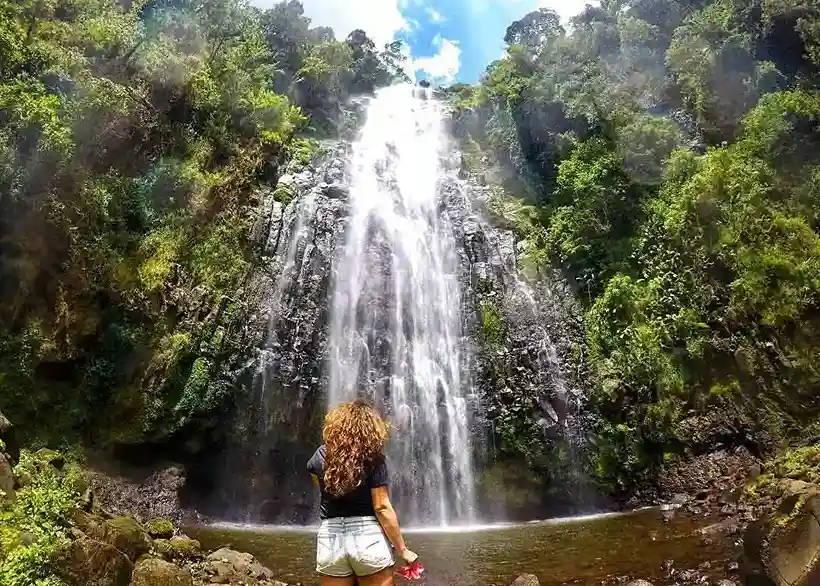
Materuni Waterfalls Day Trip
A guided walk through Chagga coffee farms on Kilimanjaro's lower slopes to the Materuni waterfall. Includes a coffee-making demonstration and lunch. Popular with travellers who have a day in Moshi before or after a climb.
View Day Trip →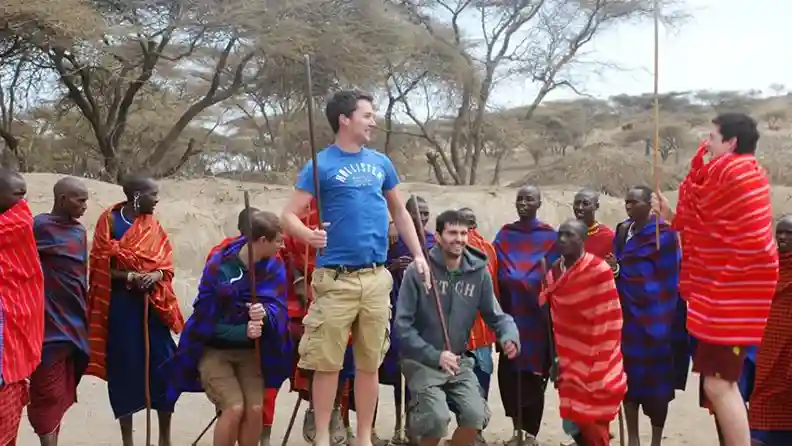
Maasai Village Cultural Tour from Moshi
A guided visit to a traditional Maasai boma near Moshi: community-led, with a local guide explaining homestead life, livestock traditions, and Maasai land use in the Kilimanjaro region.
View Day Trip →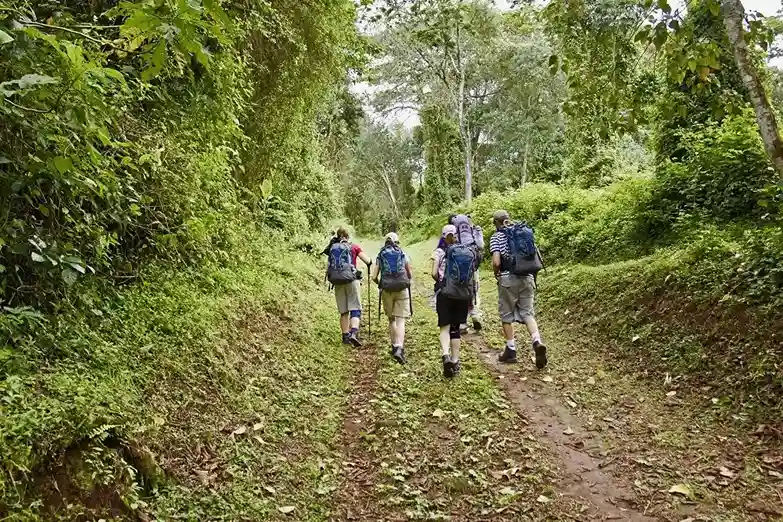
Kilimanjaro Lower Slopes Day Hike
A day hike into the Kilimanjaro National Park via the Marangu gate. Suitable for visitors who want to walk in the montane forest zone without committing to a summit climb. Good acclimatisation option for climbers arriving early.
View Day Hike →