Most Complete Cameroon Travel Guide 2026-2027 – Everything You Need to Know Before Visiting
This Cameroon travel guide provides everything you need to plan your journey to “Africa in miniature.” Cameroon offers an extraordinary blend of rainforests, savannahs, volcanic mountains, and Atlantic beaches that create one of the continent's most biodiverse and culturally rich travel experiences. Many travelers who want to travel to Cameroon are surprised by the country's incredible diversity and rich cultural heritage spanning over 250 ethnic groups, two official languages, and landscapes ranging from desert in the north to dense equatorial rainforest in the south. The nation covers 475,442 square kilometers, offering visitors everything from gorilla tracking to traditional chiefdoms and pristine coastal resorts.
Start Reading the Full Guide ↓Quick Facts About Cameroon
- Capital: Yaoundé.
- Currency: Central African CFA Franc (XAF).
- Time Zone: West Africa Time (WAT, UTC+1).
- International Calling Code: +237.
- Driving Side: Right.
- Major Airports: Douala International (DLA), Yaoundé Nsimalen (NSI), Garoua (GOU).
Cameroon Overview & Key Facts
Brief History of Cameroon
Cameroon's history spans ancient Baka pygmy cultures, Bantu migrations, powerful kingdoms like Bamoun and Foumban, German colonization (1884–1916), and subsequent French and British administration after World War I. The country gained independence in 1960 (French Cameroon) and 1961 (British Southern Cameroons), reunifying as a bilingual nation. This rich historical tapestry creates a fascinating backdrop for modern travelers exploring sultanates, colonial architecture, and traditional chiefdoms.
Independence & National Identity
- Independence date: 1 January 1960 (French), 1 October 1961 (reunification).
- Former colonial powers: Germany, France, Britain.
- National symbols & identity.
Cameroon is proudly known as “Africa in miniature” due to its geographical and cultural diversity. The national flag features green, red, and yellow stripes with a yellow star, symbolizing unity, the sun, and the country's richness.
Government System & Current Leadership
- Type of government: Presidential Republic
- Current president: Paul Biya (in power since 1982)
- Notes on political stability
Cameroon operates as a presidential republic with ongoing challenges in the English-speaking Northwest and Southwest regions. Travelers should stay informed about current conditions through their embassy.
Population, Ethnic Groups & Languages
- Population: 29.3 million (2025 projection).
- Major ethnic groups: Bamileke, Fulani, Bassa, Duala, over 250 groups.
- Official language(s): French and English.
- Additional languages commonly spoken.
French is spoken by ~80% of the population, English by ~20% (mainly Northwest and Southwest). Over 250 indigenous languages exist, with Cameroonian Pidgin English widely used as a lingua franca.
Main Religions & Cultural Identity
Christianity (~70%), Islam (~24%), and traditional beliefs dominate. Religious harmony is generally strong. Islamic customs are more visible in the north, while Christian traditions prevail in the south and west.
Geography & Natural Landscape
Cameroon features extreme diversity: Sahelian north, savannah center, volcanic mountains (Mount Cameroon, 4,040m), dense equatorial rainforest, and 400km of Atlantic coastline. The country has active volcanoes, crater lakes, and some of Africa’s oldest rainforests.
Economy & Tourism Highlights
Oil, timber, cocoa, and coffee drive the economy. Tourism is growing rapidly with gorilla tracking, cultural festivals (e.g., Ngondo, Fantasia), and improved infrastructure. The country offers exceptional biodiversity and relatively low tourist numbers.
What Cameroon Is Known For
- “Africa in miniature” – every African landscape in one country
- Mount Cameroon (highest in West Africa)
- Cross River gorillas and rainforest primates
- Bamoun Sultanate Palace and Foumban arts
Visa & Entry Requirements in Cameroon
Most international visitors require a visa, but Cameroon’s e-Visa system (launched 2023) is fully operational in 2026 and accepted by over 100 nationalities. Processing is typically fast (3–7 days).
Do You Need a Visa?
Citizens of a few African countries (e.g., Gabon, CAR) have visa-free access. All others need a visa or e-Visa.
Visa Application Options in Cameroon
- e-Visa (online, recommended)
- Embassy application
- Visa on arrival (limited nationalities at Douala and Yaoundé airports)
Passport Validity & Entry Documents
Passport must be valid 6 months beyond entry date with 2 blank pages. Yellow Fever certificate mandatory.
Customs Rules & Prohibited Items
Standard African customs rules apply. Declare large amounts of cash. Plastic bags are banned nationwide.
Safety & Security Information in Cameroon
Tourist areas are generally safe. Avoid the Far North (Boko Haram), Northwest and Southwest (Anglophone crisis). Most attractions (Douala, Yaoundé, Limbe, Kribi, Mount Cameroon, Waza, Korup) are secure.
Is Cameroon Safe for Tourists?
Yes in tourist regions. Police escorts are provided in northern parks for added security.
Recommended Safety Tips when in Cameroon
Use registered taxis or Uber in cities. Avoid night travel on roads. Hire licensed guides for parks and mountains.
Safe Areas vs. Areas to Avoid in Cameroon
Safe: Douala, Yaoundé, Limbe, Kribi, Mount Cameroon, Dschang, Foumban, Waza, Korup. Avoid: Far North, Northwest & Southwest regions.
Emergency Numbers & Tourist Police in Cameroon
- Police: 17
- Fire: 18
- Medical Emergency: 119
Health Requirements & Vaccinations in Cameroon
Yellow Fever vaccination is mandatory. Malaria prophylaxis strongly recommended.
Mandatory Vaccinations in Cameroon
Yellow Fever certificate required for all travelers over 9 months old.
Recommended Vaccinations in Cameroon
Hepatitis A & B, Typhoid, Rabies, Meningitis (north), routine vaccines.
Malaria & Other Risks
Malaria present nationwide. Use DEET repellent and sleep under nets outside major cities.
Travel Insurance Recommendations in Cameroon
Essential – must cover medical evacuation (flights to Europe can cost $50,000+).
Best Time to Visit in Cameroon
December–February (dry season everywhere) is ideal. June–August is dry in the north and lush green in the south.
Weather by Season
Two main seasons: dry (Nov–Feb) and rainy (Mar–Jun & Sep–Nov in south; Jul–Sep in north).
When to Visit Cameroon for Best Experiences
- Gorilla tracking: December–February & June–August
- Mount Cameroon Race: February
- Beach season: November–April
Weather & Climate Overview in Cameroon
Cameroon has equatorial climate in the south, tropical in center, and semi-arid in the north. Temperatures remain fairly constant (24–30°C) with high humidity in the south.
Temperature Ranges
Coastal: 24–32°C year-round. North: 30–45°C in dry season. Highlands: 18–28°C.
Rainy & Dry Seasons in Cameroon
South has two rainy seasons; north has one long dry season.
What to Wear Based on the Weather
Light cotton clothing, rain jacket, sturdy shoes for hiking, modest attire in north.
Main Currency, Costs & Budgeting in Cameroon
Central African CFA Franc (XAF). Fixed to Euro (1 EUR = 655.957 XAF).
Average Travel Costs in Cameroon
Budget $60–100/day; mid-range $120–200; gorilla tracking/luxury $300–600/day.
Using ATMs, Cards & Mobile Money in Cameroon
ATMs common in cities (Visa/Mastercard). Mobile money (Orange Money, MTN MoMo) widely used.
Tipping Guidelines in Cameroon
10% in restaurants; 2,000–5,000 XAF for guides/drivers per day.
Transportation & Getting Around in Cameroon
Road conditions vary. Domestic flights and shared taxis are common.
Airport Transfers
Registered taxis or hotel transfers recommended in Douala/Yaoundé.
Local Transport Options in Cameroon
Shared taxis, moto-taxis (bend-skin), buses, Uber (Douala/Yaoundé).
Cameroon Domestic Flights
Camair-Co connects major cities. Reliable but schedules change.
Car Rentals & Road Conditions in Cameroon
4WD recommended outside cities. Police checkpoints common.
Accommodation Options available in Cameroon
From basic guesthouses to luxury eco-lodges and beach resorts.
Types of Accommodations in Cameroon
Hotels, guesthouses, eco-lodges, beach resorts, safari camps.
Budget vs. Mid-Range vs. Luxury
Budget $20–50; mid-range $60–120; luxury $150–400+ per night.
Best Areas to Stay in Cameroon
Douala (business), Yaoundé (culture), Limbe/Kribi (beaches), Buea (Mount Cameroon), Foumban (culture).
Essential Packing Guide when Visiting Cameroon
Light clothing, rain gear, insect repellent, sturdy shoes, binoculars, power bank.
Language & Communication in Cameroon
French and English official. Pidgin English widely spoken.
SIM Cards & Mobile Data used in Cameroon
Orange and MTN have best coverage. Cheap data packages.
Culture & Etiquette in Cameroon
Greet with handshakes. Dress modestly in north. Ask permission before photographing people.
Food, Water & Dining in Cameroon
Rich cuisine: ndolé, poulet DG, grilled fish, koki. Bottled water recommended.
Top Attractions & Things to Do in Cameroon
Mount Cameroon hike, gorilla tracking in Lobéké, Waza National Park, Limbe beaches, Ring Road, Bamoun Palace, Ngondo Festival.
Cameroonian Electrical System Information
220–240V, 50Hz. European plugs (C & E).
Local Laws & Regulations of Cameroon
Plastic bags banned. Photography restrictions around military/police. Same-sex activity illegal (rarely enforced against tourists).
Final Travel Tips for Visitors in Cameroon
Book gorilla permits early, use registered guides, carry small CFA notes, be flexible with transport schedules.
Frequently Asked Questions – Cameroon Travel Guide 2026-2027
Our Tanzania Tours Products
While Cameroon offers incredible rainforests, mountain gorillas and Atlantic beaches, many travelers combine Central Africa with the ultimate wildlife experience in East Africa. Capable Africa Tours specializes in secure, guided safaris that maximize safety and wonder...
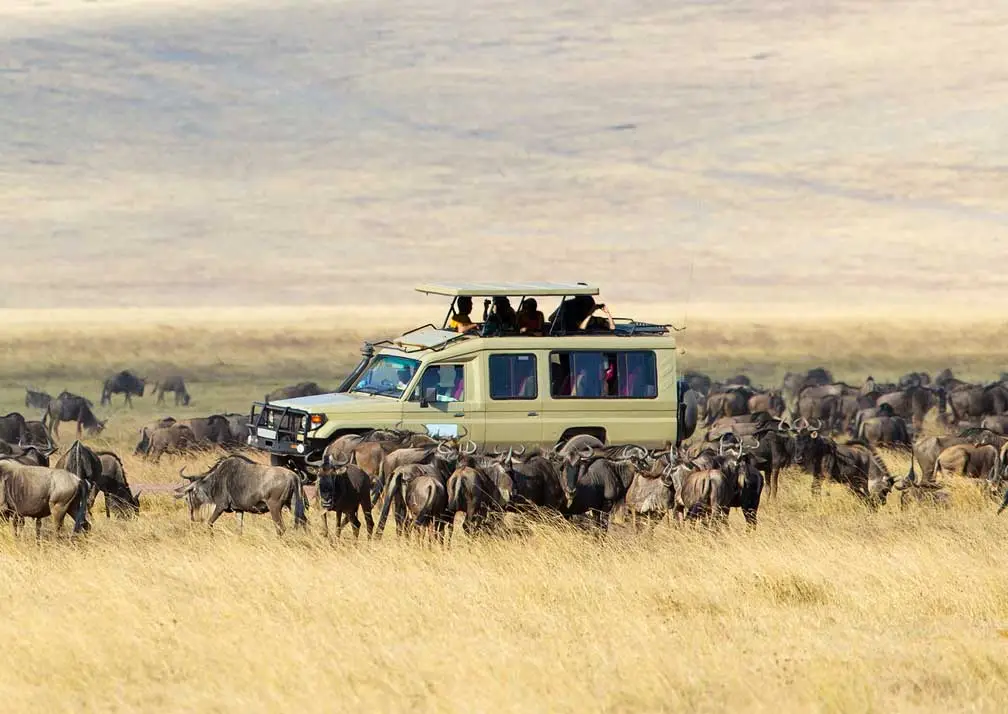
Great Migration Safaris
Experience one of nature's greatest spectacles with our Great Migration safari packages, timed for river crossings or calving.
View Package →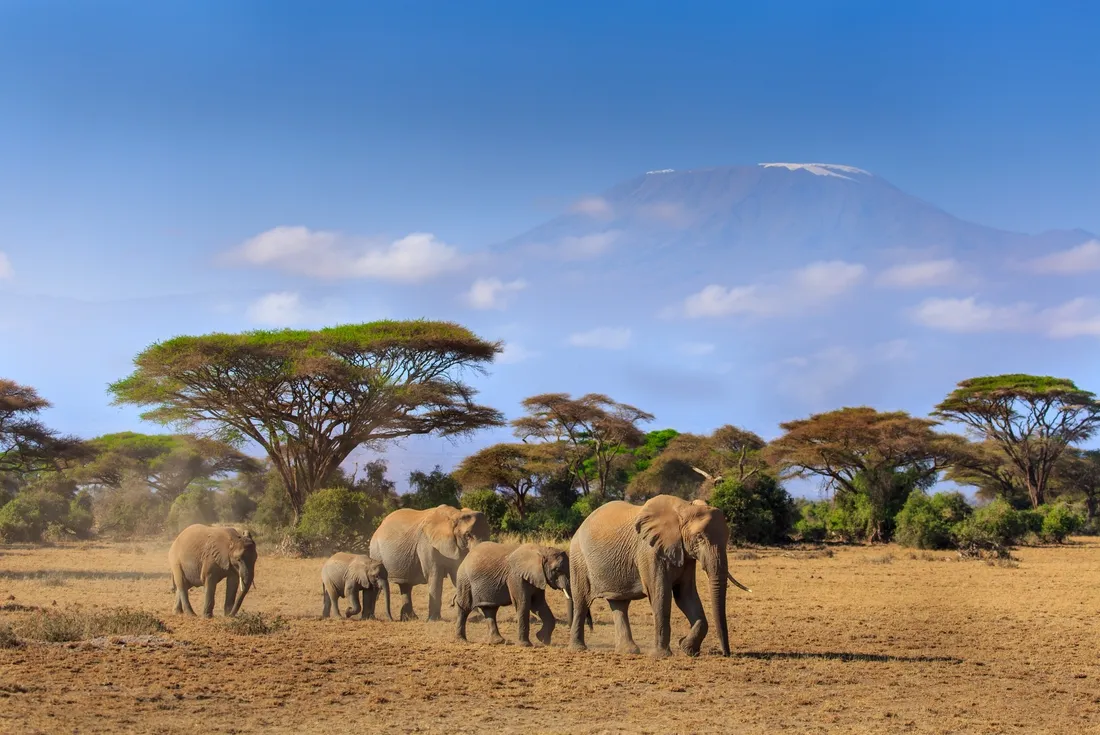
Serengeti & Kilimanjaro Trek
Combined safari and trekking tours offer wildlife adventures and Kilimanjaro climbs.
View Package →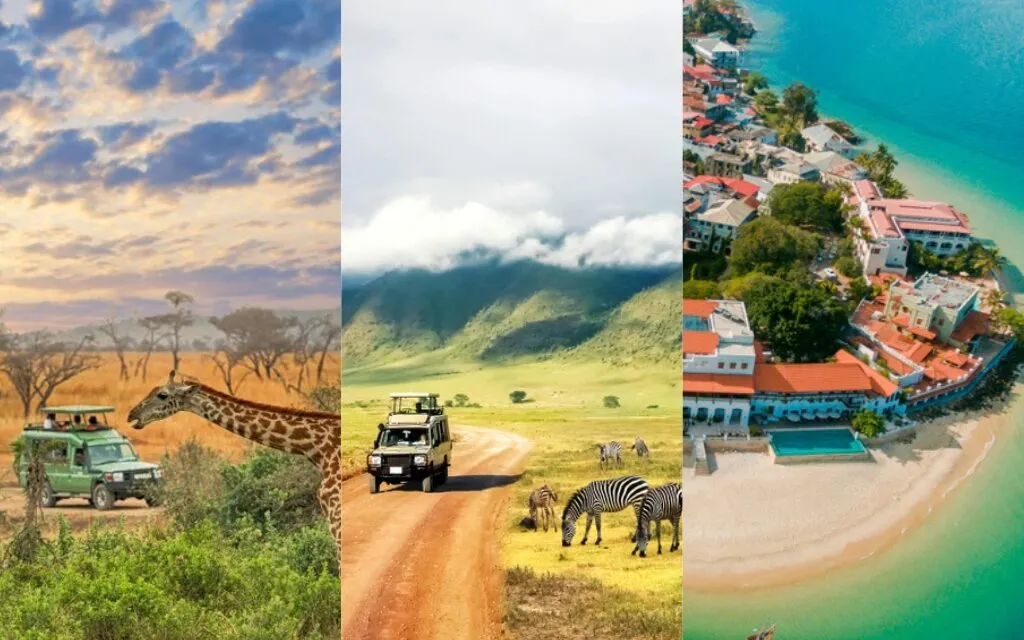
Serengeti & Zanzibar Tours
Luxury Tanzania safari & beach packages with the Great Migration and pristine beaches.
View Package →Related: Best Time to Visit Tanzania 2026 – Perfect safari extension after your Cameroon adventure.