
Most Complete Cape Verde Travel Guide 2026-2027 – Everything You Need to Know Before Visiting
This Cape Verde travel guide provides everything you need to plan your journey to Africa’s sunniest archipelago. Cape Verde offers an extraordinary blend of pristine Atlantic beaches, dramatic volcanic landscapes, and vibrant Creole culture that create one of the continent's most relaxed and welcoming travel experiences. Many travelers who want to visit Cape Verde are surprised by the islands' incredible diversity and rich cultural heritage spanning Portuguese colonial history, African roots, and a unique island identity. The nation consists of ten volcanic islands and eight islets covering 4,033 square kilometers, offering visitors everything from world-class kitesurfing and turtle-watching to live morna music and hiking active volcanoes.
Start Reading the Full Guide ↓Quick Facts About Cape Verde
- Capital: Praia (on Santiago island).
- Currency: Cape Verde Escudo (CVE).
- Time Zone: Cape Verde Time (CVT, UTC-1).
- International Calling Code: +238.
- Driving Side: Right.
- Major Airports: Amílcar Cabral (Sal), Aristides Pereira (Boa Vista), Nelson Mandela (Praia), Cesária Évora (São Nicolau).
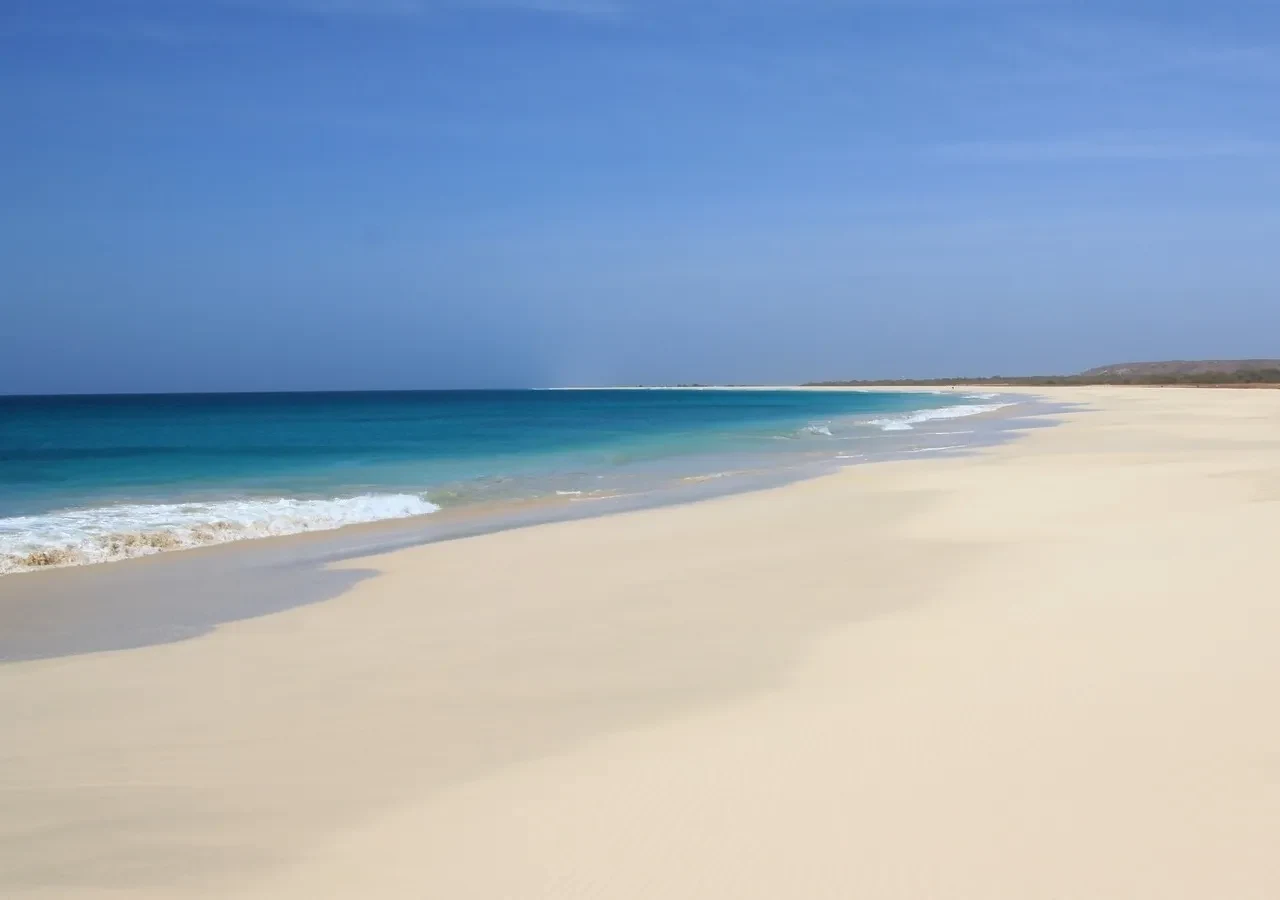
Cape Verde Overview & Key Facts
Brief History of Cape Verde
Cape Verde was uninhabited when Portuguese explorers arrived in 1456–1460. The islands became a major hub in the transatlantic slave trade and later a coaling station. Cape Verdean Creole culture emerged from the mixture of Portuguese settlers and enslaved Africans from the mainland. The islands served as an important stopover point for transatlantic flights and shipping routes in the 20th century.
Independence & National Identity
- Independence date: July 5, 1975.
- Former colonial power: Portugal.
- National symbols & identity.
Cape Verde gained independence from Portugal after the Carnation Revolution. The country shares its independence day with Guinea-Bissau, reflecting the joint struggle led by PAIGC. National identity centers on “morabeza” (Creole hospitality), Cesária Évora’s morna music, and a proud diaspora that maintains strong connections with the islands.
Government System & Current Leadership
- Type of government: Parliamentary Republic
- Current president: José Maria Neves (since 2021)
- Notes on political stability
Cape Verde is one of Africa’s most stable democracies with peaceful transfers of power since independence. The country consistently ranks among the continent’s top performers in governance, freedom, and human development indices.
Population, Ethnic Groups & Languages
- Population: ~600,000 (2025 estimate).
- Major ethnic groups: Creole (mixed African-European) 71%, African 28%, European 1%.
- Official language(s): Portuguese.
- Additional languages commonly spoken.
Cape Verdean Creole (Kriolu) is the mother tongue of virtually all inhabitants. Portuguese is used in government and education. English, French, and Spanish are widely spoken in tourism areas, especially on Sal and Boa Vista.
Main Religions & Cultural Identity
Roman Catholicism is practiced by over 90% of the population, blended with African spiritual traditions. Religious tolerance is high, with small Protestant and Muslim communities. Festivals combine Catholic saints’ days with African-influenced celebrations.
Geography & Natural Landscape
Cape Verde consists of ten islands divided into Barlavento (windward) and Sotavento (leeward) groups. The islands are volcanic with dramatic landscapes: active volcanoes (Fogo), lunar-like plains (Sal, Boa Vista), lush mountains (Santo Antão), and black-sand beaches. The archipelago lies 570 km off the Senegalese coast.
Economy & Tourism Highlights
Tourism is the main economic driver, followed by remittances from the large diaspora. The country has positioned itself as an upscale yet accessible Atlantic destination with direct flights from Europe and growing connections from North America and Brazil.
What Cape Verde Is Known For
- Cesária Évora and morna music (UNESCO intangible heritage)
- World-class kitesurfing and windsurfing conditions
- Pristine beaches and turtle nesting sites
- Fogo volcano and wine produced on volcanic soil
Visa & Entry Requirements in Cape Verde
Most visitors enjoy visa-free entry for up to 30 days. Airport registration (formerly “visa on arrival”) is required and can be completed online in advance or upon arrival.
Do You Need a Visa?
Citizens of over 60 countries (all EU, UK, Switzerland, Norway, USA, Canada, Australia, New Zealand, Brazil, etc.) do NOT need a visa for stays up to 30 days. All other nationalities require a visa in advance.
Visa Application Options in Cape Verde
- Online pre-registration at ease.gov.cv (recommended)
- Payment on arrival (possible but longer queues)
- Visa on arrival for nationalities not exempt
Pre-register at least 5 days before travel to avoid airport delays. Fee is approximately €31 (payable online or on arrival).
Passport Validity & Entry Documents
Passport must be valid for at least 6 months beyond intended stay. Return/onward ticket may be requested. Proof of accommodation is sometimes checked.
Customs Rules & Prohibited Items
Standard international rules apply. Duty-free allowance: 200 cigarettes, 1L spirits, 2L wine. No restrictions on currency declaration.
Safety & Security Information in Cape Verde
Cape Verde remains one of Africa’s safest destinations with low violent crime rates and stable politics. Petty theft and bag-snatching occur in tourist areas (especially Sal and Boa Vista beaches).
Is Cape Verde Safe for Tourists?
Yes – very safe. Most government advisories rate Cape Verde as “exercise normal precautions” (Level 1 USA) or “low risk” (UK, Canada). Solo female travelers report feeling comfortable.
Recommended Safety Tips when in Cape Verde
Use hotel safes, avoid isolated beaches after dark, don’t leave valuables unattended, use licensed taxis or hotel transfers at night.
Safe Areas vs. Areas to Avoid in Cape Verde
All tourist islands (Sal, Boa Vista, Santiago, São Vicente, Santo Antão, Fogo) are safe. Praia and Mindelo have typical urban precautions after dark.
Emergency Numbers & Tourist Police in Cape Verde
- Police: 132
- Fire: 131
- Ambulance: 130
- Tourist Police units on Sal and Boa Vista
Health Requirements & Vaccinations in Cape Verde
No mandatory vaccinations required. Standard travel vaccinations recommended.
Mandatory Vaccinations in Cape Verde
None. Yellow fever certificate required only if arriving from endemic countries.
Recommended Vaccinations in Cape Verde
Hepatitis A, Typhoid, routine boosters. No malaria risk.
Malaria & Other Risks
No malaria. Mosquitoes present but low disease risk. Sun exposure and dehydration are the main health concerns.
Travel Insurance Recommendations in Cape Verde
Strongly recommended – covers medical evacuation (limited hospital facilities on smaller islands) and watersports activities.
Best Time to Visit in Cape Verde
Year-round destination with constant trade winds keeping temperatures pleasant.
Weather by Season
Temperatures range 24–30°C year-round. Driest months: November–July. Short rainy season: August–October (occasional heavy showers).
When to Visit Cape Verde for Best Experiences
- Kitesurfing/windsurfing: November–May (strongest winds)
- Turtle watching: June–October
- Hiking Santo Antão/Fogo: November–April
- Carnival (Mindelo/São Vicente): February
High Season vs. Low Season Travel
High season: November–April and July–August. Low season: May–June and September–October (best deals).
Weather & Climate Overview in Cape Verde
Arid tropical climate with constant northeast trade winds. Very low rainfall (average 100–300 mm/year).
Temperature Ranges
Sea temperature 22–27°C year-round. Air temperature rarely drops below 22°C or exceeds 32°C.
Rainy & Dry Seasons in Cape Verde
Dry season: November–July. Short rainy season: August–October.
What to Wear Based on the Weather
Light summer clothing, swimsuits, sun protection, light jacket for evenings and wind. Hiking shoes for mountainous islands.
Main Currency, Costs & Budgeting in Cape Verde
Euros widely accepted alongside Cape Verde Escudo.
Local Currency Information
Cape Verde Escudo (CVE). Fixed exchange rate: €1 = 110.265 CVE.
Average Travel Costs in Cape Verde
Budget: $80–130/day; mid-range $150–250/day; all-inclusive resorts $200–450/day.
Using ATMs, Cards & Mobile Money in Cape Verde
ATMs plentiful on Sal, Boa Vista, Santiago, São Vicente. Visa/Mastercard widely accepted in tourist areas.
Tipping Guidelines in Cape Verde
10% in restaurants if service not included. Rounding up taxi fares. €5–10/day for guides and drivers.
Transportation & Getting Around in Cape Verde
Inter-island flights and ferries are the main options.
Airport Transfers
Taxis and hotel shuttles from airports. Pre-book on Sal and Boa Vista during high season.
Local Transport Options in Cape Verde
Taxis, shared “aluguer” minibuses (Santiago, Santo Antão), car/scooter/quad rental (Sal, Boa Vista).
Cape Verde Domestic Flights
Cabo Verde Airlines and TICV operate frequent inter-island flights. Book early during peak season.
Car Rentals & Road Conditions in Cape Verde
Rental widely available on Sal, Boa Vista, Santiago. 4×4 recommended for Fogo and Santo Antão.
Accommodation Options available in Cape Verde
From all-inclusive resorts to boutique guesthouses and Airbnb.
Types of Accommodations in Cape Verde
All-inclusive resorts dominate Sal and Boa Vista. Boutique hotels and pousadas on Santiago, São Vicente, Santo Antão. Luxury eco-lodges on Fogo.
Budget vs. Mid-Range vs. Luxury
Budget: $40–80; mid-range $90–180; luxury $200–600+ per night.
Best Areas to Stay in Cape Verde
Santa Maria (Sal), Sal Rei (Boa Vista), Praia/Santa Maria (Santiago), Mindelo (São Vicente), São Filipe (Fogo), Ribeira Grande (Santo Antão).
Essential Packing Guide when Visiting Cape Verde
Pack light but include sun protection and wind-proof items.
Clothing Essentials
Swimsuits, rash guards, light cotton clothes, light jacket, sarong (multi-use).
Footwear & Gear
Flip-flops, water shoes, hiking shoes for mountainous islands, reef-safe sunscreen, snorkel mask.
Electronics & Cameras
European plugs (Type C/F), 220V. Waterproof phone case recommended.
Toiletries & Personal Items
High SPF reef-safe sunscreen, after-sun lotion, insect repellent (evenings), basic medications.
Language & Communication in Cape Verde
Creole (Kriolu) is the heart of communication, Portuguese official, English common in tourism.
Main Languages Spoken in Cape Verde
Portuguese (official), Cape Verdean Creole (universal), English (tourist areas), French/Spanish common.
Useful Phrases for Tourists
“Bon dia” (good morning), “Obbrigadu” (thank you), “Quanto custa?” (how much?), “Tudo bem?” (all good?).
SIM Cards & Mobile Data used in Cape Verde
Unitel T+ and CV Movel. SIMs available at airports and shops. Good 4G coverage on populated islands.
Internet Availability & Wi-Fi in Cape Verde
Wi-Fi in most hotels and many restaurants/cafés. Fastest on Sal and Boa Vista.
Culture & Etiquette in Cape Verde
Relaxed island culture with strong emphasis on “morabeza” (hospitality).
Cape Verdean Dress Code Expectations
Beachwear on beaches and resorts. Modest dress when visiting churches or inland villages.
Social Etiquette & Respectful Behavior of Cape Verde
Greet with handshake or cheek kisses (close friends). Accept offers of coffee or grogue politely.
Photography Rules in Cape Verde
Ask permission before photographing people. No restrictions on landscapes.
Important Cultural Dos & Don’ts in Cape Verde
Do: greet people, try local food, respect no-swim zones (turtle nesting). Don’t: take sand or shells from protected beaches.
Food, Water & Dining in Cape Verde
Fresh seafood, cachupa, and Portuguese-influenced cuisine.
Cape Verde Local Dishes to Try
Cachupa (national dish – corn and bean stew), fresh tuna, lobster, pastel com diabo dentro, grogue (sugarcane spirit).
Dietary Options in Cape Verde
Excellent fresh fish and seafood. Vegetarian options improving but limited outside resorts.
Drinking Water Safety
Bottled water recommended though tap water is generally safe in resorts.
Restaurant Etiquette
Tipping 5–10% if service not included. Meals are relaxed affairs.
Top Attractions & Things to Do in Cape Verde
Each island offers distinct experiences – beach relaxation, adventure, or culture.
Major Tourist Attractions in Cape Verde
- Santa Maria beach (Sal)
- Fogo volcano and wine region
- Santo Antão hiking trails
- Mindelo carnival and Cesária Évora heritage
Best Tours & Experiences in Cape Verde
Kitesurfing lessons, turtle-watching tours (Boa Vista), volcano climbs (Fogo), island-hopping by yacht, quad excursions in Viana desert (Boa Vista).
Family-Friendly Activities to do in Cape Verde
All-inclusive resorts with kids clubs (Sal/Boa Vista), turtle watching, water parks, easy hikes.
Unique Cultural or Historical Sites to visit in Cape Verde
Cidade Velha (UNESCO – first European settlement in tropics), Tarrafal concentration camp museum, Pedra de Lume salt crater (Sal).
Cape Verdean Electrical System Information
European standard.
Plug Types & Voltage used in Cape Verde
Type C and F plugs, 220–240V, 50Hz.
Charging Tips
Standard European adapters work. Power banks useful for long beach days.
Local Laws & Regulations of Cape Verde
Relaxed but respectful of local customs.
Rules Travelers Need to Know when In Cape Verde
No photography of military/police. Turtle nesting beaches protected. Drugs strictly illegal.
Alcohol, Smoking & Substance Laws of Cape Verde
Legal drinking age 18. No public drunkenness. Cannabis illegal.
Restricted or Protected Areas in Cape Verde
Turtle nesting beaches (night access restricted), some nature reserves require permits.
Final Travel Tips for Visitors in Cape Verde
Relax, enjoy the morabeza, and island-hop to experience the diversity.
Common Mistakes to Avoid
Staying only on Sal/Boa Vista and missing cultural islands (Santiago, Fogo, Santo Antão). Underestimating wind and sun strength.
Tips to Save Money when Visiting Cape Verde
Travel in shoulder season, stay in local guesthouses on less touristy islands, eat at local restaurants, use aluguer minibuses.
Safety & Comfort Tips
Use reef-safe sunscreen, stay hydrated, book airport transfers in advance during high season, learn a few Creole phrases – locals love it.
Frequently Asked Questions – Cape Verde Travel Guide 2026-2027
Our Tanzania Tours Products
While Cape Verde offers stunning Atlantic beaches and island culture, many travelers combine it with the ultimate African wildlife adventure in Tanzania. Capable Africa Tours specializes in secure, guided safaris that maximize safety and wonder. From family-friendly lodges to luxury camps, we handle logistics so you focus on the magic.
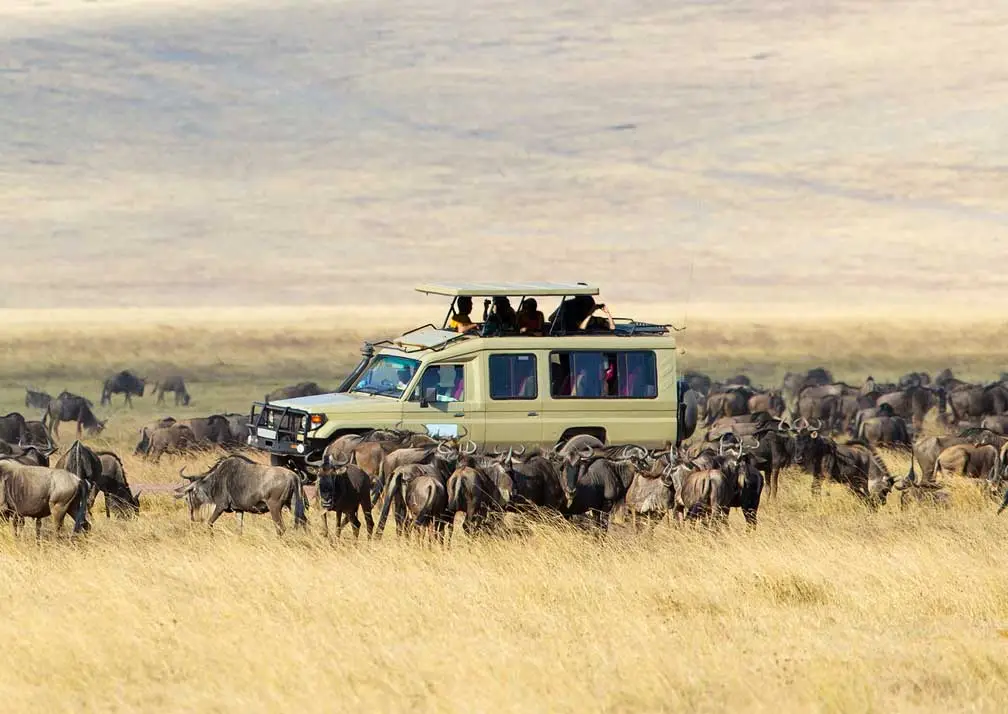
Great Migration Safaris
Experience one of nature's greatest spectacles with our Great Migration safari packages, timed for river crossings or calving.
View Package →
Serengeti & Kilimanjaro Trek
Combined safari and trekking tours offer wildlife adventures and Kilimanjaro climbs.
View Package →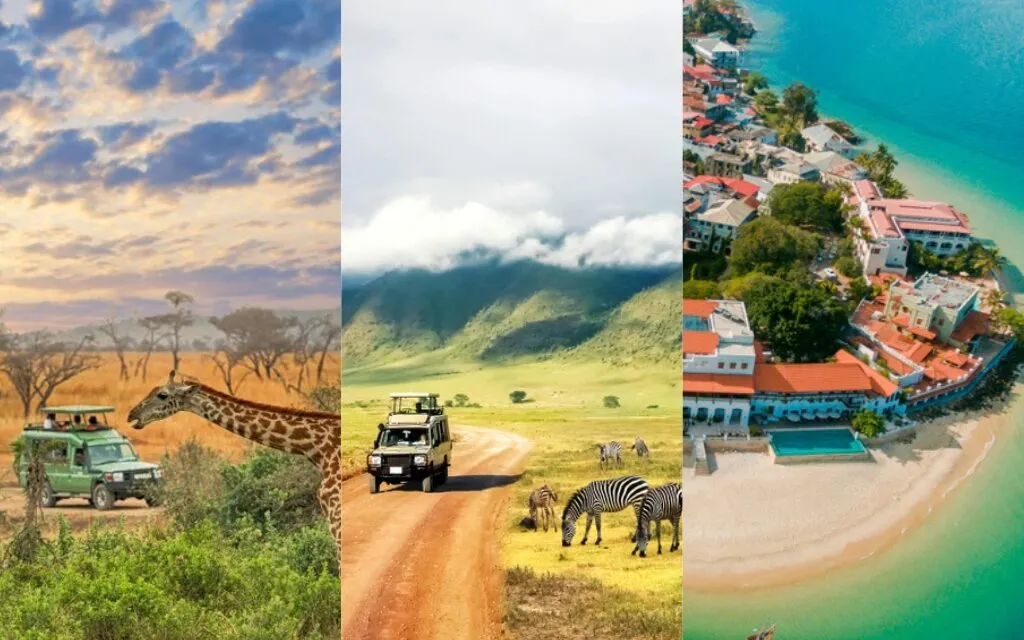
Serengeti & Zanzibar Tours
Luxury Tanzania safari & beach packages with the Great Migration and pristine beaches.
View Package →Related: Best Time to Visit Tanzania 2026 – Perfect safari extension after your Cape Verde beach holiday.