
Quick Answer: The Machame Route is Kilimanjaro's most popular and arguably most scenic climbing route, earning the nickname "Whiskey Route" for its challenging character. It takes 6–7 days, passes through five distinct ecological zones, and offers strong summit success rates of 80–90% on the 7-day schedule. It suits fit, experienced hikers prepared for camping at altitude.
Machame Route Overview
The Machame Route approaches Kilimanjaro from the southwest, beginning at Machame Gate (1,800 m) on the mountain's forested lower slopes. It winds across the entire southern face, giving climbers a broad and varied perspective of the mountain rarely experienced on other routes. Most groups descend via the Mweka Route on the southeast side — a completely different trail that keeps the journey fresh from first step to last.
This route appeals to climbers who value scenery and variety over comfort. You will sleep in tents throughout, trek through ancient rainforest on Day 1, and by Day 3 you are crossing the dramatic Shira Plateau and standing before the iconic Barranco Wall. The diversity of landscapes — tropical forest, open moorland, alpine desert, glacial ice — makes every day feel distinct.
Climbers choosing Machame tend to be fit, adventurous, and motivated by more than just reaching the top. Many are experienced trekkers from other continents who want a true wilderness experience at altitude. The route is not suited to beginners or those with limited high-altitude exposure who have not prepared thoroughly.
Best Machame Route Tour Packages for 2026-2027
Our Kilimanjaro trekking packages via Machame Route cater to various budgets and schedules, offering group or private Machame Route hikes. Choose between 6-day or 7-day Machame Route itineraries for your Mount Kilimanjaro Machame Route climb.
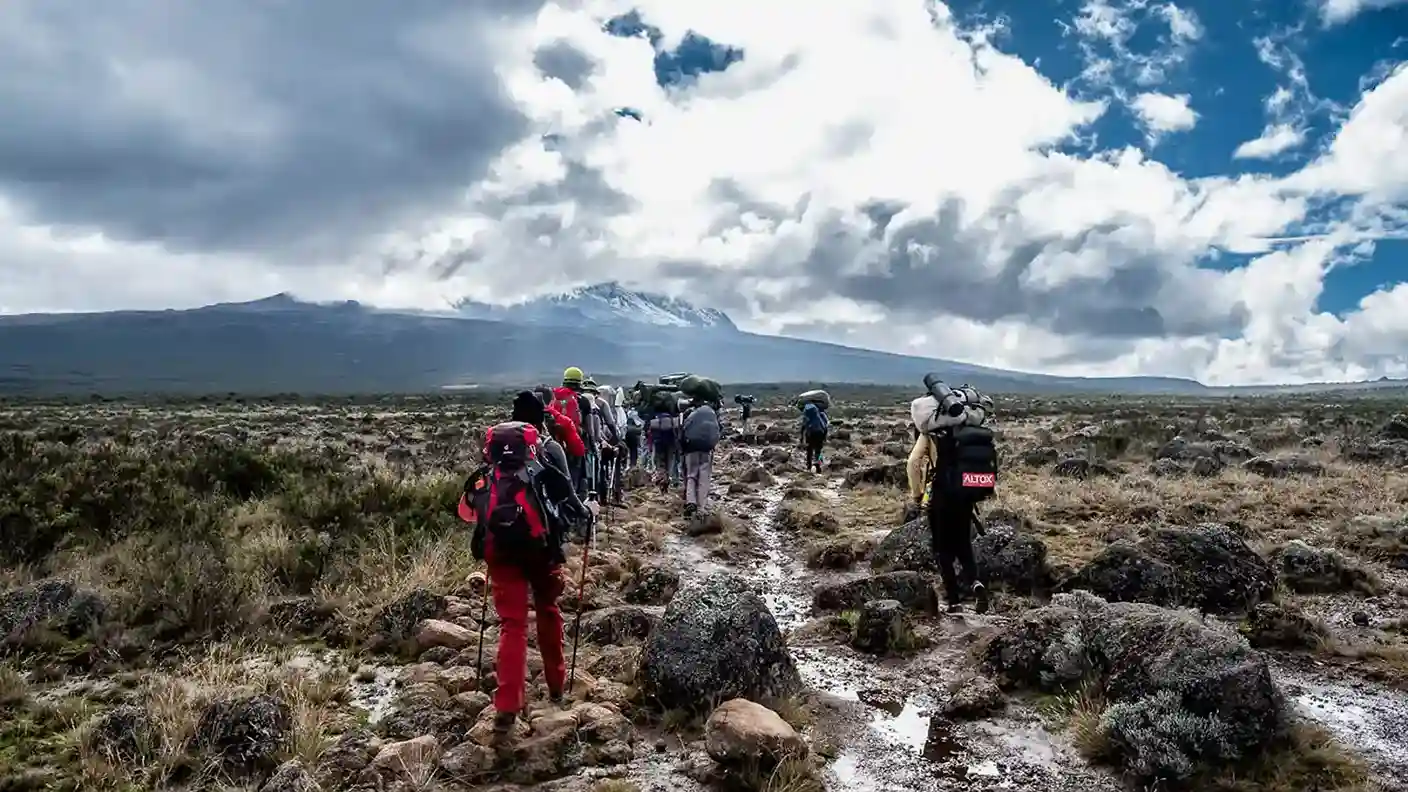
6-Day Machame Route Kilimanjaro Climb
Perfect for confident hikers seeking a quicker climb. This itinerary is ideal for experienced trekkers who want to reach the summit in less time, with a slightly higher physical challenge and fewer acclimatization days.
View Package →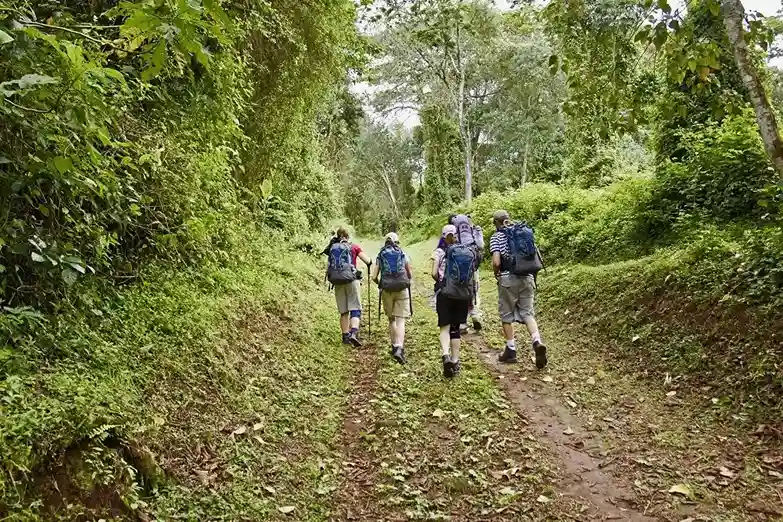
7-Day Machame Route Kilimanjaro Climb
Our most recommended option. The 7-day climb includes an extra day for acclimatization, significantly improving your comfort, safety, and summit success rate. Ideal for first-time high-altitude climbers.
View Package →Machame Route Highlights
Five Ecological Zones
The route passes through rainforest, heath and moorland, alpine desert, and the arctic summit zone — more variety than almost any other route on the mountain.
The Barranco Wall
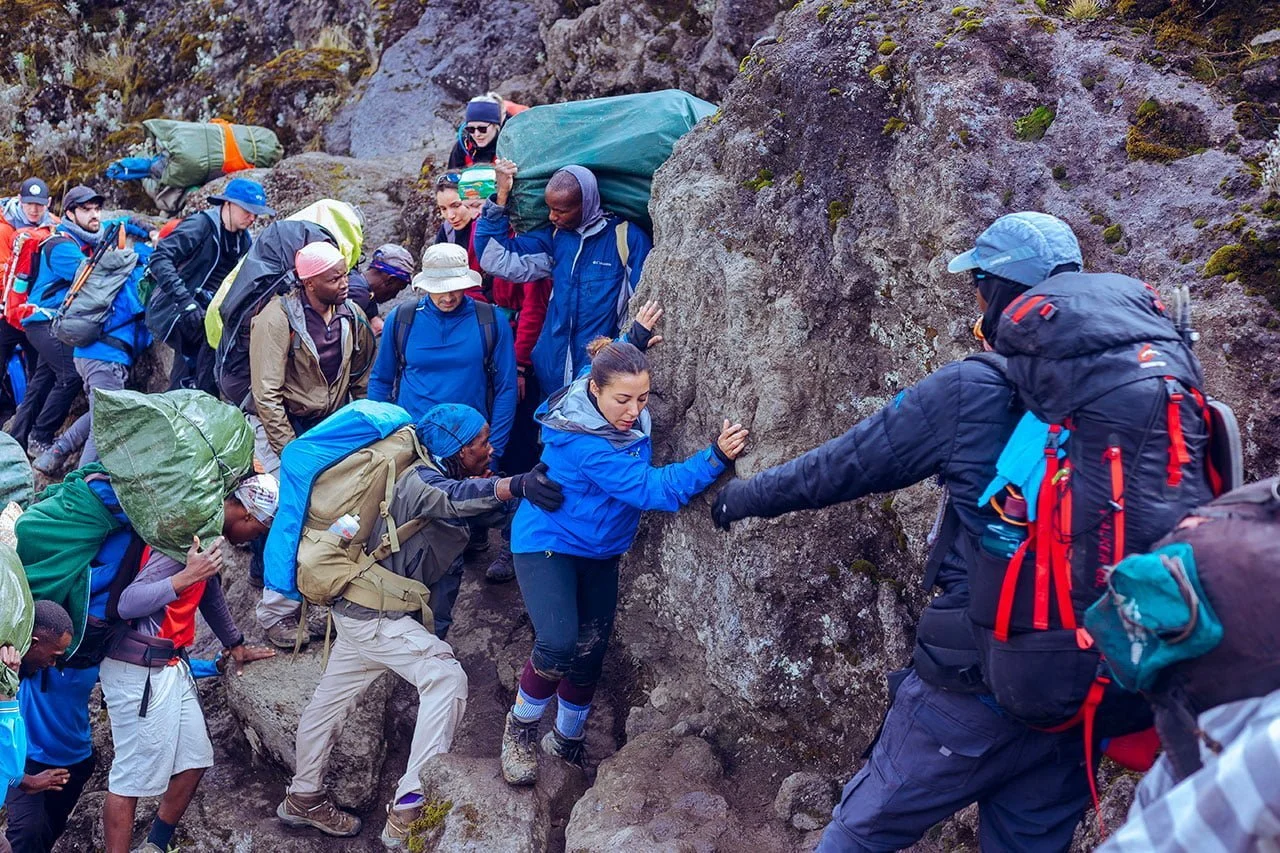
A thrilling 257 m scramble up a dramatic volcanic lava ridge. No ropes required, but it is a physical highlight climbers consistently rate as a favourite moment.
Southern Circuit Views
The traverse across the southern face opens up spectacular views of the Kibo crater rim and Kilimanjaro's glaciers that northern routes simply do not offer.
Superior Acclimatization
The "climb high, sleep low" profile — particularly with the 7-day option — gives your body meaningful time to adjust before the summit push.
Stellar Sunrise Summits
The typical summit window puts climbers at Uhuru Peak around sunrise — one of the most celebrated views in all of African travel.
Loop Route Design
Ascending via Machame and descending via Mweka creates a complete loop, giving climbers two entirely different perspectives of the mountain.
Machame Route Difficulty Level
The Machame Route's difficulty comes primarily from altitude, not technical terrain. There is no rock climbing or glacier travel — all walking is on maintained paths. The Barranco Wall involves hands-and-feet scrambling but is well-within the abilities of any fit hiker.
What makes this route genuinely hard is the sustained elevation gain, reduced oxygen levels above 4,000 m, and the physical demands of a cold, multi-hour summit night. Altitude sickness affects even experienced mountaineers; fitness alone does not guarantee success.
Recommended preparation: Train consistently for at least 3–4 months before your climb. Long uphill hikes with a pack, cardiovascular conditioning, and ideally some prior experience at altitude (above 3,500 m) will all improve your chances of reaching Uhuru Peak.
Machame Route Day-by-Day Itinerary (7 Days)
We recommend the 7-day version for all climbers. The additional day at Karanga Camp allows for meaningful acclimatization and measurably better summit success rates compared to the 6-day schedule.
Machame Gate → Machame Camp
1,800 m → 3,000 mYour climb begins at Machame Gate, where park rangers check permits and your crew assembles. The trail enters a lush montane rainforest almost immediately — tall camphor trees draped in Spanish moss, colobus monkeys, and the sounds of forest birds. The path climbs steadily through dense vegetation. By late afternoon you emerge above the treeline at Machame Camp, where you settle in for your first mountain meal and your first look at the ice cap above.
Machame Camp → Shira Camp
3,000 m → 3,840 mThe forest gives way to open heath and moorland — giant lobelias and groundsels dot the landscape in shapes that seem almost prehistoric. The trail climbs steadily onto the Shira Plateau, the ancient collapsed caldera on Kilimanjaro's western side. Views across to Mount Meru open up on clear days. This is your first full acclimatization camp, and you will feel the altitude beginning to assert itself.
Shira Camp → Barranco Camp (via Lava Tower)
3,840 m → 4,640 m → 3,960 mThis is one of the most important acclimatization days on the route. You hike up to the striking volcanic Lava Tower at 4,640 m — well above your sleeping altitude — for lunch, then descend to Barranco Camp. This "climb high, sleep low" approach is central to how the Machame Route prepares your body for summit night. The descent reveals the full grandeur of the Barranco Valley and its famous wall, which dominates the view from camp.
Barranco Camp → Karanga Camp
3,960 m → 4,035 mDay 4 begins with the Barranco Wall — a memorable scramble up a steep lava ridge with fantastic exposure. Guides assist at the trickier sections, and most climbers find it exhilarating rather than frightening. Beyond the wall, the route traverses several valleys and ridges across the southern face. The alpine desert is in full effect here: sparse vegetation, sweeping views, and the silence of high altitude. Karanga Camp feels remote and genuinely wild.
Karanga Camp → Barafu Base Camp
4,035 m → 4,673 mA shorter day by design, preserving energy for the summit push ahead. The trail crosses the final vegetation zone into true alpine desert — barren, windswept, and silent. Barafu Camp (meaning "ice" in Swahili) sits exposed on a rocky ridge at 4,673 m. Your team briefs you on the summit itinerary during dinner. You will rest briefly before a midnight or 1 a.m. wake call for the final push.
Barafu → Uhuru Peak → Mweka Camp
4,673 m → 5,895 m → 3,100 mSummit day. The ascent begins in darkness, typically between midnight and 1 a.m. The pace is deliberately slow — pole pole — on steep volcanic scree. Temperature drops sharply above 5,000 m; headlamps illuminate a line of climbers making the same determined pilgrimage upward. Stella Point (5,739 m) on the crater rim is reached as the sky begins to lighten. From there, the final 45-minute traverse across the crater rim leads to Uhuru Peak and one of the great views on earth. After photographs and a brief rest, you descend all the way to Mweka Camp — a long but exhilarating day.
Mweka Camp → Mweka Gate
3,100 m → 1,640 mThe final morning descent passes back through the rainforest, often in light mist. By midday you arrive at Mweka Gate, where certificates are presented and the celebratory tipping ceremony takes place — a cherished tradition that allows you to thank the crew who made your summit possible. From the gate, transport returns you to Moshi or your hotel.
Machame Scenery and Route Characteristics
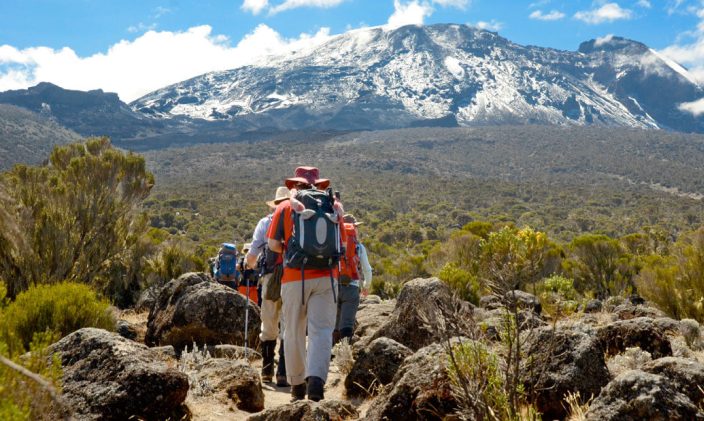
Few mountain routes in the world can match the ecological drama of the Machame Route. The climb begins beneath the rainforest canopy, where elephant trails occasionally cross the path and olive trees tower overhead. By Day 2, the forest yields to open moorland populated by giant heathers and the otherworldly Lobelia deckenii — a plant that reaches head-height and grows only on this mountain.
The Shira Plateau delivers its own spectacle: a wide, grassy expanse at nearly 4,000 m, ringed by ancient lava ridges and offering uninterrupted views of Kibo's summit towers. Crossing the plateau on a clear morning, with Kilimanjaro's icefield catching the first light, is a view that stays with climbers for a lifetime.
The Barranco Valley and its wall are unlike anything else on the mountain. The valley is sheltered, surprisingly green compared to the alpine desert above, and split by a river course. The wall itself — a 250-metre cliff of compacted lava — looks impossible from below and straightforward once you are climbing it.
Above Karanga, the landscape strips back to bare rock, thin air, and immense sky. The final approach to Barafu is austere and powerful. And summit night above 5,000 m, with the Milky Way overhead and Africa's dark horizon below, is something no photograph fully prepares you for.
Machame Route Summit Success Rate
with proper preparation
Summit success on Kilimanjaro is influenced by several factors that are largely within a climber's control: itinerary length, physical preparation, and how closely they follow their guide's advice — particularly the instruction to maintain a very slow pace. Climbers who rush, underestimate the altitude, or skip the recommended training routinely struggle regardless of the route they choose.
The 7-day Machame itinerary has a meaningfully higher success rate than the 6-day version. The extra night at Karanga Camp allows the body additional time to produce red blood cells and adapt to reduced oxygen. We do not offer the 6-day schedule for this reason.
It is worth being honest: around 10–15% of climbers on this route — even well-prepared, fit individuals — will not reach Uhuru Peak, most often due to acute mountain sickness. Age, fitness, and prior altitude experience give some indication of risk but are not reliable predictors. A thoughtful approach to acclimatization is the single most important factor.
Best Time to Climb the Machame Route
Kilimanjaro can be climbed year-round, but weather windows matter. The mountain creates its own microclimate and can be unpredictable at any season — but two main climbing windows offer the most reliable conditions.
January – March
Dry, cold, and clear. Excellent visibility, firm trail conditions, and typically lower crowds than the July peak. Summit nights are cold but calm.
June – October
The most popular window, especially July–August. Reliable dry weather, outstanding views, and the full tourist season. Busiest period on trail and at camp.
November
Short rains begin. Conditions are variable — some weeks are clear, others wet. Fewer climbers on the mountain.
April – May
Long rains season. Trails become muddy, visibility is poor, and summit conditions deteriorate. Most operators close or advise against climbing.
How the Machame Route Compares to Other Kilimanjaro Routes
| Route | Duration | Difficulty | Scenery | Crowds | Acclimatization | Accommodation |
|---|---|---|---|---|---|---|
| Machame | 6–7 days | Hard | Excellent | Busy | Very Good | Camping |
| Lemosho | 7–8 days | Moderate–Hard | Outstanding | Quieter | Excellent | Camping |
| Rongai | 6–7 days | Moderate | Good | Quiet | Good | Camping |
| Marangu | 5–6 days | Moderate | Good | Busy | Fair | Huts |
| Northern Circuit | 9–10 days | Moderate–Hard | Outstanding | Very Quiet | Excellent | Camping |
For climbers deciding between Machame and Lemosho, the choice usually comes down to two things: time and crowd preference. Lemosho's longer approach from the west offers an extra day of acclimatization and notably fewer other trekking groups on the lower mountain. Machame is more accessible logistically and offers a slightly more social experience at camp. Both routes join the Southern Circuit above Shira and share the same summit day experience.
Climbers who prefer hut accommodation over tents, or who have limited time, often consider the Marangu Route — though its compressed schedule reduces the acclimatization window and results in lower summit success rates on average.
Accommodation on the Machame Route
The Machame Route is a full camping route. There are no permanent mountain huts or lodge facilities on the trail. Your accommodation consists of high-quality expedition tents erected and broken down each day by your porter and guide team.
Sleeping Tents
Two-person, high-quality dome tents with full-length sleeping space. We use 3- or 4-season tents rated for the expected temperatures on each section of the route.
Mess Tent
A private dining and briefing tent is erected at each camp, giving your group a sheltered space to eat hot meals together and discuss the day's route with your guide.
Toilet Tent
A private toilet tent with a portable toilet is set up at every camp. While modest, this makes a significant difference to comfort at altitude.
Sleeping Bags
We provide or can arrange rental of expedition-grade sleeping bags rated to -20°C. Your own quality sleeping bag is the single most important item for summit night comfort.
Camp sites on the Machame Route — Machame, Shira, Barranco, Karanga, and Barafu — are designated KINAPA sites with basic pit latrines, water sources, and ranger posts. They can feel busy during peak season, particularly Barranco Camp, which serves as the convergence point for several routes.
Packing Recommendations for the Machame Route
The mountain's five ecological zones demand a layering strategy that works in both warm, humid forest (Day 1) and sub-zero summit conditions (Day 6). Your personal pack for hiking should weigh no more than 7–8 kg; porters carry the main duffel bag (up to 15 kg including crew gear).
Layering System
- Moisture-wicking base layers (×2)
- Insulating mid-layer (fleece or down)
- Hardshell waterproof jacket
- Hardshell waterproof trousers
- Warm summit jacket (down or synthetic, −15°C rated)
- Lightweight hiking trousers (×2)
Footwear & Extremities
- Waterproof hiking boots (broken in)
- Camp sandals or trail shoes
- Warm summit gloves (waterproof outer)
- Liner gloves
- Balaclava or warm hat
- Wool or synthetic hiking socks (×4)
- Gaiters (highly recommended)
Equipment
- Trekking poles (collapsible)
- Headlamp + spare batteries
- Daypack (20–25 L)
- Sleeping bag (−20°C rated)
- Sleeping bag liner
- Sunglasses (UV400 or glacier glasses)
- Sun hat + neck gaiter
Health & Nutrition
- Personal first aid kit
- Altitude medication (discuss with doctor)
- High-energy snacks for summit night
- Electrolyte tablets
- Lip balm + high SPF sunscreen
- Water purification tablets (backup)
- Reusable 2 L water bottle or hydration pack
Kilimanjaro Climbing Local Guide Tips
These insights come from guides who have led hundreds of ascents on Kilimanjaro and know the mountain in all its moods.
-
1
Pole Pole Is Not a Suggestion
"Walk slowly, very slowly" — pole pole in Swahili — is the single most important instruction your guide will give. The majority of climbers who struggle on summit night did not walk slowly enough on the days before. Slow down by about 30% compared to what feels comfortable. Your heart rate should remain conversational at all times below Barafu.
-
2
Hydration Matters More Than You Think
At altitude, dehydration accelerates the symptoms of altitude sickness. Aim for 3–4 litres of water per day, including on summit night. Hot drinks at camp count toward this total. If you are not using the toilet regularly, you are not drinking enough.
-
3
Eat Even When You Are Not Hungry
Altitude suppresses appetite significantly above 4,000 m. Your body still needs fuel, especially for the long summit day. Force yourself to eat full meals at Barafu before your rest period. Your guide team prepares nutritious food specifically designed for performance at altitude — trust the menu and eat it.
-
4
The Barranco Wall Is Easier Than It Looks
From Barranco Camp, the wall appears almost vertical. In practice, it is a well-worn scrambling route with clear handholds and footholds throughout. Your guide leads the way and assists at the two or three genuinely awkward sections. Avoid looking down if heights unsettle you, but most climbers are surprised by how enjoyable it is once they start moving.
-
5
Sleep Matters at Altitude — Even If It Feels Impossible
Many climbers find it difficult to sleep above 4,000 m. Rest on the tent mattress even if you cannot sleep deeply. Lying horizontal is more restorative than most climbers realise. Avoid sleeping pills unless specifically prescribed for altitude; they can suppress the breathing response your body needs to acclimatize.
-
6
Dress in Layers Before You Feel Cold
On summit night the temperature drops very quickly above 5,000 m. It is far harder to warm up once you are cold than to peel off a layer if you warm up. Put on your down jacket and summit gloves before you think you need them. Frostbite on fingers and nose tips is a genuine risk on summit night.
-
7
Tip Your Crew Well — They Make the Climb Possible
Your porter and guide team carries loads of up to 20 kg, wakes before you each morning, and often works in conditions you are being protected from. The recommended tipping range is $150–$250 per climber for a 7-day climb, distributed by your lead guide to the crew proportionally. Bring cash in US dollars or Tanzanian shillings and prepare the envelopes before the last day.
Frequently Asked Questions
Why Climb with Capable Africa Tours
We are a Tanzania-based operator with deep roots in Kilimanjaro guiding. Our lead guides hold KINAPA certification and have, between them, made hundreds of summit ascents. We do not subcontract our climbs — when you book with us, you climb with our own team, guided by people who know this mountain in all its moods.
Experienced Local Guides
All lead guides are KINAPA-licensed, Wilderness First Responder certified, and have a minimum of five years of guiding experience on Kilimanjaro.
Pulse Oximetry at Every Camp
We monitor oxygen saturation and heart rate at every camp using medical-grade pulse oximeters and maintain a written health log throughout the climb.
Supplemental Oxygen & Gamow Bag
Every group carries supplemental oxygen and a Gamow altitude bag for emergency use. We hope to never use them; having them is non-negotiable.
Nutritious Mountain Cuisine
Our mountain chef prepares three hot meals plus snacks daily, adapted for altitude nutrition. Vegetarian, vegan, and dietary requirements are accommodated.
Fair Crew Standards
We pay our guides, assistant guides, cooks, and porters above KINAPA minimums and provide full equipment. Happy, well-supported crew perform better and contribute to a safer climb.
Pre-Climb & Post-Climb Support
We provide a detailed preparation guide, training recommendations, and a personal call with your lead guide 2–4 weeks before departure. Our Moshi office is reachable 7 days a week throughout your stay.
Conclusion: Is the Machame Route Right for You?
The Machame Route is the right choice for climbers who want more than a summit tick. If you are drawn to dramatic scenery, a genuine wilderness experience, the challenge of the Barranco Wall, and a route that takes you through every ecological zone the mountain has to offer — this is your path.
It is best suited to fit, experienced trekkers who take preparation seriously, are comfortable with camping in cold conditions, and understand that altitude is the real challenge regardless of fitness level. If you prefer hut accommodation or a shorter schedule, routes like Marangu or Rongai may suit you better. If you want comparable scenery with better acclimatization and fewer other groups, the Lemosho Route deserves serious consideration.
For those who choose Machame and prepare well, the reward is one of Africa's great trekking experiences — a journey through living geology, across ancient lava fields, and up to a summit that earns its reputation as the Roof of Africa.
If you are considering a Kilimanjaro climb and want to talk through which route fits your goals and timeline, we are happy to help. Get in touch with our team in Moshi — no obligation, just honest advice from people who know this mountain.
Ready to Climb the Machame Route?
Talk to our Kilimanjaro specialists. We will help you choose the right itinerary, prepare properly, and climb with a team that puts your safety and experience first.
Request a Free Consultation Compare All Routes