
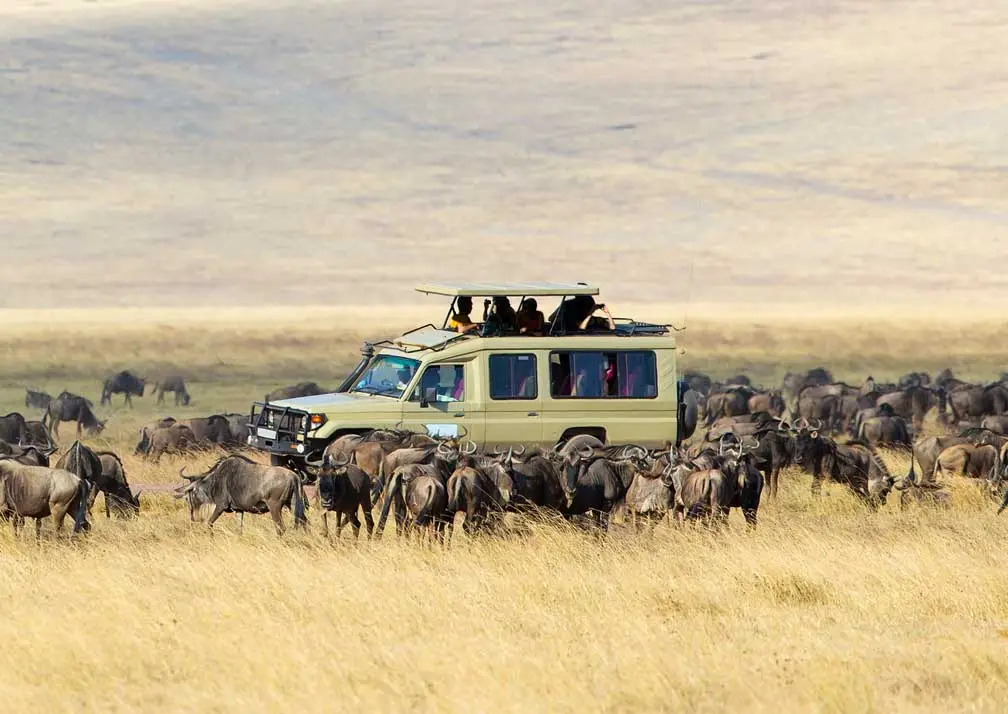
Great Migration Safaris
Experience one of nature’s greatest spectacles with our Great Migration safari packages, timed for river crossings or calving.
Tanzania safari
A 2-day Ngorongoro and Lake Manyara safari is a short Northern Tanzania wildlife trip from Arusha. Day 1 explores Lake Manyara's forest, lakeshore and Rift Valley habitats before an overnight in Karatu. Prices start from USD 1,100 per person, based on a safari starting and ending in Arusha. The final quotation varies by travel dates, group size, accommodation level, room arrangement, transfers, park-fee changes and optional upgrades. Recommended lodges or camps are subject to availability and may be replaced with comparable alternatives or adjusted to suit your budget and preferences.
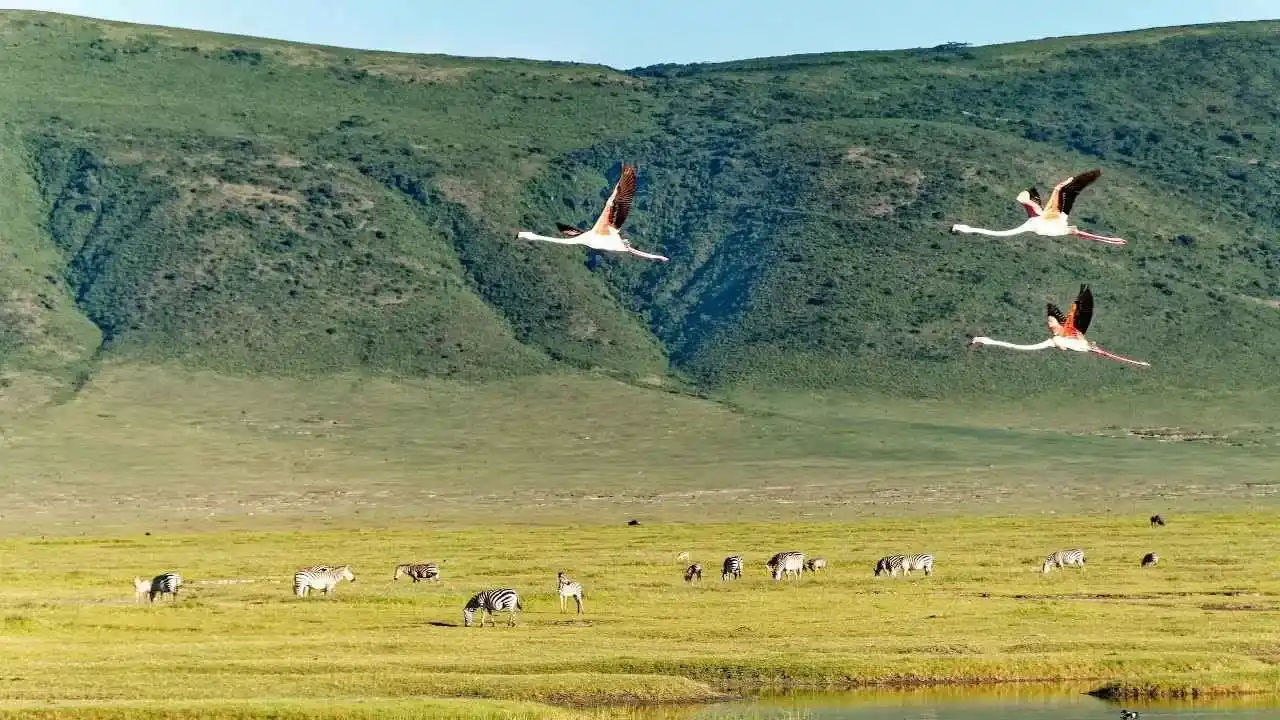
A 2-day Ngorongoro and Lake Manyara safari is a short Northern Tanzania wildlife trip from Arusha. Day 1 explores Lake Manyara's forest, lakeshore and Rift Valley habitats before an overnight in Karatu. Day 2 descends into Ngorongoro Crater for concentrated wildlife viewing, including possible lion, buffalo, elephant and black rhino sightings, before returning to Arusha.
Pricing basis: This safari starts from USD 1,100 per person when it begins and ends in Arusha. Other starting points, airport transfers and fly-in arrangements are quoted separately.
Accommodation flexibility: Named lodges and camps are recommended examples rather than guaranteed allocations. You may choose another property, or we may propose a comparable alternative based on availability, budget, route efficiency and your preferences.
This 2 days Tanzania safari tour package to Ngorongoro and Lake Manyara combines two contrasting Northern Tanzania wildlife areas without the longer drive to Serengeti. Lake Manyara lies below the Great Rift Valley escarpment and includes groundwater forest, woodland, floodplain and lakeshore habitat. Ngorongoro Crater adds open grassland, marshes, forest and permanent water within a volcanic caldera.
The route suits couples, families, first-time visitors, short holidays and travelers adding wildlife to Kilimanjaro or Zanzibar. Possible sightings include elephants, buffaloes, giraffes, zebras, wildebeest, hippos, baboons, lions, hyenas and many birds. Black rhino is possible in Ngorongoro, while Lake Manyara is associated with tree-climbing lions, but neither sighting is guaranteed.
An overnight in Karatu keeps Day 2 efficient and allows an early crater start. the recommended plan may include a private 4x4, professional driver-guide, listed fees, meals, drinking water and one mid-range lodge night.
| Duration | 2 days and 1 night |
|---|---|
| Destinations | Lake Manyara National Park and Ngorongoro Crater |
| Starting Point | Arusha is the standard pricing base. Moshi, Kilimanjaro International Airport, Arusha Airport, Zanzibar fly-in or another agreed pickup can be arranged, with additional transport or flight costs quoted separately. |
| Ending Point | Arusha is the standard return point. Airport drop-off, Moshi, Zanzibar connection or another agreed endpoint can be arranged and quoted according to timing and logistics. |
| Starting Price | Starts from USD 1,100 per person, based on a safari starting and ending in Arusha. Final pricing is customized. |
| Accommodation Category | Mid-range lodge in Karatu. Named properties are recommendations and remain subject to availability and your preferences. |
| Travel Style | Private road safari in a 4x4 with a professional driver-guide |
| Best Time | Year-round, with seasonal differences in weather and scenery |
| Private / Group | Private as priced; group joining may be quoted separately |
| Family Friendly | Yes, for children comfortable with early starts and game drives |
| Big Five Opportunities | Good opportunities in Ngorongoro, but all five are never guaranteed |
Two different ecosystems provide a useful introduction to Northern Tanzania wildlife.
Private transport and a comfortable Karatu overnight create a practical short escape.
The route has fewer hotel changes and less distance than a two-day Serengeti trip.
It fits into a weekend, business trip or brief Tanzania stopover.
Domestic flights can connect the beach with Arusha or Kilimanjaro.
Forest, lakeshore, escarpment and crater scenery add variety to the game drives.
Lake Manyara offers forest, lakeshore and escarpment scenery, while Ngorongoro provides broad crater views and concentrated wildlife. The route is efficient from Arusha, and the Karatu overnight supports an early crater departure. Private travel also gives flexibility for photography stops, family breaks and guide decisions based on wildlife movement.
Your guide collects you from Arusha after breakfast for the two-to-two-and-a-half-hour drive to Lake Manyara. The game drive explores groundwater forest, woodland, floodplain and lakeshore habitat. Possible sightings include elephants, buffaloes, giraffes, hippos, monkeys, baboons, antelopes, lions and varied birdlife.
After a picnic lunch and further wildlife viewing, leave the park and continue about 30–45 minutes to Karatu for dinner and overnight.
After an early breakfast, drive about 30–45 minutes to the conservation-area entrance, continue through the highlands and descend into Ngorongoro Crater. The crater floor includes grassland, marsh, forest and lakeshore habitat.
Possible sightings include wildebeest, zebras, buffaloes, lions, hyenas, hippos, elephants and black rhino. After a picnic lunch, ascend the crater and return to Arusha in the late afternoon or evening.
Lake Manyara sits below the Great Rift Valley escarpment and contains a compact mosaic of groundwater forest, woodland, floodplain, hot springs and alkaline lakeshore. Its forest sections are useful for primates and elephants, while open areas may hold buffaloes, giraffes, zebras and antelopes. The park is also valued for birding and landscape photography. Wildlife distribution and lake conditions change seasonally.
Ngorongoro Crater is the main game-viewing feature inside the wider conservation area. Its floor contains permanent water, grassland, marsh and forest, supporting large numbers of resident herbivores and predators. Visitors value the dramatic descent, broad crater views and opportunities to see several large mammals during one game drive. Rhino sightings remain possible but should never be promised.
Across the two destinations, possible sightings include elephants, buffaloes, giraffes, zebras, wildebeest, hippos, warthogs, gazelles, impalas, waterbucks, baboons, monkeys, lions, hyenas and many bird species. Lake Manyara may also produce leopard or tree-climbing lion sightings, while Ngorongoro offers one of Northern Tanzania's better opportunities for black rhino. Wildlife remains unpredictable, and vegetation, rainfall, animal movement, road access and luck influence every safari.
Accommodation note: The properties below are recommendations rather than guaranteed allocations. Your confirmed itinerary may use a recommended lodge options or camp, a comparable alternative in the same or requested category, or another property you choose. Confirmation depends on availability, route efficiency, rooming, budget and your preferences, and any price difference will be included in the written quotation.
| Feature | Eileen's Trees Inn | Marera Valley Lodge |
|---|---|---|
| Location | Karatu | Rhotia/Karatu valley |
| Type | Mid-range garden lodge | Upper mid-range country lodge |
| Rooms | Spacious en-suite single, double, twin, triple and family options | Large en-suite cottages with veranda, mosquito nets and fireplaces |
| Facilities | Restaurant, bar, gardens, pool and Wi-Fi | Restaurant, bar, gardens, pool, lounge and Wi-Fi |
| Meal Plan | Dinner and breakfast | Dinner and breakfast |
Recommended: Eileen's Trees Inn offers good value and practical access to both parks.
Alternative:Marera Valley Lodge suits travelers wanting larger cottages and a quieter rural setting. A supplement may apply.
These months usually bring cooler mornings, easier road conditions and thinner vegetation in some open areas. They are popular, so crater roads and lodges can be busier.
Expect greener scenery, migrant birds, dramatic clouds and occasional rain. Some tracks may become muddy, and wildlife can be partly hidden by vegetation.
Late May, early June, late October and parts of November may balance scenery, visitor numbers and price. The best dates depend on your full Tanzania itinerary.
| Pricing Basis | Details |
|---|---|
| Starting price | From USD 1,100 per person |
| Base departure | Safari starts and ends in Arusha |
| Final quote depends on | Travel dates and season, number of travelers, rooming, accommodation category and availability, park and conservation fee updates, pickup/drop-off or flights, private/group style, child ages, optional activities and upgrades |
Group size: Vehicle and crater costs are shared. Accommodation: Budget, mid-range and luxury properties have different rates. Season: Peak dates may add supplements. Travel style: Private trips cost more than shared departures but provide greater flexibility. Children: Discounts depend on age and room sharing.
The route combines two contrasting parks without Serengeti's longer transfer. Prices remain indicative until dates, group size, rooms, availability, pickup point and current official fees are confirmed in writing.
Airports: Kilimanjaro International Airport is the main international gateway. Arusha Airport handles many domestic connections, including Zanzibar routes. Arrive one day early when possible.
Transfers: Arusha pickup is standard; Moshi or airport transfers can be quoted.
Visa: Requirements vary by nationality, so check current Tanzania Immigration guidance.
Money and internet: Carry Tanzania shillings for small purchases. Mobile coverage and lodge Wi-Fi vary inside safari areas.
Packing: Bring a soft bag, neutral clothing, sun protection, a warm crater layer, binoculars, camera gear and medication.
Stay inside the safari vehicle unless your guide confirms an authorized stop. Never feed wildlife, request prohibited off-road driving or pressure the guide to approach animals too closely. Keep voices low near wildlife and leave enough space for animals to cross roads or change direction.
Respect staff, other visitors and nearby communities. Ask before photographing people, avoid litter and follow conservation-area rules.
for elephants, baobabs and the strongest all-round route.
for less transfer time and deeper crater focus.
when rhino is less important than habitat contrast.
A short safari should be selected by travel time, wildlife priority and starting point—not by the number of park names in the itinerary. We will explain the trade-offs before confirming the route.
This itinerary starts from USD 1,100 per person based on a safari starting and ending in Arusha. The final quotation varies according to travel dates and season, number of travelers, room arrangement, accommodation category and availability, park or conservation fee updates, pickup and drop-off requirements, domestic flights or transfers, private or group travel style, child ages, optional activities and requested upgrades.
Yes. It allows one focused game drive in each destination and a Karatu overnight.
It normally starts and ends in Arusha; other transfers can be quoted.
Yes, with longer first and final road transfers.
Yes, using domestic flights to Arusha or Kilimanjaro.
The itinerary can be arranged privately, while group-joining is available only on suitable scheduled departures. The final price depends on the selected travel style, departure availability, group size and accommodation plan.
The lodges and camps named on this page are recommendations, not guaranteed allocations. Depending on availability, route efficiency, budget and your preferences, the confirmed itinerary may use one of the named properties, a comparable alternative in the same category, or another property you request. Any resulting price difference will be shown in the final quotation.
Yes: Day 1 lunch and dinner, Day 2 breakfast and lunch, plus water.
Yes, when listed in the final written quotation.
A 4x4 with a pop-up viewing roof.
Yes, when comfortable with early starts and several hours in the vehicle.
Ngorongoro offers good opportunities, but all five are not guaranteed.
No. Sightings depend on natural wildlife movement and luck.
Year-round; June–October is drier, while November–May is greener.
Bring a soft bag, neutral clothing, warm layer, sun protection and binoculars.
Usually yes when shared before confirmation.
No, but it is customary for good service.
Yes. Pickup, lodge, room setup, meals and transfers can be adjusted.
Last Updated: July 10, 2026
Fact Checked: Yes
Prices remain indicative until travel dates, group size, accommodation and current official fees are confirmed.
We plan around realistic driving, useful game-drive hours and practical Karatu accommodation, with connections from Arusha, Moshi, Kilimanjaro or Zanzibar.
Prices start from USD 1,100 per person based on an Arusha start and return. Send your travel date, number of travelers, rooming, preferred accommodation level, pickup point and special interests so we can confirm availability and prepare the final written quotation.
Keep exploring
Experience one of nature’s greatest spectacles with our Great Migration safari packages, timed for river crossings or calving.
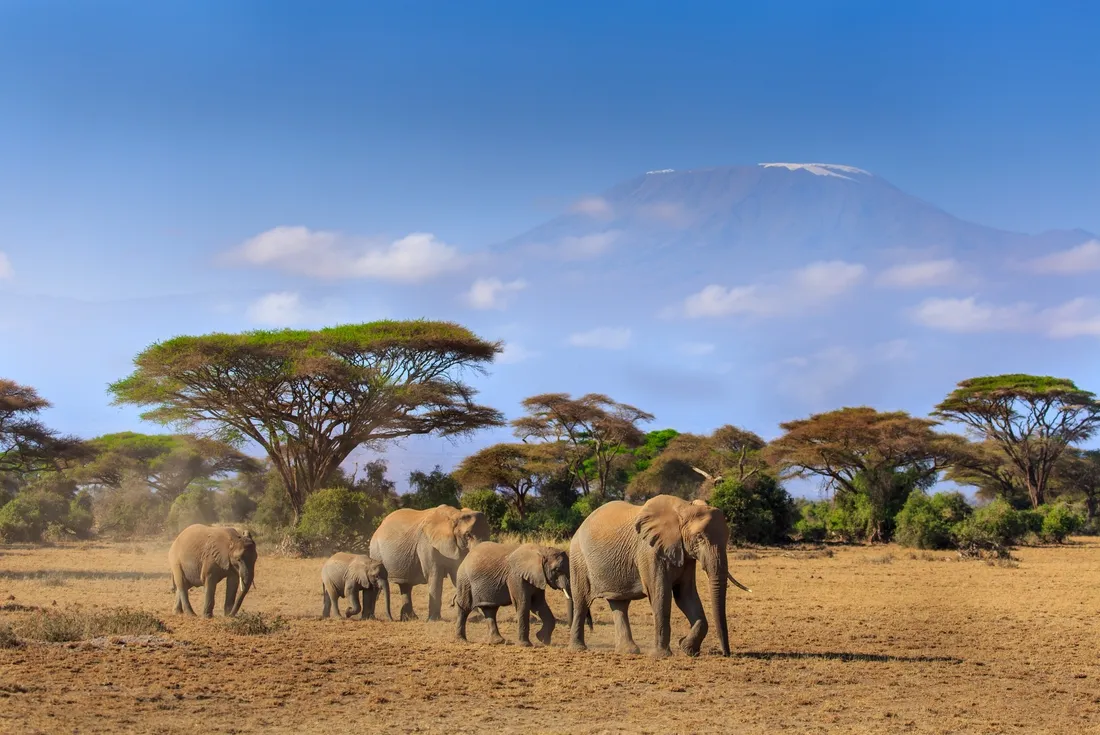
Combined safari and trekking tours offer wildlife adventures and Kilimanjaro climbs.
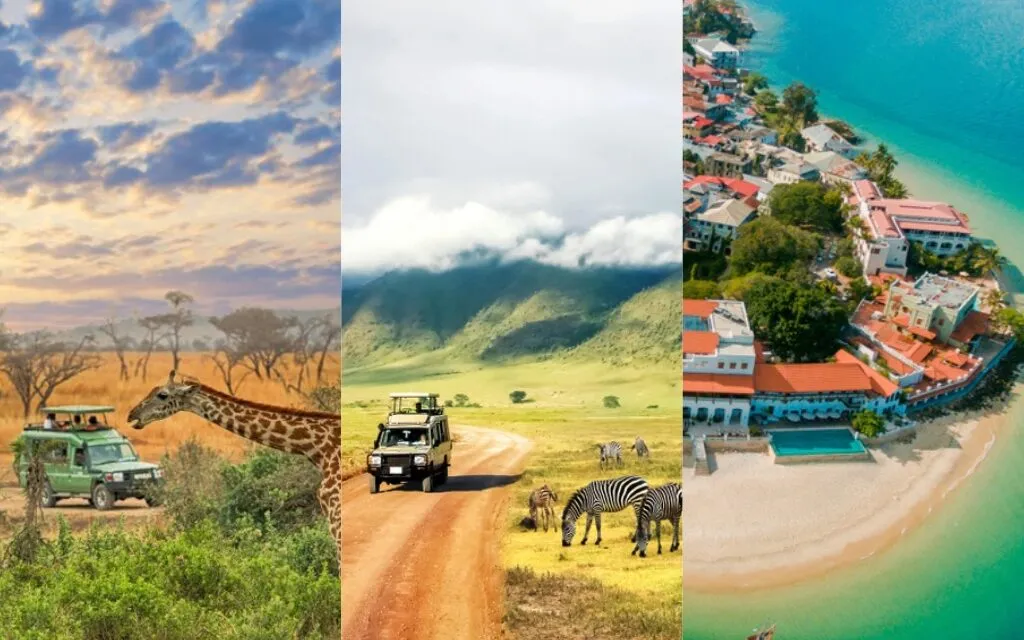
Luxury Tanzania safari & beach packages with the Great Migration and pristine beaches.