
Lake Manyara Day Trip from Arusha — 1-Day National Park Safari
Depart Arusha early morning and spend a full day exploring Lake Manyara National Park — one of Tanzania's most diverse and accessible parks. Tree-climbing lions, forest elephants, hippo pools, and flamingo-lined shores, all within two hours of the city. Private vehicle, expert guide, park fees, and picnic lunch included.
Book Your Day TripQuick Answer: Lake Manyara Day Trip from Arusha
The Lake Manyara day trip from Arusha is a one-day guided safari covering roughly 120–130 km each way (about 2 hours' drive). The tour includes a 5–6 hour game drive through groundwater forest, open woodland, and lakeside habitats inside Lake Manyara National Park. It is best known for its tree-climbing lions, large elephant population, hippo pools, and over 400 bird species. The trip runs from approximately 6:30 AM to 6:30 PM. Park fees, a private 4WD vehicle, an English-speaking guide, and a picnic lunch are all included in the price.
Key Facts: Lake Manyara National Park Day Tour
- Duration: 1 full day (approx. 8–10 hours including travel).
- Distance from Arusha: 120–130 km | 1.5–2 hours each way on paved road.
- Time in Park: 5–6 hours of game driving.
- Departure: 6:30–7:00 AM from your Arusha hotel.
- Return: 5:30–6:30 PM.
- Price From: $516 per person (private tour — price varies by group size).
- Vehicle: Private 4WD Land Cruiser / Jeep with pop-up roof.
- Group Size: Private or small group (2–6 people).
- Best Season: June–October (dry) | November–March (green / birding).
- Wildlife Highlights: Tree-climbing lions, elephants, hippos, flamingos, 400+ bird species.
- Ideal For: First-time safari visitors, families, birders, photographers.
- Included: Transport, guide, park fees, picnic lunch, water, binoculars.
About Lake Manyara National Park
Lake Manyara National Park sits at the base of the Great Rift Valley escarpment in northern Tanzania, roughly 120 km west of Arusha. The park covers 325 km², of which Lake Manyara itself — a shallow alkaline soda lake — takes up roughly 230 km². Despite its compact size, the park contains an unusually wide range of habitats within a short distance: dense groundwater forest fed by underground springs, open acacia and mahogany woodland, grassy floodplains, and the exposed lake shore.
This ecological variety is the reason Lake Manyara supports so many different species in such a small area. The groundwater forest shelters blue monkeys, bushbuck, and forest-dwelling elephant herds. The open woodland is where the park's famous tree-climbing lions are most often found. The lake itself draws vast flocks of flamingos, pelicans, and dozens of wading bird species. Few parks of this size in Africa can match that range.
For travelers based in Arusha, Manyara is a natural starting point for Tanzania's northern safari circuit — and a rewarding destination in its own right for a single full day.
What Wildlife Can You Expect to See?
Lake Manyara is a reliable park for a wide variety of species. Here is an honest overview of what most visitors see, and what is possible but less predictable.
Commonly Seen Wildlife
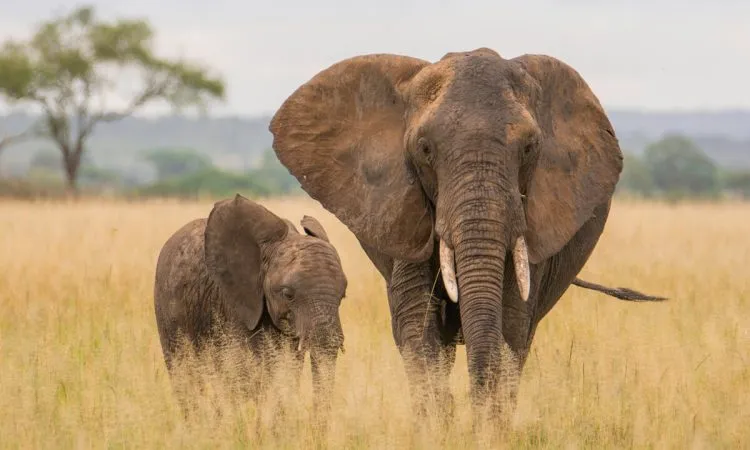
Elephants are frequently encountered in the groundwater forest near the park entrance — sometimes at very close range along the forest track. Large baboon troops are nearly guaranteed. Blue monkeys move through the forest canopy, and vervet monkeys are common along the lake margins. Giraffes, zebras, wildebeest, and impala are usually visible in the open woodland zones. Hippos are regularly seen wallowing in pools near the lake shore.
Tree-Climbing Lions
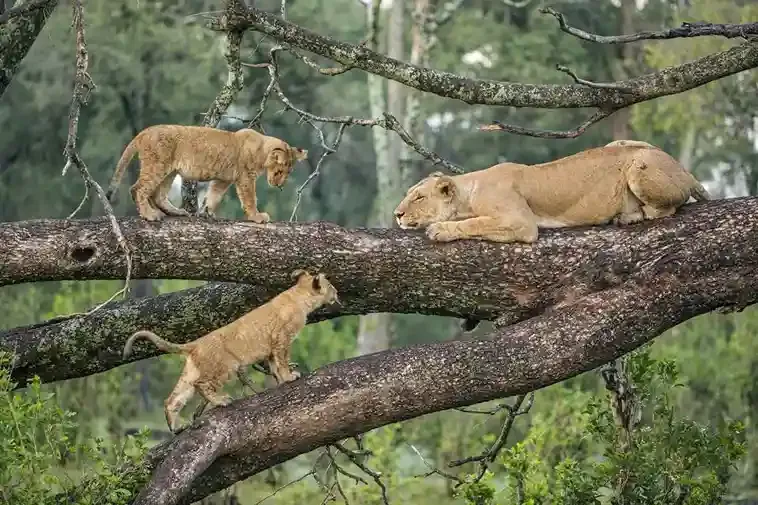
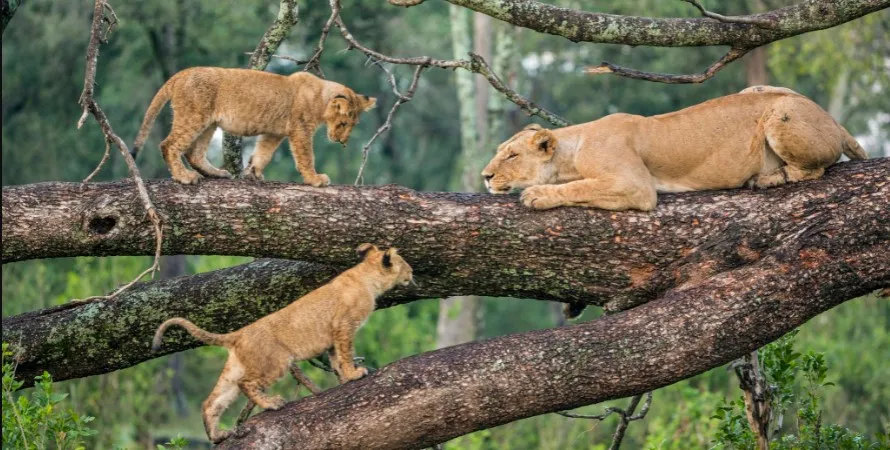
Lake Manyara's lions are among the few lion populations in the world known to regularly climb trees. They tend to rest in the branches of large acacias and sycamore figs, particularly during the heat of midday. Sightings are frequent — our guides monitor daily reports and know the lions' preferred resting areas — though exact locations vary by day and season. The behaviour is thought to be linked to the park's high tsetse fly pressure at ground level.
Bird Watching
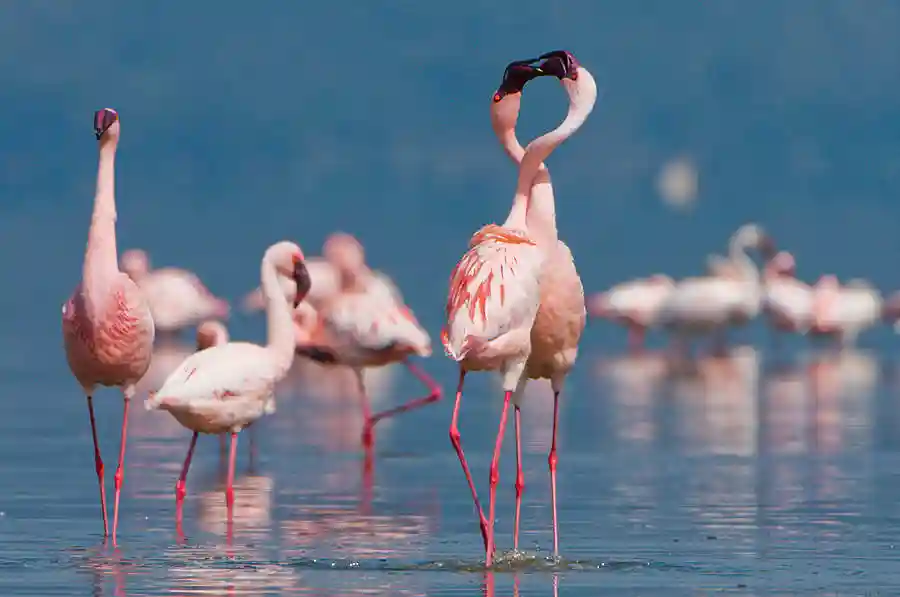
Over 400 bird species have been recorded in the park, making it one of East Africa's top birding destinations. The lake shore is best known for its flamingo gatherings — sometimes numbering in the thousands — along with great white pelicans, yellow-billed storks, African fish eagles, and various heron and egret species. The forest zone supports green-headed orioles, Livingstone's turaco, and numerous sunbird species. Birders should bring binoculars and a field guide; our guides assist with identification.
What Is Less Common
Leopards are present in the park but rarely seen during a single day visit — sightings are a welcome bonus rather than an expectation. Rhinos do not live in Lake Manyara National Park. Buffalo are present but typically more visible in the dry season. Lion sightings, while frequent, are never guaranteed in any wild environment.
Day Itinerary: Lake Manyara Day Trip from Arusha
Your day is structured to maximise time inside the park while keeping the journey comfortable. Here is what a typical day looks like.
Early Morning: Hotel Pickup & Drive to Lake Manyara (6:30–9:00 AM)
We collect you from your Arusha hotel or guesthouse between 6:30 and 7:00 AM. The drive west to Lake Manyara takes approximately 1.5 to 2 hours on paved road, passing through the Maasai steppe, coffee-growing highlands, and small roadside towns. Your guide uses the journey to brief you on the park, current animal movements, and what to look for during the game drive.
- Drive time: 1.5–2 hours
- Road condition: Paved tarmac for the full route
- Meals: Light packed breakfast or optional stop en route
Morning: Groundwater Forest & Woodland Game Drive (9:00 AM–1:00 PM)
After passing through the TANAPA gate, you enter the park's groundwater forest — one of the finest in East Africa. The tall canopy and filtered light create excellent conditions for close elephant encounters and primate watching. Blue monkeys are often heard before they are seen. Moving into the open acacia woodland, your guide scans the tree branches for resting lions. This zone typically offers the best chance of a tree-climbing lion sighting and is also productive for giraffe and zebra.
- Duration: Approximately 4 hours of driving
- Key habitats: Groundwater forest, acacia woodland
- Highlights: Elephants, blue monkeys, tree-climbing lions, giraffes
Midday: Picnic Lunch & Lake Shore Drive (1:00–3:00 PM)
A picnic lunch is served at one of the park's designated rest areas — usually near the lake shore, with views across the water to the Rift Valley wall. After lunch, the drive continues along the lake margin, where flamingos and pelicans gather in the shallows. Hippo pools are also located in this zone, and the late afternoon light makes for excellent photography. Birders will find this section of the drive particularly productive.
- Duration: Approximately 2 hours including lunch break
- Key habitats: Alkaline lake shore, hippo pools
- Highlights: Flamingos, pelicans, hippos, Rift Valley escarpment views
Late Afternoon: Optional Add-On & Return to Arusha (3:00–6:30 PM)
You depart the park in the mid-afternoon, allowing for an optional Maasai village visit on the return route — a 30–45 minute stop that adds cultural depth to the day. The drive back to Arusha follows the same route, with estimated arrival at your hotel between 5:30 and 6:30 PM depending on road conditions and any stops made along the way.
- Drive time: 1.5–2 hours
- Optional add-on: Maasai village visit (~$20 per person)
- Meals: Dinner on own account at your hotel
Who This Tour Is Best For
This day trip works well for a specific kind of traveler. Knowing whether it fits your needs before booking saves both time and expectation.
This Tour Suits You If:
- You are based in Arusha and have one spare day before or after a longer safari
- You are visiting Tanzania for the first time and want a straightforward introduction to safari wildlife
- You are travelling with children and want a comfortable, low-physical-demand day out
- You are a keen birder — Lake Manyara is one of the best single-day birding destinations in northern Tanzania
- You are interested in wildlife photography and want diverse habitats within a compact area
- You are short on time and cannot commit to a multi-day safari itinerary
This Tour May Not Be Ideal If:
- You are specifically seeking large predator concentrations — the Serengeti or Ngorongoro Crater are better suited for that
- You want to see rhinos — they are not present in Lake Manyara
- You prefer remote, uncrowded parks with minimal vehicle traffic — Manyara is popular and roads near the entrance can be busy on weekends
- You have limited time in Arusha (arriving late and departing early the next morning) — a full day is needed to make the round trip worthwhile
Best Time to Visit Lake Manyara National Park
Lake Manyara is accessible year-round, but different seasons offer different experiences. Here is what to expect month by month.
Dry Season: June to October
This is the most popular period for game viewing. Vegetation thins out considerably, making animals easier to spot. Wildlife concentrates around permanent water sources, including the lake shore and hippo pools. Road conditions inside the park are at their best. The dry season coincides with the East African dry-season safari peak, so expect higher demand and slightly longer park queues at the gate on weekends.
Green Season: November to March
The short rains (November–December) and long rains (March–May) bring a transformation to the park. The groundwater forest is dense and vivid, and migratory bird species arrive in large numbers — this is when flamingo concentrations on the lake are often at their most spectacular. General game viewing requires more patience as animals spread out across the landscape. Road conditions can be muddy in places, but our 4WD vehicles handle them comfortably. Prices are generally lower, and the park is noticeably quieter.
Shoulder Months: January to February
The short dry period between the two rainy seasons is an underrated window. Skies are often clear, wildlife is active, and the park is less busy than the peak dry months. Calving season for wildebeest and zebra occurs around this time, making it productive for big cat activity.
Lake Manyara National Park — Photo Gallery
Other Day Trips from Arusha
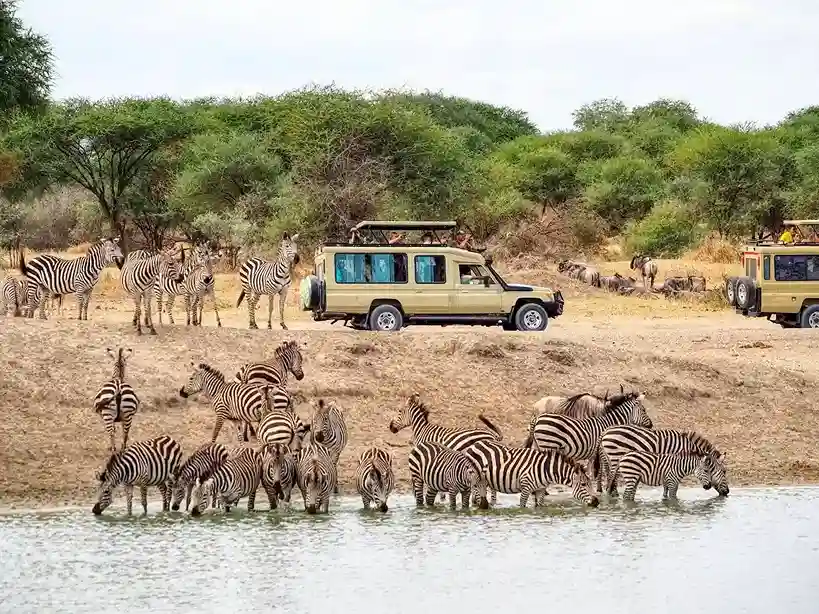
Tarangire National Park Day Trip
Tanzania's top park for elephant density, with ancient baobab trees and the Tarangire River as a dry-season wildlife corridor. A strong alternative to Manyara for travelers prioritising large herds.
View Package →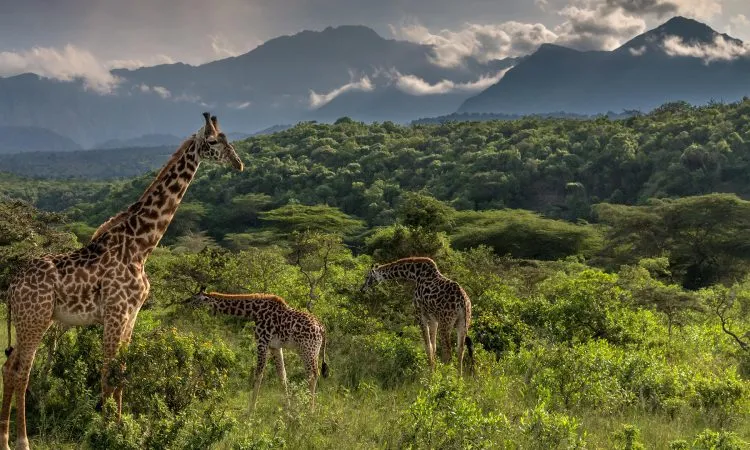
Arusha National Park Day Safari
The most convenient safari option from Arusha — lush crater lakes, colobus monkeys, flamingos, and views of both Mount Meru and Kilimanjaro on a clear day. Ideal for a half-day or shorter visit.
View Package →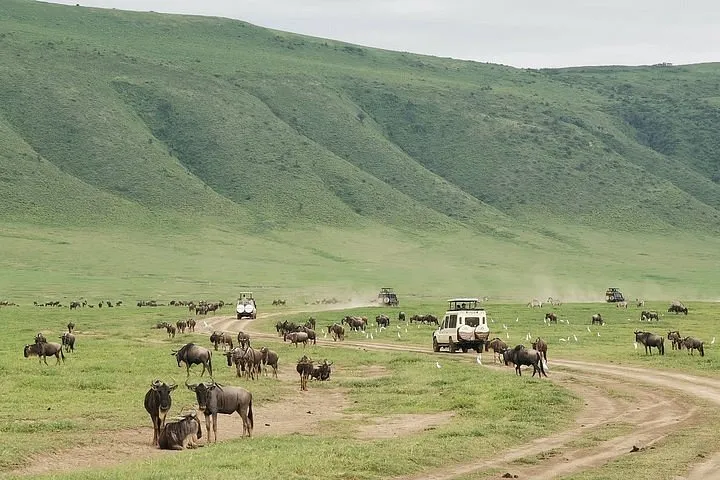
Ngorongoro Crater Day Trip
The world's largest intact volcanic caldera, teeming with lions, elephants, flamingos, and one of the highest concentrations of wildlife in Africa — all on a single-day excursion from Arusha.
View Package →Lake Manyara National Park — Location & Map
Lake Manyara National Park lies at the base of the Rift Valley escarpment, approximately 120 km southwest of Arusha. The map below shows the park's position within Tanzania's northern safari circuit, placing it in context alongside Tarangire, Ngorongoro, and the Serengeti.
What to Pack for Your Lake Manyara Day Trip
The game drive takes place from inside the vehicle, so you do not need specialist gear. A few practical items will make the day noticeably more comfortable.
- Neutral-coloured clothing: Khaki, olive, or tan tones are best. Avoid bright colours and white — they attract tsetse flies in the forest zone and can disturb wildlife at close range.
- Long-sleeved shirt: Essential in the groundwater forest to reduce tsetse fly bites. A light layer also works for cooler mornings in the rainy season.
- Binoculars: 8×42 is the most practical size for scanning distant tree branches and lake shore birds. We provide shared binoculars, but personal ones improve your experience considerably.
- Camera with zoom lens: A lens of 300mm or longer is recommended for wildlife and bird photography. Bring a spare battery — a full day of shooting drains power faster than expected.
- Sunscreen and hat: SPF 50+ for exposed skin. A wide-brimmed hat reduces glare during lake shore driving.
- Insect repellent: DEET-based repellent (30%+) for the forest section. DEET-free alternatives are available for sensitive skin.
- Refillable water bottle: We provide bottled water, and refills are available throughout the day.
- Light jacket or fleece: Useful for early morning departures and during the rainy season when temperatures can be cooler.
- Dust bag for electronics: Recommended in the dry season when park tracks generate fine dust through open roof hatches.
Tour Pricing: Lake Manyara Day Trip from Arusha
The tour price starts from $516 per person for a private day trip. The per-person rate decreases with larger groups, as vehicle and guide costs are shared. All prices are quoted in USD and are inclusive of the items listed below.
Group size has the biggest effect on per-person cost. Two travelers sharing a private vehicle will pay more per person than a group of four or five. We are happy to provide an exact quote based on your travel dates and group size — contact us on WhatsApp or use the inquiry form below.
What Is Included & Excluded
We believe in clear, upfront pricing with no surprises. Here is a full breakdown of what the tour price covers and what falls outside of it.
Included
- Hotel pickup and drop-off in Arusha
- Private 4WD safari vehicle with pop-up roof hatch
- English-speaking professional guide
- TANAPA entry fees for Lake Manyara National Park
- Picnic lunch and bottled water throughout the day
- Shared binoculars and wildlife field guide
- All fuel and vehicle running costs
Not Included
- International or domestic flights
- Travel insurance (recommended)
- Guide gratuity (discretionary — $10–15 per person is customary)
- Personal purchases and souvenirs
- Optional Maasai village entry fee (~$20 per person)
- Alcoholic beverages
- Dinner on return to Arusha
Ready to Book Your Lake Manyara Day Trip?
We have been running this route for years and know every section of the park well. Our guides are trained naturalists, not simply drivers — and the difference shows in the quality of your sightings and the depth of what you learn during the day.
- Private vehicle — your own pace, your own itinerary
- Guides with direct, up-to-date knowledge of animal locations
- All park fees and logistics handled — nothing to organise on arrival
- Small group maximum of 6 people for a personal experience
- Transparent, all-inclusive pricing with no hidden fees
Send an inquiry below or reach us directly on WhatsApp for a response within 2–4 hours.
Book This Day TripGet Your Custom Quote — Lake Manyara Day Trip from Arusha
Fill in the form below and we will send you a detailed itinerary and confirmed pricing within 2–4 hours. No commitment required at this stage.
Extend Your Tanzania Safari
The Lake Manyara day trip works well as a standalone excursion, but many travelers use it as a first taste of what northern Tanzania offers before committing to a longer itinerary.
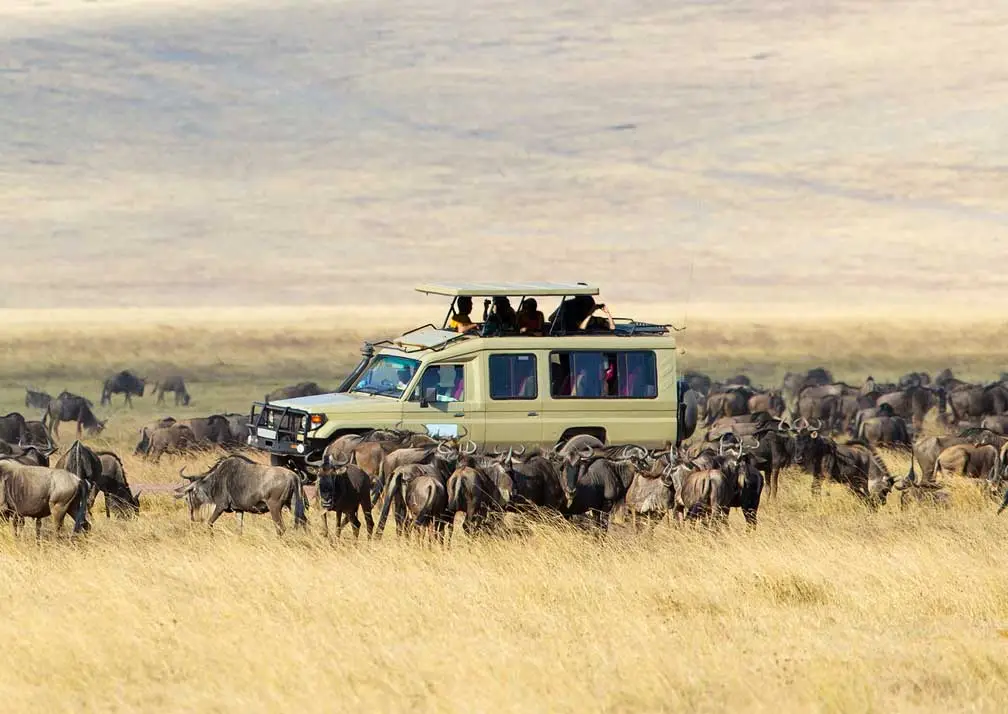
Great Migration Safari Packages
The annual wildebeest migration is one of the largest wildlife movements on earth. Our packages are timed for the river crossings in the northern Serengeti and the calving season on the southern plains.
View Package →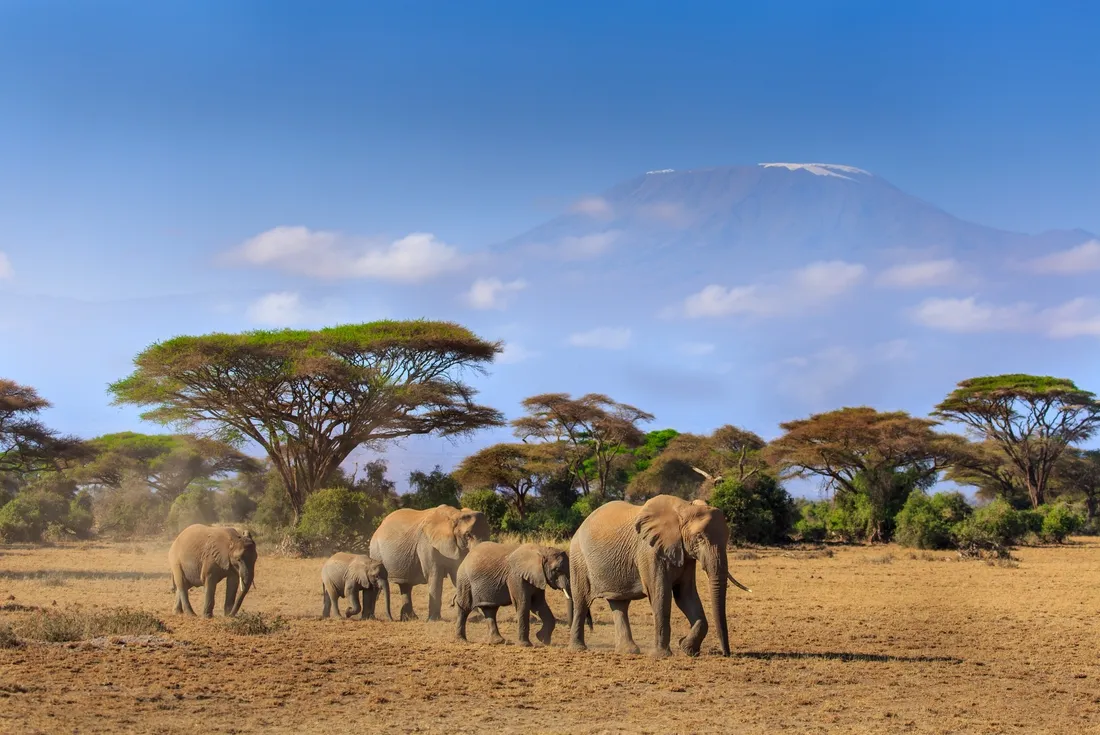
Serengeti & Kilimanjaro Packages
Combine a northern circuit safari with a Kilimanjaro climb — two of Tanzania's defining experiences on one trip. Available in several route and duration combinations.
View Package →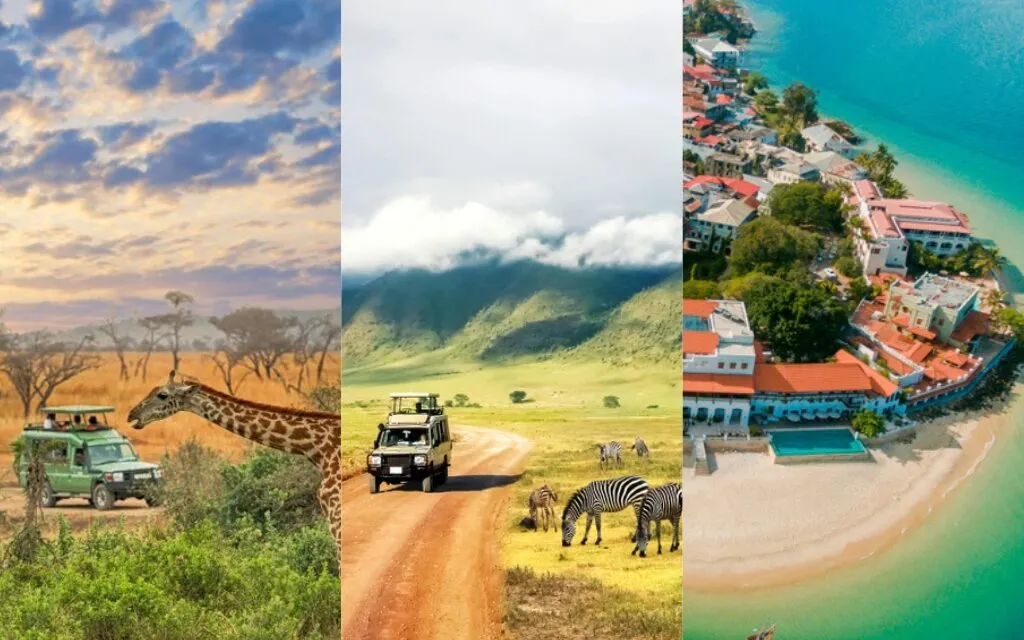
Serengeti & Zanzibar Tours
A classic Tanzania combination: wildlife in the Serengeti followed by days on the beach in Zanzibar. Available as a flexible package with accommodation options across all budgets.
View Package →