South American Countries: Complete Alphabetical List (A–Z)
South America has 12 independent countries. The alphabetical list includes: Argentina, Bolivia, Brazil, Chile, Colombia, Ecuador, Guyana, Paraguay, Peru, Suriname, Uruguay, and Venezuela. Explore the diverse nations of South America with this complete alphabetical list of South American countries (A–Z). From Argentina’s vibrant cities to Venezuela’s natural wonders, this guide highlights each sovereign country, offering quick insights into geography, culture, and travel essentials. Perfect for students, travelers, and curious readers alike, it provides an easy reference to understand the continent’s political map while discovering key facts about each nation. Whether planning a trip or expanding your knowledge, this list ensures you have a clear, organized overview of South America from A to Z. Below is the complete list sorted alphabetically, including each country's capital and a brief highlight for travelers.
View Full ListSouth American Countries Overview (2025 Guide)
Quick overview of each sovereign country in South America, including key travel and geographical facts as of December 2025.
| Country | Capital | Official Language(s) | Population (2025 est.) | Currency | Best Known For |
|---|---|---|---|---|---|
| Argentina | Buenos Aires | Spanish | 46 million | Argentine Peso (ARS) | Tango, Patagonia glaciers, Iguazu Falls, wine regions, Buenos Aires culture |
| Bolivia | Sucre (constitutional) La Paz (administrative) |
Spanish, Quechua, Aymara + 34 others | 12 million | Boliviano (BOB) | Salar de Uyuni (world’s largest salt flat), Lake Titicaca, Andean culture |
| Brazil | Brasília | Portuguese | 213 million | Brazilian Real (BRL) | Amazon Rainforest, Rio Carnival, Christ the Redeemer, beaches, Iguaçu Falls |
| Chile | Santiago | Spanish | 20 million | Chilean Peso (CLP) | Atacama Desert, Torres del Paine, Easter Island, Patagonia, world-class wines |
| Colombia | Bogotá | Spanish | 53 million | Colombian Peso (COP) | Coffee regions, Cartagena old town, Amazon jungle, Tayrona beaches, vibrant culture |
| Ecuador | Quito | Spanish | 18 million | US Dollar (USD) | Galápagos Islands, Quito historic center, Andes volcanoes, Amazon biodiversity |
| Guyana | Georgetown | English | 0.81 million | Guyanese Dollar (GYD) | Kaieteur Falls, pristine Amazon rainforest, Caribbean coast, eco-tourism |
| Paraguay | Asunción | Spanish, Guarani | 7 million | Guaraní (PYG) | Jesuit ruins, Chaco wilderness, Itaipu Dam, Guarani culture |
| Peru | Lima | Spanish, Quechua, Aymara | 35 million | Peruvian Sol (PEN) | Machu Picchu, Inca Trail, Amazon River, Nazca Lines, Cusco history |
| Suriname | Paramaribo | Dutch | 0.62 million | Surinamese Dollar (SRD) | Colonial Paramaribo (UNESCO), diverse cultures, Amazon rainforest, eco-lodges |
| Uruguay | Montevideo | Spanish | 3 million | Uruguayan Peso (UYU) | Punta del Este beaches, Montevideo old town, wine & mate culture, relaxed vibe |
| Venezuela | Caracas | Spanish | 29 million | Bolívar (VES) | Angel Falls (world’s tallest waterfall), Caribbean islands, tepuis, Canaima National Park |
Overview of South America
Quick Facts About the Continent
- Official Name: South America (América del Sur in Spanish/Portuguese)
- Land Area: 17,840,000 km² (4th largest continent)
- Population (Dec 2025): ~438 million
- Largest Country by Area: Brazil (47.3% of the continent)
- Largest Country by Population: Brazil (~213 million)
- Most Populous City: São Paulo, Brazil (~22 million in metro area)
- Highest Point: Aconcagua, Argentina (6,960 m / 22,837 ft)
- Longest River: Amazon River (flows through Brazil, Peru, Colombia)
- Largest Lake: Lake Titicaca (Peru/Bolivia border)
- Official Languages: Spanish (9 countries), Portuguese (Brazil), English (Guyana), Dutch (Suriname), plus many indigenous languages
- Biodiversity: Home to the Amazon Rainforest – the world’s largest rainforest and most biodiverse place on Earth
How Many Countries Are in South America?
South America has 12 sovereign countries and 3 dependent territories (French Guiana, Falkland Islands, South Georgia and the South Sandwich Islands).
Subregions of South America
South America is commonly divided into four geographic and cultural subregions:
Northern South America
Countries: Colombia, Venezuela, Guyana, Suriname, French Guiana
Highlights: Amazon rainforest, Caribbean coast, Angel Falls (world’s tallest waterfall), Georgetown, Cayenne
Western South America (Andean States)
Countries: Ecuador, Peru, Bolivia, Chile (part)
Highlights: Andes Mountains, Machu Picchu, Lake Titicaca, Atacama Desert, Galápagos Islands
Southern Cone
Countries: Argentina, Chile, Uruguay, Paraguay (part)
Highlights: Patagonia, Tierra del Fuego, Iguazu Falls, Buenos Aires tango, wine regions, Ushuaia (southernmost city)
Eastern South America
Countries: Brazil, Paraguay (part), Uruguay (part)
Highlights: Amazon rainforest, Pantanal wetlands, Rio Carnival, São Paulo, Iguaçu Falls, Atlantic rainforest
Travel Information for South America
Best Time to Visit South America
South America is a year-round destination because of its varied climates, but the overall best months are April–June and September–November (shoulder seasons):
- December–March (Summer): Ideal for Patagonia, Chile, Argentina, Uruguay, southern Brazil, and beach destinations. Peak season = higher prices & crowds.
- June–August (Winter): Perfect for the Andes (Machu Picchu, Bolivia, Peru, Ecuador), Amazon rainforest (drier season), and Carnival in Brazil (February/March).
- April–May & September–October: Fewer tourists, lower prices, pleasant temperatures almost everywhere, and green landscapes after rains.
- Avoid: Amazon high-water season (Dec–May) if you want hiking; Patagonia in mid-winter (Jun–Aug) due to snow closures.
Popular Destinations in South America
- Machu Picchu & Cusco, Peru – Inca citadel & vibrant Andean culture
- Rio de Janeiro, Brazil – Christ the Redeemer, Copacabana, Carnival
- Buenos Aires, Argentina – Tango, steak, European architecture
- Patagonia (Chile & Argentina) – Torres del Paine, Perito Moreno Glacier, hiking heaven
- Galápagos Islands, Ecuador – Unique wildlife & Darwin’s living laboratory
- Amazon Rainforest – Brazil, Peru, Ecuador, Colombia (river cruises & jungle lodges)
- Salar de Uyuni, Bolivia – World’s largest salt flat & mirror effect
- Iguazu Falls – Brazil & Argentina sides, one of the new 7 Natural Wonders
- Cartagena & Medellín, Colombia – Colonial charm & modern comeback story
- Atacama Desert, Chile – Driest place on Earth, stargazing & moon-like valleys
Visa Requirements for South America (2025)
Most nationalities enjoy visa-free entry or visa-on-arrival for tourism stays of 30–90 days. Key notes:
| Country | Visa-Free for US, CA, EU, UK, AU, NZ | Max Stay | Notes |
|---|---|---|---|
| Argentina | Yes | 90 days | Reciprocity fee abolished |
| Bolivia | Visa on arrival / eVisa | 90 days | US citizens pay $160 on arrival |
| Brazil | Yes (since 2019) | 90 days | — |
| Chile | Yes | 90 days | — |
| Colombia | Yes | 90 days (extendable to 180) | — |
| Ecuador (incl. Galápagos) | Yes | 90 days | — |
| Guyana | Yes | 90 days | — |
| Paraguay | Yes | 90 days | — |
| Peru | Yes | 90–183 days (officer decides) | — |
| Suriname | eVisa or visa on arrival | 90 days | — |
| Uruguay | Yes | 90 days | — |
| Venezuela | Yes (but not recommended) | 90 days | Strongly advise against travel (safety) |
Yellow Fever vaccination certificate required when entering from certain countries (especially Amazon regions).
Safety Tips for South America
- Use official taxis or Uber/99/DiDi/Cabify in big cities (never street taxis in Bogotá, Lima, or Rio at night).
- Keep valuables in hotel safe; use anti-theft bags; avoid flashing jewelry or phones.
- Don’t walk alone at night in big cities; use reputable tour operators for remote areas.
- Drink bottled or purified water outside major hotels.
- Altitude sickness is real above 2,500 m (Cusco, La Paz, Bogotá) – acclimatize slowly, consider Diamox.
- Check current travel advisories – Venezuela, parts of Colombia, and border regions require extra caution.
- Buy comprehensive travel insurance that covers high-altitude trekking and medical evacuation.
Cultural Etiquette & Useful Tips
- Spanish is dominant (except Brazil – Portuguese; Guyana, Suriname – English; French Guiana – French).
- Greeting: a single cheek kiss (or air kiss) is common in Argentina, Chile, Uruguay, Brazil; handshake elsewhere.
- Tipping: 10% is usual in restaurants (often already included as “servicio”); round up taxi fares.
- Dress modestly when visiting churches or indigenous communities.
- Punctuality is relaxed (“hora latina”) – don’t be surprised if people are 15–30 min late socially.
- Always ask permission before photographing indigenous people.
- Bargaining is expected in markets, but not in fixed-price shops it’s considered rude.
- Learn basic phrases: “por favor”, “gracias”, “con permiso” go a very long way.
Interesting Facts About South America
South America, the fourth-largest continent, is a land of stunning contrasts—from the world's largest rainforest to its driest desert. Here are some captivating facts that highlight its natural wonders, geography, and unique features.
- Home to the Amazon Rainforest: The Amazon is the world's largest tropical rainforest, covering about 40% of the continent and producing around 20% of the planet's oxygen. It's also incredibly biodiverse, home to millions of species.
- The Andes Mountains: The longest continental mountain range in the world, stretching over 7,000 km (4,300 miles) along the western edge, with Aconcagua as the highest peak outside Asia at 6,959 meters (22,831 feet).
- Angel Falls: Located in Venezuela, it's the world's tallest uninterrupted waterfall at 979 meters (3,212 feet)—nearly 20 times taller than Niagara Falls.
- Atacama Desert: In Chile, it's the driest non-polar desert on Earth—some areas haven't seen rain for centuries, making it a perfect spot for stargazing and Mars-like landscapes.
- Machu Picchu: This iconic Incan citadel in Peru, built in the 15th century, is one of the New Seven Wonders of the World and a UNESCO site perched high in the Andes.
- Two Landlocked Countries: Bolivia and Paraguay are the only landlocked nations in South America, with no access to the ocean.
- Triangular Shape: South America's unique shape gives it the shortest coastline relative to its size among continents.
- Biodiversity Hotspot: The continent boasts incredible diversity, from the Galápagos Islands (famous for inspiring Darwin's theory of evolution) to the world's highest navigable lake, Lake Titicaca.
- Southernmost City: Ushuaia in Argentina is the world's southernmost city, often called the "End of the World" and a gateway to Antarctica.
From ancient ruins to extreme landscapes, South America offers endless adventure for travelers!
Economic and Cultural Overview of South America
Main Industries
South America's economy is diverse and heavily reliant on natural resources. Key sectors include mining (copper in Chile, iron ore and gold in Brazil and Peru), agriculture (soybeans, coffee, beef, and wine), manufacturing (automobiles, steel, and food processing, especially in Brazil and Argentina), oil and gas (Venezuela and Brazil), and a growing services sector including tourism. Brazil dominates as the continent's largest economy, contributing significantly to regional GDP through its varied industries.
Languages Spoken
The predominant languages are Spanish (official in most countries except Brazil) and Portuguese (official in Brazil, the continent's most populous nation). English is official in Guyana, while Dutch is spoken in Suriname and French in French Guiana. Indigenous languages play a vital role, with Quechua (spoken by millions in Peru, Bolivia, and Ecuador), Guaraní (co-official in Paraguay and widely spoken), and Aymara being among the most prominent.
Religions
Christianity dominates, with Roman Catholicism historically the majority faith (around 54% of the population in recent surveys). Evangelical Protestantism has grown rapidly (about 19-20%), while around 19% identify as non-religious or unaffiliated. Indigenous beliefs often blend with Catholicism in Andean regions, and small minorities practice Judaism, Islam, and other faiths, particularly in urban areas like Argentina.
Cultural Highlights
South America is renowned for its vibrant festivals blending indigenous, European, and African influences. Standouts include Rio Carnival in Brazil (the world's largest with samba parades and street parties), Inti Raymi in Peru (Inca sun festival reenactment in Cusco), Fiesta de la Candelaria in Puno (colorful dances honoring the Virgin Mary), and Día de los Muertos traditions. Other highlights are tango in Argentina, Andean music and textiles, Amazonian indigenous traditions, and gaucho cowboy culture in the Pampas.
South America Countries by Population (as of December 2025)
The following table ranks the top 10 countries of South America by population from largest to smallest, based on UN estimates and projections for December 2025.
| Rank | Country | Population | % of South America Population |
|---|---|---|---|
| 1 | Brazil | 213 million | 48.6% |
| 2 | Colombia | 53 million | 12.2% |
| 3 | Argentina | 46 million | 10.5% |
| 4 | Peru | 35 million | 7.9% |
| 5 | Venezuela | 29 million | 6.5% |
| 6 | Chile | 20 million | 4.5% |
| 7 | Ecuador | 18 million | 4.1% |
| 8 | Bolivia | 12 million | 2.8% |
| 9 | Paraguay | 7 million | 1.6% |
| 10 | Uruguay | 3 million | 0.7% |
South America Countries by Area (from Largest to Smallest)
The following table ranks the top 10 countries of South America by land area from largest to smallest.
| Rank | Country | Area (km²) | % of South America's Land Area |
|---|---|---|---|
| 1 | Brazil | 8,515,770 | 47.3% |
| 2 | Argentina | 2,780,400 | 15.5% |
| 3 | Peru | 1,285,216 | 7.1% |
| 4 | Colombia | 1,138,910 | 6.3% |
| 5 | Bolivia | 1,098,581 | 6.1% |
| 6 | Venezuela | 912,050 | 5.1% |
| 7 | Chile | 756,102 | 4.2% |
| 8 | Paraguay | 406,752 | 2.3% |
| 9 | Ecuador | 283,561 | 1.6% |
| 10 | Guyana | 214,969 | 1.2% |
Ready to Explore South America?
From the Amazon to the Andes, South America offers incredible diversity. Let us help plan your next adventure!
Contact Us for Custom ToursExplore More Tanzania Safaris
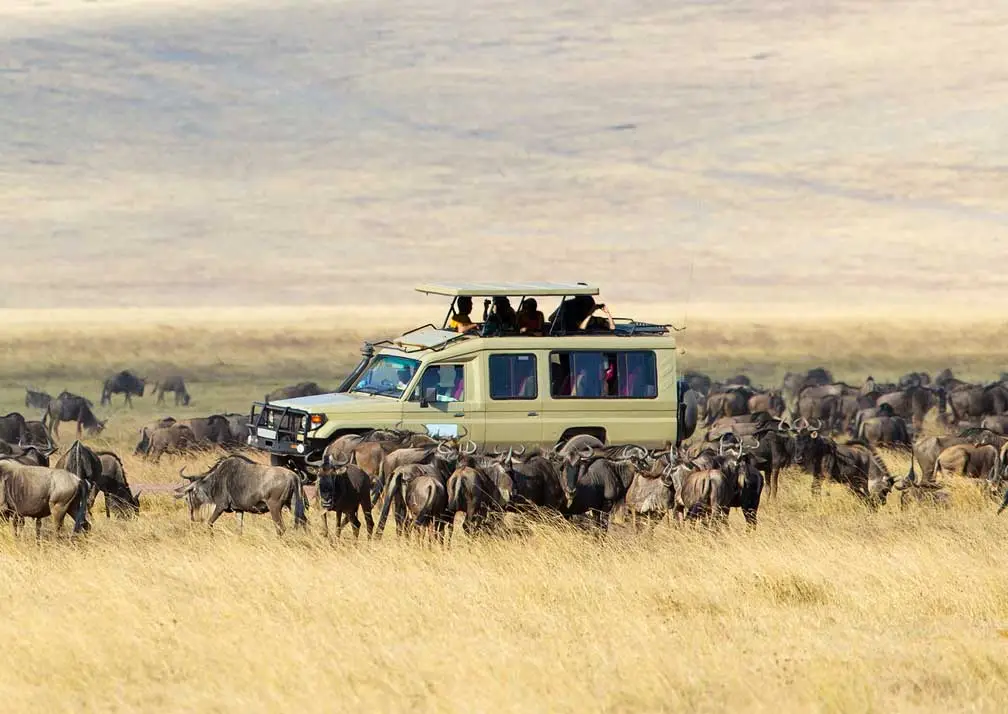
Great Migration Safaris
Experience one of nature’s greatest spectacles with our Great Migration safari packages, timed for river crossings or calving.
View Package →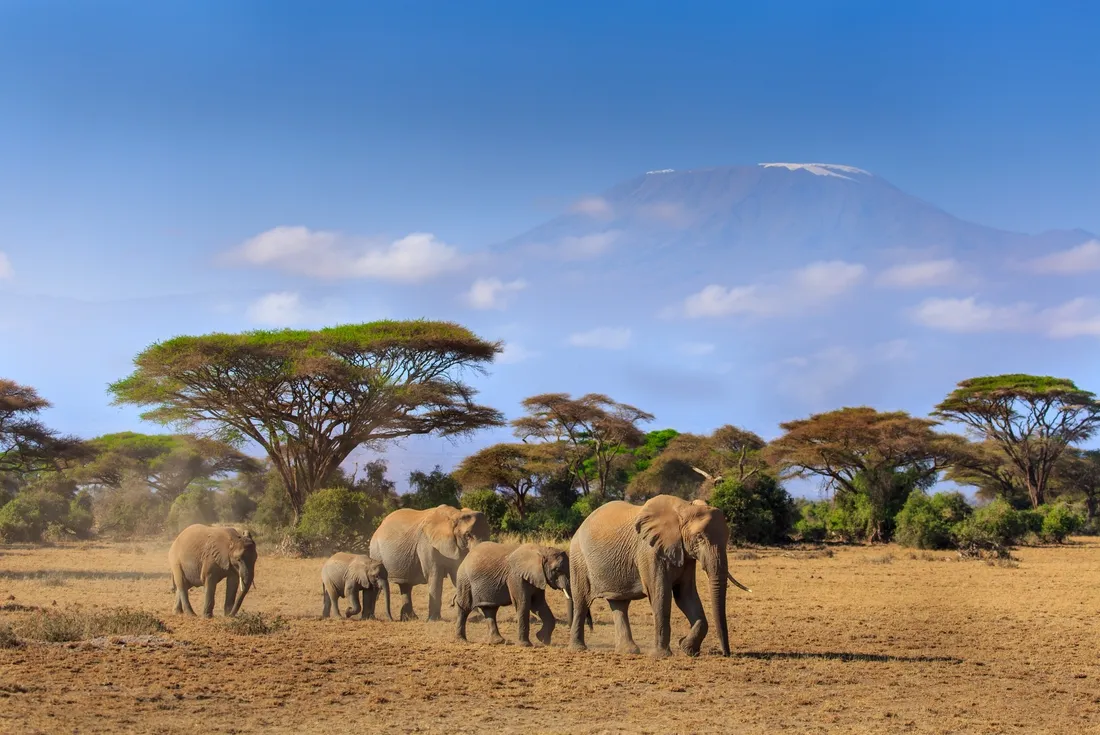
Serengeti & Kilimanjaro Trek
Combined safari and trekking tours offer wildlife adventures and Kilimanjaro climbs.
View Package →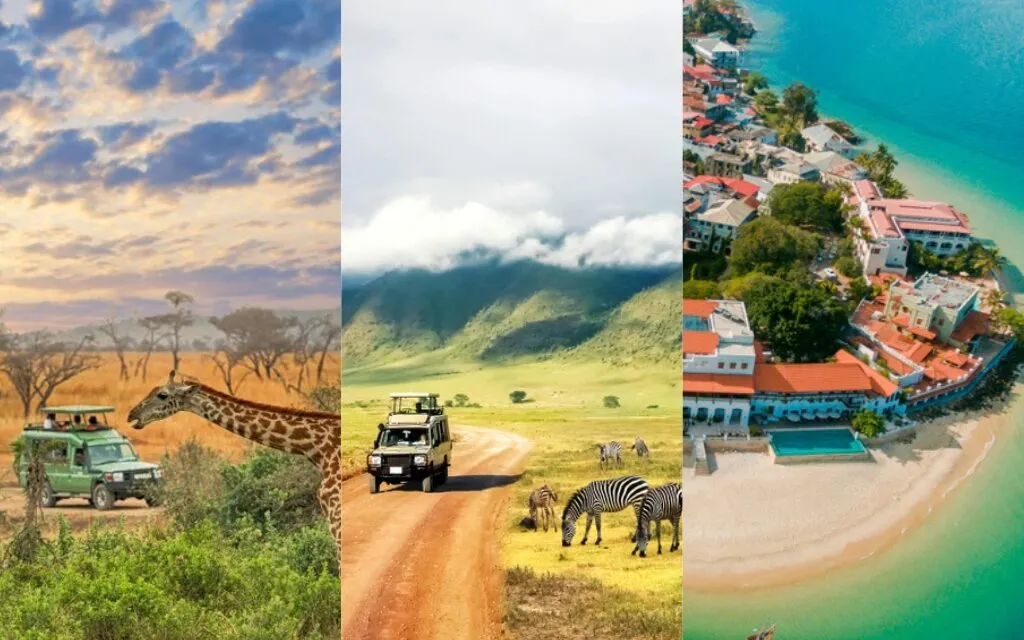
Serengeti & Zanzibar Tours
Luxury Tanzania safari & beach packages with the Great Migration and pristine beaches.
View Package →