
List of All African Countries (Alphabetical Order)
Africa is home to 54 internationally recognized sovereign nations. Below is the complete list sorted alphabetically, including each country's capital city and a brief highlight perfect for travelers and safari enthusiasts.
View Full ListOverview of Africa
Africa, the second-largest continent by both land area and population, is a land of extraordinary diversity, rich history, and unparalleled natural beauty. Covering approximately 30.3 million square kilometers (about 20% of Earth's total land area), Africa is home to stunning landscapes ranging from the vast Sahara Desert in the north to the lush rainforests of the Congo Basin, expansive savannas teeming with wildlife, and dramatic mountain ranges like the Atlas and the Drakensberg. As of December 2025, Africa's population exceeds 1.56 billion people, making it the second-most populous continent after Asia and accounting for nearly 19% of the world's population.
Known as the cradle of humankind, Africa is where the earliest human ancestors evolved, with fossil evidence dating back millions of years. Today, it boasts over 3,000 distinct ethnic groups and more than 2,000 languages spoken across its 54 internationally recognized sovereign countries. The continent's cultural tapestry is vibrant, blending ancient traditions with modern influences, and it is renowned worldwide for its wildlife safaris, iconic landmarks such as the Pyramids of Giza and Victoria Falls, and emerging economic powerhouses driving global growth.
Quick Facts About the Continent
- Land Area: Approximately 30.3 million km² (second-largest continent)
- Population (December 2025): Over 1.56 billion (second-most populous continent)
- Number of Countries: 54 sovereign nations
- Largest Country by Area: Algeria
- Largest Country by Population: Nigeria
- Longest River: Nile River (6,650 km)
- Highest Point: Mount Kilimanjaro (5,895 m), Tanzania
- Largest Desert: Sahara Desert (world's largest hot desert)
- Biodiversity: Home to the "Big Five" game animals and the greatest variety of wildlife on Earth
How Many Countries Are in Africa?
Africa comprises 54 fully recognized sovereign countries, the highest number of any continent. This count is based on membership in the United Nations and the African Union. Additionally, there are a few territories and disputed regions, such as Western Sahara. These nations vary immensely in size, population, culture, and economy—from tiny island states like Seychelles to vast nations like the Democratic Republic of the Congo.
Subregions of Africa
The United Nations divides Africa into five main subregions for statistical and geographical purposes: Northern Africa, Western Africa, Central Africa (also called Middle Africa), Eastern Africa, and Southern Africa. These divisions help highlight the continent's diverse climates, cultures, and economies.
- Northern Africa (7 countries): Dominated by the Sahara and Mediterranean influences; includes Egypt, Algeria, Morocco, Tunisia, Libya, Sudan, and Western Sahara. Known for ancient civilizations and Arab-Berber culture.
- Western Africa (16 countries): Coastal and Sahel regions; home to economic giants like Nigeria and vibrant cultures in Ghana, Senegal, and Côte d'Ivoire.
- Central Africa (9 countries): Dense rainforests and the Congo Basin; includes DR Congo, Cameroon, and Gabon—rich in biodiversity and natural resources.
- Eastern Africa (18-20 countries/territories): Features the Great Rift Valley, iconic safaris in Kenya and Tanzania, and island nations like Madagascar and Comoros.
- Southern Africa (10 countries): Diverse landscapes from deserts to mountains; includes South Africa, Namibia, Botswana, and Zimbabwe—famous for wildlife reserves and Victoria Falls.
Africa's subregions showcase its incredible variety, making it a top destination for travelers seeking adventure, history, and natural wonders. From gorilla trekking in the east to desert explorations in the north, the continent offers endless discoveries.
Travel Information for Africa
Best Time to Visit
Africa is a year-round destination, but the ideal time depends on your chosen region and activity. For East Africa’s Great Migration (Kenya & Tanzania), the best period is June to October when millions of wildebeest cross the Mara River. Southern Africa (South Africa, Botswana, Zambia, Zimbabwe) is at its peak from May to September during the dry winter season—perfect for game viewing as animals congregate around waterholes. North Africa (Morocco, Egypt, Tunisia) is most comfortable from October to April, avoiding the intense summer heat. Beach destinations like Seychelles, Mauritius, and Zanzibar offer excellent weather from May to October (cooler and drier) or December to March (warmer). Always check regional rainfall patterns, as “green season” (November–April in many areas) brings lush scenery, fewer crowds, and lower prices.
Popular Destinations
Top draws include the Serengeti and Maasai Mara (Great Migration), Victoria Falls (Zambia/Zimbabwe), Okavango Delta (Botswana), Cape Town and the Garden Route (South Africa), Marrakech and the Sahara Desert (Morocco), the Pyramids of Giza and Nile cruises (Egypt), gorilla trekking in Uganda and Rwanda, Zanzibar’s spice islands and beaches, Namibia’s red dunes and Etosha National Park, and Madagascar’s unique lemurs and baobab avenues. Each region offers dramatically different landscapes, wildlife, and cultures within a single continent.
Visa Requirements
Visa rules vary widely. Many East and Southern African countries (Kenya, Tanzania, Rwanda, Zambia, Zimbabwe, South Africa, Botswana, Namibia) offer visa-on-arrival or e-visas for most nationalities. Kenya, Rwanda, and Uganda share the East Africa Tourist Visa (US$100, 90 days, multiple entry). Egypt and Morocco provide easy visa-on-arrival or e-visas. West African nations such as Ghana, Senegal, and Cape Verde have simplified processes. However, some countries (e.g., Algeria, Angola, Equatorial Guinea) still require advance embassy visas and invitations. Always check current requirements 4–6 weeks before travel, as policies change frequently.
Safety Tips
Millions of tourists visit Africa safely every year. Common-sense precautions include using registered guides and reputable tour operators, avoiding walking alone at night in urban areas, keeping valuables secure, and following local advice in wildlife areas. Malaria is present in many regions—take prescribed prophylactics and use insect repellent. Drink only bottled or purified water. Yellow fever vaccination and certificate are mandatory for entry into many countries. Research specific destinations: most safari and tourist areas are very safe, while some cities require normal big-city awareness.
Cultural Etiquette
Africa is incredibly diverse with over 3,000 ethnic groups. Always ask permission before photographing people, especially Maasai, Himba, or San communities—many expect a small payment. Dress modestly when visiting villages, mosques, or conservative areas (shoulders and knees covered). Remove shoes when entering homes. Greet elders first and use right hands for giving/receiving items in Muslim regions. Tipping guides, drivers, and porters is customary and greatly appreciated (US$10–20 per person per day is standard on safaris). Learning basic greetings in local languages (Swahili “Jambo”, Arabic “As-salamu alaikum”, French “Bonjour”) opens doors and hearts everywhere.
Top 10 African Countries by Population (as of December 2025)
The following table ranks the top 10 countries in Africa by population from largest to smallest, based on UN estimates and projections for December 2025. These 10 countries account for over 60% of Africa's total population of approximately 1.55 billion.
| Rank | Country | Population | % of Africa Population |
|---|---|---|---|
| 1 | Nigeria | 237.5 million | 15.3% |
| 2 | Ethiopia | 135.5 million | 8.7% |
| 3 | Egypt | 118.4 million | 7.6% |
| 4 | DR Congo | 111.1 million | 7.2% |
| 5 | Tanzania | 69.6 million | 4.5% |
| 6 | South Africa | 64.4 million | 4.2% |
| 7 | Kenya | 57.0 million | 3.7% |
| 8 | Sudan | 51.1 million | 3.3% |
| 9 | Uganda | 50.7 million | 3.3% |
| 10 | Algeria | 47.1 million | 3.0% |
Top 10 African Countries by Area (from Largest to Smallest)
The following table ranks the top 10 countries in Africa by land area from largest to smallest. These 10 countries cover over 70% of Africa's total land area of approximately 30.4 million km².
| Rank | Country | Area (km²) | % of Africa's Land Area |
|---|---|---|---|
| 1 | Algeria | 2,381,741 | 7.8% |
| 2 | DR Congo | 2,344,858 | 7.7% |
| 3 | Sudan | 1,861,484 | 6.1% |
| 4 | Libya | 1,759,540 | 5.8% |
| 5 | Chad | 1,284,000 | 4.2% |
| 6 | Niger | 1,267,000 | 4.2% |
| 7 | Angola | 1,246,700 | 4.1% |
| 8 | Mali | 1,240,192 | 4.1% |
| 9 | South Africa | 1,221,037 | 4.0% |
| 10 | Ethiopia | 1,104,300 | 3.6% |
Ready to Explore Africa?
From the Serengeti plains of Tanzania to the pyramids of Egypt, Africa offers unmatched adventure. Let Capable Africa Tours craft your dream safari!
Book Your African Adventure TodayExplore More Tanzania Safaris
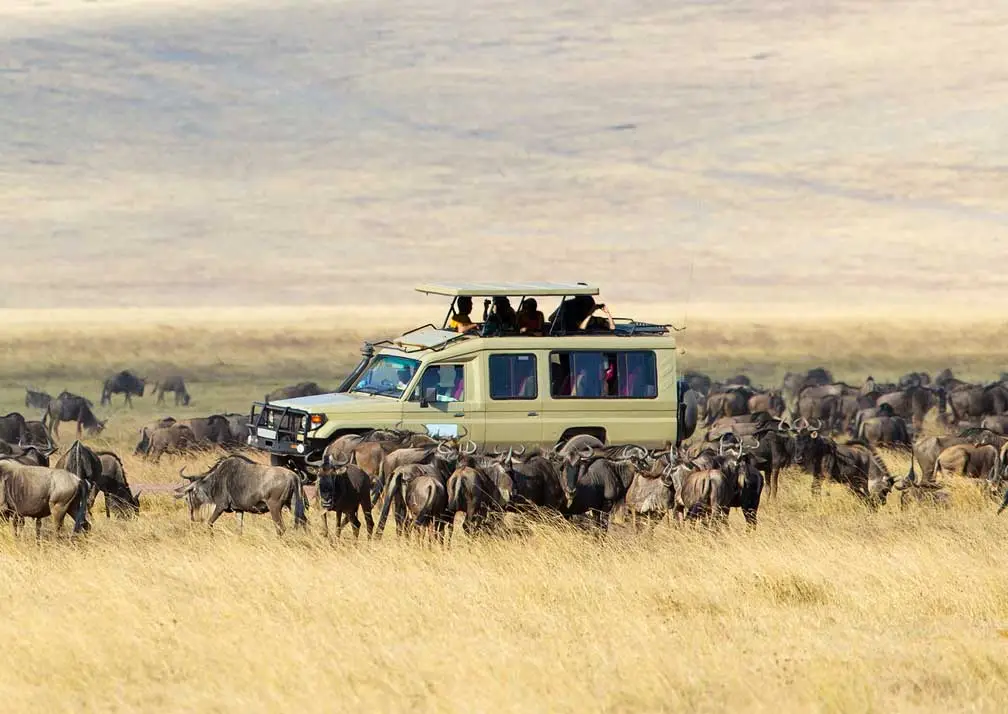
Great Migration Safaris
Experience one of nature’s greatest spectacles with our Great Migration safari packages, timed for river crossings or calving.
View Package →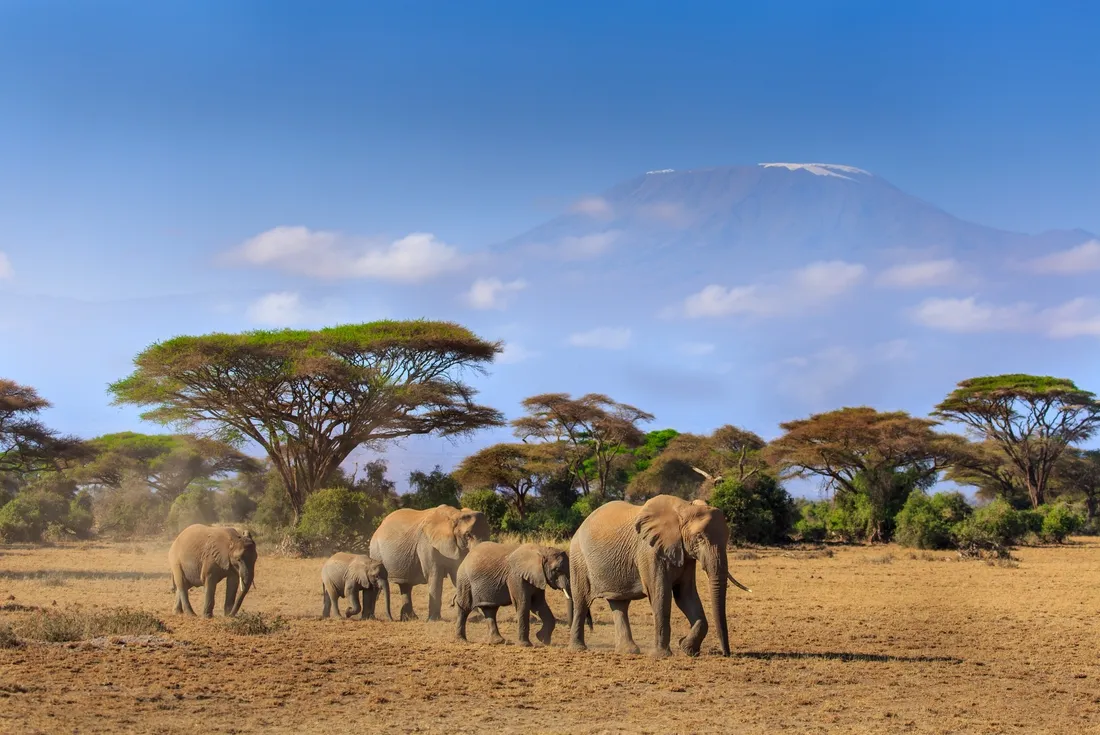
Serengeti & Kilimanjaro Trek
Combined safari and trekking tours offer wildlife adventures and Kilimanjaro climbs.
View Package →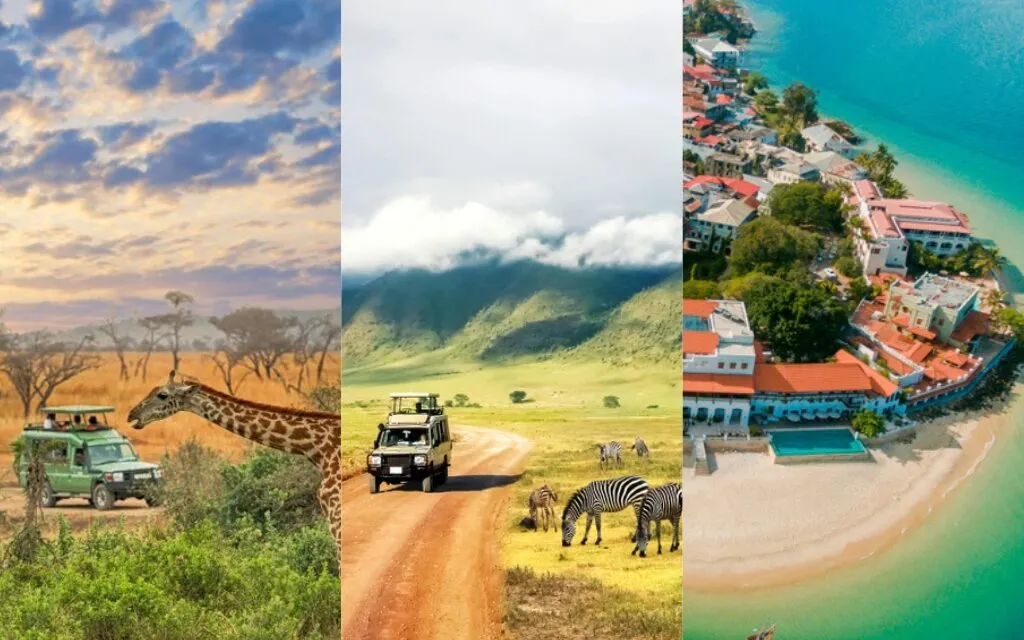
Serengeti & Zanzibar Tours
Luxury Tanzania safari & beach packages with the Great Migration and pristine beaches.
View Package →